A Documentary Examination of the Largest Italian Diaspora Community in the World
There are, by most reliable estimates, between seventeen and twenty-six million Americans of Italian descent living in the United States today. That range -- wide enough to fill a mid-sized European country -- reflects a measurement problem: since the 2010 Census removed "Italian American" as a pre-printed ethnicity option, the count has depended on self-reporting. The National Italian American Foundation and the Calandra Italian American Institute at Queens College both place the figure closer to the higher end. Either way, Italian Americans constitute the fourth-largest self-reported ancestry group in the nation, behind German, Irish, and English.
This article examines the Italian American experience in three parts: the historical arc from mass immigration through assimilation, the present landscape of achievement and institutional life, and the organized efforts now underway to ensure the culture endures into its next century on American soil.

Part I: The Historical Record
The Great Migration, 1880--1924
Between 1880 and the outbreak of World War I in 1914, more than four million Italians emigrated to the United States. The majority came from the southern regions -- Sicily, Calabria, Campania, Basilicata, Puglia -- where centuries of feudal governance, heavy taxation, and agricultural collapse had created conditions of extreme poverty. Between 1820 and 2004, approximately 5.5 million Italians in total migrated to the United States, making Italians the second-largest immigrant group admitted during that span.
Most entered through Ellis Island, which processed more than twelve million immigrants during its forty years of operation. Italians were the single largest ethnic group to pass through the facility. The Library of Congress records that on peak days, up to five thousand immigrants were processed. Italian immigrants called Ellis Island "L'Isola delle Lagrime" -- the Island of Tears -- for the families separated when members failed medical or mental fitness inspections.
The pattern of early Italian immigration was distinctive. Many were single men -- so-called "birds of passage" -- who intended to work, send remittances home, and return to Italy. A U.S. government commission estimated in 1896 that Italian immigrants sent or carried between four and thirty million dollars back to their families each year. Over time, however, permanent settlement became the norm. By 1900, one-third of Italian immigrants had settled in New York City alone, establishing dense ethnic enclaves in Manhattan, Brooklyn, and the Bronx, with parallel communities forming across New Jersey, Pennsylvania, Connecticut, Rhode Island, and Massachusetts.

Discrimination, Violence, and the Fight for Acceptance
The Italian immigrant experience in America was marked by sustained and often violent hostility. Anti-Italian sentiment was amplified by nativist movements, pseudo-scientific racial theories that classified southern Europeans as inherently inferior, and media portrayals that depicted Italians as criminals, anarchists, and public health threats.
The most notorious incident occurred on March 14, 1891, in New Orleans. Following the assassination of Police Chief David Hennessy -- and the subsequent acquittal or mistrial of nineteen Italian immigrants charged in his murder -- a mob of thousands, including prominent attorneys, politicians, and future city officials, stormed the Orleans Parish Prison and murdered eleven men. The victims were shot, beaten, and hanged. No one was ever indicted. The New York Times published approving coverage. Theodore Roosevelt wrote in a letter to his sister that he considered the lynchings "a rather good thing." Italy severed diplomatic relations with the United States in response, and the incident nearly provoked armed conflict between the two nations.
The 1891 massacre was not isolated. The Library of Congress documents that more than twenty Italians were lynched in the 1890s alone. Research compiled by the Italian Sons and Daughters of America identifies at least forty additional lynchings of Italian Americans between the late nineteenth and early twentieth centuries, in states from Louisiana and Mississippi to Colorado, West Virginia, and Washington.
Discrimination continued through World War II. Following Executive Order 9066, signed by President Roosevelt on February 19, 1942, approximately 600,000 Italian immigrants and Italian Americans were classified as "enemy aliens" by the U.S. government. Many were subjected to surveillance, travel restrictions, curfews, and seizure of property. Some were interned at facilities including Fort Missoula in Montana. This occurred despite the fact that more than one million Italian Americans were serving in the U.S. armed forces at the time -- comprising an estimated twelve percent of total American military personnel during the First World War, a disproportionately high figure. Joe DiMaggio's father, a California fisherman, was forced to surrender his boat to the government. The Wartime Violations of Italian American Civil Liberties Act, acknowledging these injustices, was not signed into law until 2000.
The legal framework restricted immigration as well. The Emergency Quota Act of 1921 and the Immigration Act of 1924 imposed national-origin quotas that assigned Italians only 3.87 percent of annual immigrant admissions, despite Italians being the fifth-largest national-origin group in the 1920 population. These restrictions remained in place until the Immigration and Nationality Act of 1965.
Assimilation and Economic Ascent
The post-war decades brought rapid upward mobility. Italian Americans moved out of urban enclaves and into suburban communities in large numbers. Intermarriage rates climbed sharply: according to research by Dr. Richard D. Alba of the State University of New York at Albany, only eight percent of Italian Americans born before 1920 had mixed ancestry, but seventy percent of those born after 1970 were children of intermarriage. By 1985, seventy-two percent of Italian American men under thirty had married someone with no Italian background.
Economic indicators tell an equally clear story. By the second generation, approximately seventy percent of Italian American men held blue-collar jobs. By the third generation, that figure had dropped to roughly fifty percent. By 1987, Italian American income exceeded the national average. Current data from the American Community Survey confirms the trend has accelerated: Italian American median household income now exceeds the national median by approximately $16,000 annually. The share of Italian Americans holding bachelor's and professional degrees surpasses the national average, and the poverty rate among Italian American households is significantly below the national figure. Italian Americans are statistically overrepresented in management, business, science, arts, finance, insurance, and real estate occupations.

Part II: The Present Landscape
Government and Public Service
Italian Americans have occupied positions at every level of American governance. Fiorello La Guardia served three terms as mayor of New York City from 1934 to 1945, transforming the city's infrastructure and political culture. Ella T. Grasso became the first woman elected governor of a U.S. state in her own right when she won the Connecticut governorship in 1974. Geraldine Ferraro made history in 1984 as the first woman and first Italian American to receive a major-party vice-presidential nomination. Mario Cuomo served three terms as governor of New York and delivered what many consider one of the defining keynote addresses in Democratic convention history in 1984.
In the current era, Nancy Pelosi -- born Nancy Patricia D'Alesandro in Baltimore's Little Italy -- served as Speaker of the House of Representatives, the highest-ranking Italian American in the history of the legislative branch. Italian Americans serve in the U.S. Senate, the House of Representatives, state legislatures, and municipal governments across the country. The 2025 election of Pope Leo XIV, an American-born pontiff of Italian descent, marked a significant milestone for the global Italian diaspora.

Entertainment, Arts, and Media
The Italian American influence on American popular culture is extensive and well-documented. Frank Sinatra reshaped the entertainment industry as the first major crossover artist -- singer, actor, political figure -- and set the template for the modern celebrity. Dean Martin, Al Pacino, Robert De Niro, and Martin Scorsese became defining figures of American film and music in the twentieth century. Scorsese and Francis Ford Coppola are widely regarded as two of the most important directors in the history of American cinema.
The current generation includes Lady Gaga (Stefani Joanne Angelina Germanotta), a multi-Grammy and Academy Award-winning artist; Leonardo DiCaprio, whose work across two decades has earned critical and commercial recognition at the highest levels; Ariana Grande, one of the most commercially successful recording artists active today; and Bruce Springsteen, whose career spans five decades and twenty Grammy Awards. Behind the camera, Italian American animators created some of the most enduring characters in American popular culture, including Donald Duck (Al Taliaferro), Woody Woodpecker (Walter Lantz), Casper the Friendly Ghost (co-created by Joseph Oriolo), and Tom and Jerry (co-created by Joseph Barbera).
Science and Medicine
Enrico Fermi, who emigrated from Italy and became a U.S. citizen, constructed the first nuclear reactor and received the Nobel Prize in Physics in 1938. His work laid the foundation for both nuclear energy and the national laboratory system that bears his name. Mario Capecchi, born in Italy, received the Nobel Prize in Medicine in 2007 for pioneering work in gene targeting. Riccardo Giacconi received the Nobel Prize in Physics in 2002 for contributions to astrophysics.
Dr. Anthony Fauci, the son of Italian immigrants in Brooklyn, served as director of the National Institute of Allergy and Infectious Diseases for nearly four decades and became one of the most recognized public health officials in American history. Dr. Alessio Fasano, a gastroenterologist at Massachusetts General Hospital, has led groundbreaking research in celiac disease and autoimmune conditions. These figures represent a broader pattern: Italian Americans have made significant contributions to nuclear physics, medicine, astrophysics, neuroscience, and public health research.
Business and Enterprise
The Italian American business tradition encompasses both historic and contemporary achievement. A.P. Giannini founded the Bank of Italy in San Francisco in 1904; it became Bank of America, one of the world's largest financial institutions. Lee Iacocca led Chrysler's turnaround from near-bankruptcy and became a symbol of American industrial leadership. Kenneth Langone co-founded The Home Depot. Steve Bisciotti built the Allegis Group into the largest privately held staffing firm in the United States and acquired the Baltimore Ravens. Joe Gebbia co-founded Airbnb.
Peter Arduini currently serves as president and CEO of GE HealthCare. Robert Nardelli served as chairman and CEO of both Home Depot and Chrysler. The NIAF Board of Directors includes leaders from major financial institutions, real estate firms, law practices, and technology companies. Italian American entrepreneurship has also been foundational in the American food industry -- from Ghirardelli Chocolate (founded by Domingo Ghirardelli in San Francisco) to E. & J. Gallo Winery (co-founded by Ernest Gallo) to Leprino Foods, the world's largest manufacturer of mozzarella cheese.
Sports
Joe DiMaggio's fifty-six-game hitting streak with the New York Yankees remains one of professional baseball's most iconic records. Rocky Marciano retired as the only undefeated heavyweight champion in boxing history. Vince Lombardi's name adorns the Super Bowl championship trophy. Mario Andretti won the Formula One World Championship and the Indianapolis 500. In a lesser-known but significant historical note, Gene Sarazen (born Eugenio Saraceni) won both the PGA Championship and the U.S. Open in 1922, and Nick LaRocca of New Orleans led the Original Dixieland Jass Band, which made the first commercially released jazz recording in 1917.

Part III: The Road Ahead
The Institutional Framework
Italian American cultural continuity depends in large part on a network of organizations that fund scholarships, advocate on policy issues, promote the Italian language, and create community infrastructure. The principal national organizations are as follows.
The National Italian American Foundation (NIAF) was established on April 26, 1975, when nineteen Italian Americans convened under the leadership of Monsignor Geno Baroni at the National Center for Urban Ethnic Affairs in Washington, D.C. Today, NIAF operates as the primary advocacy and cultural organization for Italian Americans at the federal level. The Foundation administers nearly two hundred scholarships annually, with awards ranging from $2,500 to $12,000, across fields including medicine, engineering, business, law, music, and Italian language and culture. NIAF's annual gala in Washington, D.C., functions as the community's premier national gathering, drawing senior government officials, business leaders, and cultural figures.
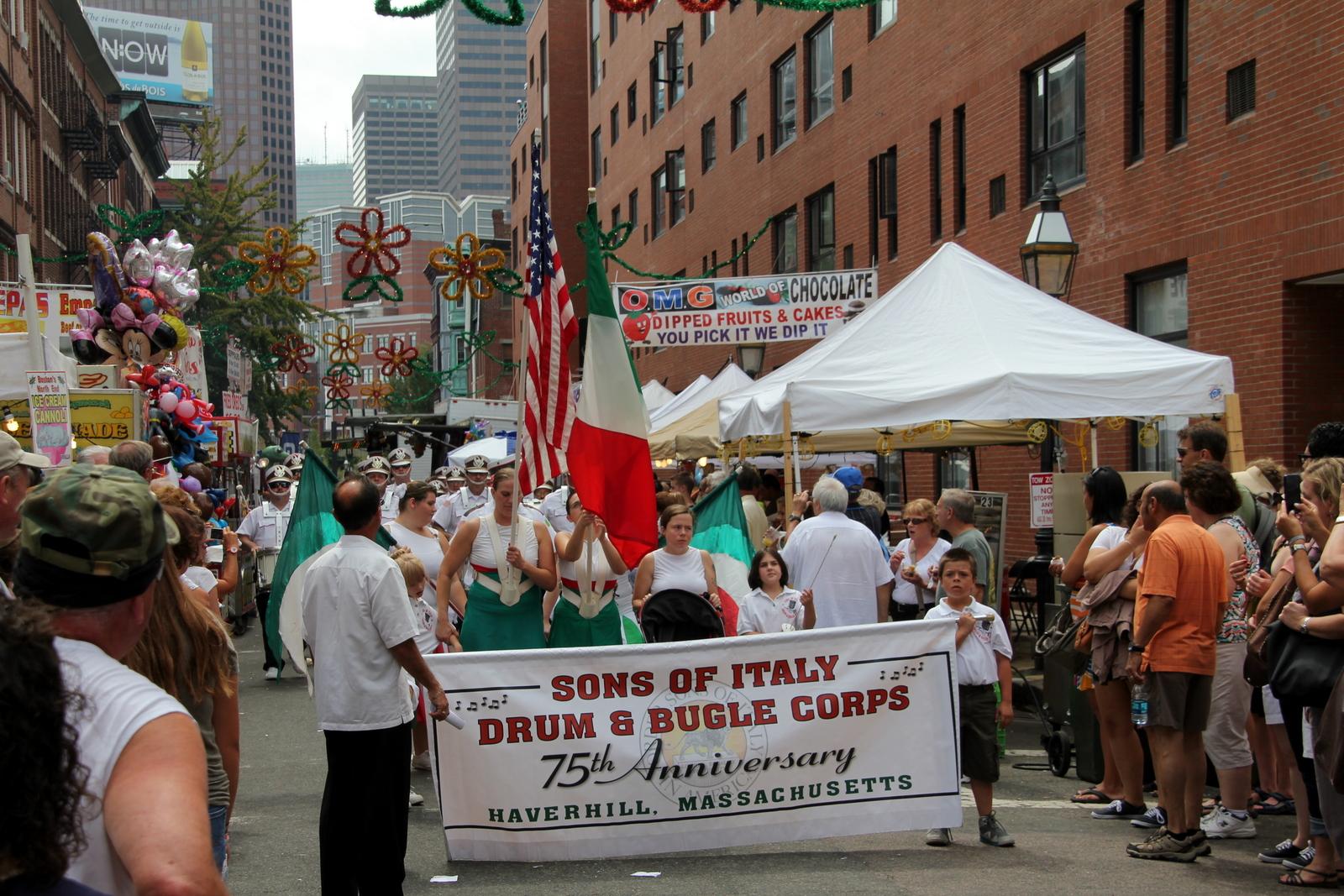
The Order Sons and Daughters of Italy in America (OSDIA) is the oldest and largest Italian American organization in the United States. Founded in 1905 as a mutual aid society, OSDIA now maintains over four hundred lodges across all fifty states, Canada, and Italy. Its philanthropic arm, the Sons of Italy Foundation, has distributed millions of dollars in scholarships and research grants. The Commission for Social Justice, OSDIA's anti-defamation division, works to combat stereotyping and discrimination against Italian Americans and was instrumental in securing the 2019 formal apology from the Mayor of New Orleans for the 1891 lynchings.
UNICO National was founded on October 10, 1922, in Waterbury, Connecticut, by Dr. Anthony P. Vastola and fourteen colleagues. Named for the Italian word meaning "unique," UNICO was conceived as a service organization that would place charitable work and civic engagement above fraternity. It has operated continuously for over a century.
Additional organizations serve specialized constituencies. The National Organization of Italian American Women (NOIAW), founded in 1980, runs educational programs and scholarships for women of Italian heritage. The Italian American ONE VOICE Coalition operates as a national anti-bias network. The Federation of Italian-American Organizations (FIAO) of Brooklyn operates Il Centro, a 44,000-square-foot community center in Bensonhurst serving over 7,000 people annually. The Joint Civic Committee of Italian Americans serves as the coordinating body for Chicagoland's Italian American organizations. The Italian American Studies Association (IASA), founded in 1966, focuses on scholarly research and preservation of the Italian American historical record.
Youth Programs and the Next Generation
The central demographic challenge facing Italian Americans is generational dilution through assimilation and intermarriage. With over seventy percent of post-1970 Italian Americans coming from mixed-heritage families, the question of cultural transmission has become urgent. Several programs have been established to address this directly.
NIAF on Campus is the Foundation's flagship youth initiative. The program connects students who are active in Italian clubs at their colleges, providing each participating campus group with up to $1,500 in annual funding for cultural and educational events. The stated mission is to "empower the future leaders of the Italian American community to embrace their cultural heritage and carry it with them for the rest of their lives." Participating students attend NIAF's Anniversary Gala weekend in Washington, receive access to networking opportunities with other campus clubs, and gain long-term fellowship status with the Foundation.
The NIAF scholarship program has grown substantially since its inception. In its early years, the Foundation awarded four scholarships of $250 each. Today, NIAF offers nearly two hundred scholarships annually across a wide array of named funds -- including the Agnes E. Vaghi Scholarship for women in journalism, the Frank D. Stella Scholarship for business students, and regionally designated awards for students from Massachusetts, Florida, New York, and other states. Applicants must have at least one ancestor who emigrated from Italy and must maintain a minimum GPA of 3.5.
Additional NIAF youth programs include the Voyage of Discovery, which sends young Italian Americans to Italy to establish direct connections with the country of origin; the Christopher Columbus Essay Contest for younger students; the DiLella Fellows and Young Professionals Network, which build leadership pipelines in business, government, and the arts; and the Congressional Fellowship, which places Italian Americans in Capitol Hill offices.
Beyond NIAF, the Coccia Foundation, established in 1994 by Cavaliere Joseph Coccia Jr. and his wife Elda, supports cultural and educational programming for Italian American youth, particularly within institutions of higher education. FIAO Brooklyn runs after-school programs in public schools serving over 10,000 New York City students annually, along with Italian-language classes, culinary programs, and youth sports leagues rooted in Italian soccer traditions. Chicago's Joint Civic Committee of Italian Americans operates its Avanti group, specifically designed to engage young professionals and the next generation of community leaders.

The Demographic Picture
Italian Americans remain geographically concentrated in the Northeast and industrial Midwest, though the population has dispersed significantly. Connecticut leads the nation in per-capita concentration at 16.1 percent, followed by Rhode Island at 15.5 percent and New Jersey at 14.6 percent. New York has the largest absolute population at 2.33 million. California ranks second at approximately 1.39 million. Significant communities exist in Pennsylvania, Massachusetts, Ohio, Illinois, Florida, and Texas.
Census and survey data indicate that Italian Americans are more likely than the general population to be married or cohabitating, to have a computer in the household, and to work in management, business, science, arts, finance, or real estate. They are less likely to identify as having a disability and less likely to receive SNAP benefits. Median household income exceeds the national figure by a substantial margin. These indicators suggest a community that has, in aggregate, achieved and in many respects surpassed socioeconomic parity -- a notable trajectory for a population that arrived largely impoverished and illiterate just over a century ago.
The question facing Italian Americans in the coming decades is not one of economic standing but of cultural identity. Whether the heritage will survive in meaningful form depends on the strength of the institutional network, the commitment of the next generation, and the community's ability to articulate what Italian American identity means beyond ancestry alone.
Sources
Primary sources referenced in this article:
- Library of Congress -- Italian Immigration: Ellis Island
- Library of Congress -- Italian Immigration: Under Attack
- Wikipedia -- Italian Americans
- Wikipedia -- 1891 New Orleans Lynchings
- Britannica -- New Orleans Lynching of 1891
- HISTORY.com -- The Grisly Story of One of America's Largest Lynchings
- Italian Sons and Daughters of America -- The Innocent 11
- Italian Sons and Daughters of America -- We Discovered It, We Named It, We Built It
- NIAF Blog -- Untold WWII History: U.S. Internment of Italian Americans
- National Italian American Foundation -- Who We Are
- National Italian American Foundation -- Scholarship Program
- National Italian American Foundation -- NIAF on Campus
- National Italian American Foundation -- Italian American Statistics
- Order Sons and Daughters of Italy in America
- FIAO Brooklyn -- Il Centro Community Center
- Italian American Herald -- New Data Finds Italian Americans Prospering Today
- World Population Review -- Italian Population by State
- Calandra Italian American Institute -- Data Snapshots
- Stony Brook University -- Italian-American Heritage Month
- Statue of Liberty-Ellis Island Foundation -- Italian Heritage Month 2023