The Heritage, Heart, and Altars of Italian America
Italian-American Heritage · March 2026 · Celebrating the Solemnity of March 19

A multi-tiered Tavola di San Giuseppe — the living heart of the feast, laden with sculpted breads, citrus, fava beans, and votive candles. New Orleans hosts more of these altars than any other American city.
When the calendar turns to the ides of March, the cultural landscape of the United States undergoes a vibrant and visible transformation, colored by the enduring legacies of two distinct, yet surprisingly interconnected, immigrant narratives. March 17 is famously washed in an emerald tide for St. Patrick. Yet, barely forty-eight hours later, the American cultural palette shifts dramatically — from green to a vibrant, insistent red.
March 19 marks the Solennità di San Giuseppe — the Solemnity of St. Joseph, husband of the Virgin Mary, earthly father of Jesus, patron of workers and immigrants, and the beloved guardian of the island of Sicily. For Italian Americans, especially those tracing their lineage to the Mezzogiorno and Sicily, this is not a secondary feast. It is the feast — a day of profound religious reverence, unparalleled culinary opulence, and fierce ethnic pride that has traveled, intact and alive, across four centuries and an ocean.
"An entire holiday constructed around the ancestral memory of starvation, paradoxically celebrated through the medium of staggering, almost overwhelming culinary abundance."
A Curious Historical Bridge: Patrick, Joseph & Rome
Ireland's most iconic saint was, in all likelihood, of Roman — and by geographic extension, Italian — heritage. Born Maewyn Succat in the Romanized settlement of Britannia around 385 AD, Patrick was the son of Calpurnius, a Roman magistrate and deacon, and the grandson of Potitus, a Christian priest. Both were active participants in the Roman Christian community that had expanded outward from the Italian peninsula. Historians note that soldiers, officials, and settlers in Britannia were often of direct Italian descent.
Kidnapped at sixteen by Irish raiders and forced into slavery, Patrick underwent a profound spiritual transformation before escaping to Britain and returning to Ireland as a bishop. He assimilated so completely into the culture he converted that he became, in the memorable phrase, "more Irish than the Irish." This shared Roman heritage provides a compelling historical bridge between the Celtic and Mediterranean diasporas in America — demonstrating that cultural identity and faith frequently transcend rigid modern borders.
Saint Joseph in Church History
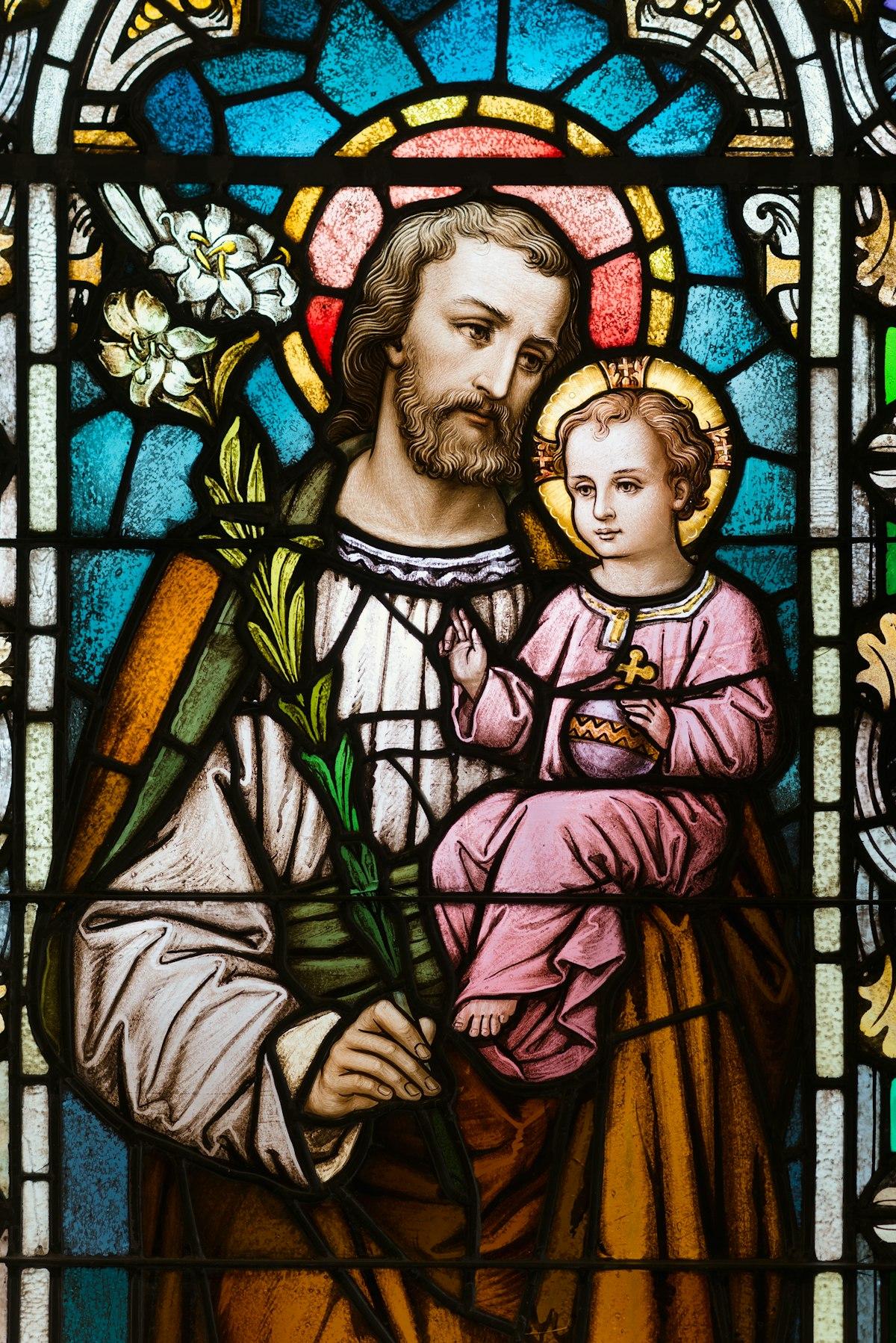
St. Joseph with the Infant Jesus, Guido Reni, c. 1635. Joseph is venerated as the model of silent, faithful fatherhood — not a single spoken word of his is recorded in Scripture.
In Catholic teaching, Joseph of Nazareth holds a singularly paradoxical place: he is one of the most venerated figures in the faith, yet not a single spoken word of his appears in the New Testament canon. His presence in Scripture is defined entirely by deeds of quiet obedience — sheltering the Holy Family, fleeing into Egypt, working as a carpenter in Nazareth.
His patronages are expansive and deeply human: fathers, workers, carpenters, travelers, immigrants, and those approaching death. He is the patron of a happy death — a title that carries enormous resonance in communities marked by poverty and hardship. Formally declared Patron of the Universal Church by Blessed Pope Pius IX on December 8, 1847, his feast day of March 19 is kept as a Solemnity in the Roman Rite. An additional feast, St. Joseph the Worker, was instituted by Pius XII on May 1, 1955, to affirm the dignity of labor alongside the international workers' movement.
The academic study of his life has generated its own theological sub-discipline: Josephology — a term that speaks to the richness and depth of scholarly inquiry his quiet biography has inspired across the centuries.
The Genesis of the Feast: Famine, Faith, and the Fava Bean
To fully comprehend the architecture, symbolic vocabulary, and emotional weight of St. Joseph's Day, one must travel back to the harsh agrarian history of medieval Sicily. According to a tradition that has survived centuries of oral transmission, the island suffered a catastrophic drought during the Middle Ages. The seasonal rains ceased entirely, crops withered, livestock perished, and the population faced the terrifying prospect of mass starvation.
In their desperation, the Sicilian people turned to their spiritual patron with a solemn vow: if spared from the famine, they would prepare a grand feast in his honor and share its bounty exclusively with the poor. The Vatican's Year of St. Joseph resource describes the tradition as both a "symbolic thank-you" to St. Joseph and a shared meal for the poor — a dual purpose encoded in its very origin.
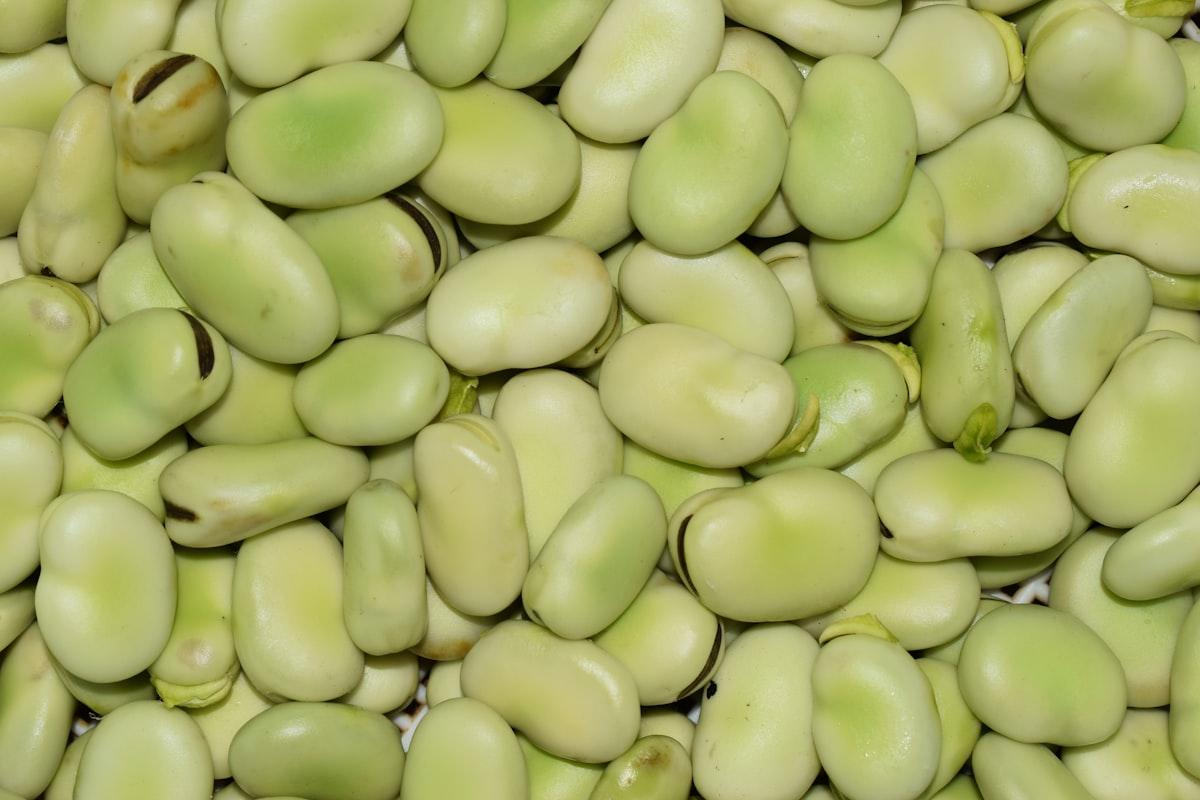
The fava bean (Vicia faba) — revered as the "lucky bean" of St. Joseph's Day. Once considered peasant fodder, it became Sicily's salvation crop and is now blessed and distributed at altars across America.
The rains came. And the only crop that proved resilient enough to survive the arid conditions and flourish quickly enough to stave off starvation was the Vicia faba — the fava bean. Historically considered a coarse legume fit only for pigs and cattle, the humble fava became the literal savior of the Sicilian populace, providing the essential protein needed for survival. Live in Italy Magazine calls it Sicily's "survival crop."
In fulfillment of their vow, wealthy Sicilian families prepared enormous buffets in town squares, inviting the homeless, the sick, and the impoverished to dine as guests of honor. This singular act of gratitude laid the permanent foundation for the Tavola di San Giuseppe — St. Joseph's Table. The tradition was subsequently carried across the Atlantic during the great waves of Italian immigration in the late 19th and early 20th centuries, taking exceptional root in New Orleans, New York, Chicago, Providence, and Boston.
Today, the fava bean remains the most potent symbol of the holiday. Blessed by parish priests, it is distributed at altars in small keepsake bags alongside holy cards and medals. It is a widespread custom among Italian Americans to carry a dried fava bean year-round — in a pocket, a purse, a wallet — as a tangible guarantee that the bearer will never experience the hunger of their ancestors.
The Architecture of Devotion: The Tavola di San Giuseppe
The contemporary St. Joseph's Altar is far more than a buffet. It is a kinetic work of art — a multi-sensory installation of faith, gratitude, and generational culinary mastery. Whether erected in a private living room as the fulfillment of a sacred ex-voto (a promise made for a healed illness, a successful birth, or a soldier's safe return) or constructed in a sprawling parish hall by hundreds of volunteers, the altar's physical structure adheres to strict, centuries-old symbolic guidelines.
The physical table is traditionally constructed in three distinct tiers, representing the Holy Trinity, draped in fine white linen. The topmost tier is presided over by a prominent statue or framed image of St. Joseph holding the infant Jesus. The middle tiers serve as the spiritual conduit — holding flickering votive candles, rosaries, prayer cards, and the most intricate sculptural breads. The base overflows with fresh produce, cookies, cakes, and regional pastries. White lilies — symbolizing Joseph's purity and the legend of his blossoming staff that indicated he was chosen by God to wed Mary — are woven densely throughout.
The altar is designed to be visually overwhelming: a stark and deliberate contrast to the scarcity of the famine that inspired it. It is a space where the community can physically see the results of collective labor and faith before the altar is broken apart to feed the hungry.
Altar Symbolism at a Glance
| Component | Theological Symbolism | Placement |
|---|---|---|
| Three Tiers | The Holy Trinity — Father, Son, Holy Spirit | The foundational structure of the entire altar |
| White Lilies | Joseph's absolute purity; his blossoming staff | Central statue; woven throughout the tiers |
| Citrus & Artichokes | Sicily's agricultural revival after the miraculous rains | Piled across the base for color and fragrance |
| Candles & Rosaries | Prayer and intercession; the vigil of gratitude | Middle tiers flanking the bread sculptures |
| Fava Beans | The survival crop that ended the famine | Throughout, and distributed in blessed keepsake bags |
| Statue of St. Joseph | The saint's divine oversight over the feast | The apex of the top tier, presiding over all |
Pane di San Giuseppe: The Art of Sacred Bread
If the three tiers form the skeleton of the altar, the Pane di San Giuseppe — St. Joseph's Bread — serves as its absolute centerpiece. Skilled bakers sculpt dense, slightly sweet dough into elaborate, theologically rich shapes before baking them to a deep golden brown. Sicilian bakers coat the bread's surface with copious sesame seeds that serve a dual symbolic purpose: they represent the countless teardrops shed by the starving populace during the great famine, and they emulate the sawdust of St. Joseph the Carpenter's workshop.
The structural shapes of the bread constitute an edible catechism for the community. Crosses represent the ultimate sacrifice. Monstrances and chalices honor the Eucharist. Doves, lambs, and fish are ubiquitous symbols of Christian identity. The Crown of Thorns reminds the faithful that, despite the day's feasting, March 19 falls during the solemn season of Lent. Most uniquely, the bread takes the form of the working class: intricate carpentry tools — saws, hammers, ladders, sandals — are baked in direct homage to Joseph's humble trade, elevating manual labor to a state of holiness.
Common Bread Sculpture Shapes & Their Meanings:
- Cross & Crown of Thorns — Christ's sacrifice; the Lenten season
- Monstrance & Chalice — Honor to the Eucharist
- Dove & Lamb — Peace and the Lamb of God
- Carpentry Tools (saw, hammer, ladder) — Joseph's trade; dignity of labor
- St. Joseph's Staff & Lily — His divine selection as Mary's spouse
- Heart — Devotion to the Sacred Heart; the Immaculate Heart
- "St. Joseph's Purse" — Charity extended to the needy
The Meatless Mandate: A Culinary Lexicon
Because March 19 falls within the penitential season of Lent, the traditional St. Joseph's feast is strictly meatless. Yet this religious restriction does not produce culinary austerity — quite the opposite. The savory dishes are triumphs of Mediterranean flavor and ingenuity.
The principal savory dish is almost universally a variation of Pasta con le Sarde — pasta with sardines. Reflecting the complex, Moorish-influenced flavor profiles of Sicilian gastronomy, this dish incorporates wild fennel, pine nuts, raisins, garlic, and high-quality olive oil. Crucially, this pasta is never topped with cheese. Instead, it is generously sprinkled with muddica — heavily toasted breadcrumbs — which serve a profound dual purpose: theologically, the golden crumbs represent the sawdust of Joseph's carpentry floor; sociologically, they pay homage to the extreme poverty of the historic peasantry, for whom aged cheeses were an unattainable luxury. Toasted breadcrumbs were, literally, the poor man's cheese.
The savory table also features cardoons and cauliflower battered and fried until golden, stuffed artichokes, lentils with rice, and fried baccalà (salt cod) alongside the ever-present fava bean in its various preparations — including Maccu di Fave, the thick fava bean soup that is one of the oldest dishes in Sicily's culinary canon.
The Sweet Tributes: Zeppole, Sfingi & Regional Pastries

Zeppole di San Giuseppe: a deep-fried or baked choux pastry nest filled with vanilla custard or sweetened ricotta, dusted with powdered sugar, and crowned with a dark amarena cherry.
No St. Joseph's table is complete without its signature sweets — the primary vehicles through which the holiday is most frequently experienced by the wider American public, transforming Italian bakeries into bustling epicenters of activity in the weeks before March 19.
Chief among these treats is the Zeppole di San Giuseppe: a masterpiece of pastry engineering. A deep-fried or baked choux pastry is meticulously piped into a circular, nest-like shape. The center is filled with rich yellow custard or sweetened ricotta cream, dusted with a heavy snowfall of powdered sugar, and crowned with a dark, syrupy amarena sour cherry. Some culinary historians trace the zeppole to the ancient Roman festival of Liberalia (celebrated March 17), which featured fried wheat cakes — a custom the Church assimilated just two days later under the banner of St. Joseph.
A competing and more popular religious legend holds that during the Holy Family's flight into Egypt, Joseph sustained his family by frying and selling dough pancakes as a street vendor, linking the pastry directly to his role as provider.
Regional Zeppole & Related Pastries
| Pastry / Region | Dough | Filling | Distinctive Feature |
|---|---|---|---|
| Zeppole (Campania / Naples) | Fried or baked choux | Vanilla or chocolate pastry cream | Crowned with a single amarena cherry |
| Zeppole (Puglia) | Fried in lard for richer texture | Traditional custard | Dough enhanced with fresh lemon zest |
| Sfingi / Sfince (Sicily) | Softer, porous sponge-like fried dough | Sweetened sheep's milk ricotta with chocolate chips | Garnished with candied orange peel and pistachios — Arabic influence |
| Struffoli / Pignolata (Southern Italy) | Small deep-fried dough balls | Bound together with warm honey | Shaped into a ring, covered in colorful sprinkles |
The Tupa Tupa: A Living Ritual of the Holy Family
Embedded within the broader celebration of the altar is a deeply poignant, highly performative ritual known as the Tupa Tupa — phonetically, "Knock, Knock." This custom is a theatrical reenactment of the Holy Family's desperate search for shelter in Bethlehem, transposed onto the feast of St. Joseph to highlight his role as protector of the vulnerable.
Three children are selected to dress in period costumes as the infant Jesus, the Virgin Mary, and St. Joseph — often accompanied by other children as angels or patron saints. The procession approaches three physical doors within the church or parish hall. At each, the child portraying Joseph raises his staff and knocks. A voice from within calls out, "Who is there?" Joseph responds: "Jesus, Mary, and Joseph; we seek shelter." The first two doors respond harshly: "Go away; there is no room for you here."
Finally, the procession arrives at the third door — behind which lies the magnificent, fully prepared altar. The host throws the doors open, greets the Holy Family warmly, and leads the children to the head of the table, serving them the first portions of the meal. This act embodies a profound theological truth: the feeding of the divine through the feeding of the vulnerable. Only after this ceremonial first meal is the altar officially "broken," the priests bless the food, and the great work of distributing meals to the public and the poor begins in earnest.
The Diaspora in Action: 2026 Urban Celebrations
As Italian Americans across the nation prepare for March 2026, major cities with deep Italian roots are mounting expansive, highly coordinated tributes to St. Joseph. The evolution of these events — from quiet home altars in 20th-century tenement enclaves to massive civic festivals requiring city permits and corporate sponsorships — illustrates the enduring power and adaptability of Italian-American heritage.
New Orleans, Louisiana: The Epicenter
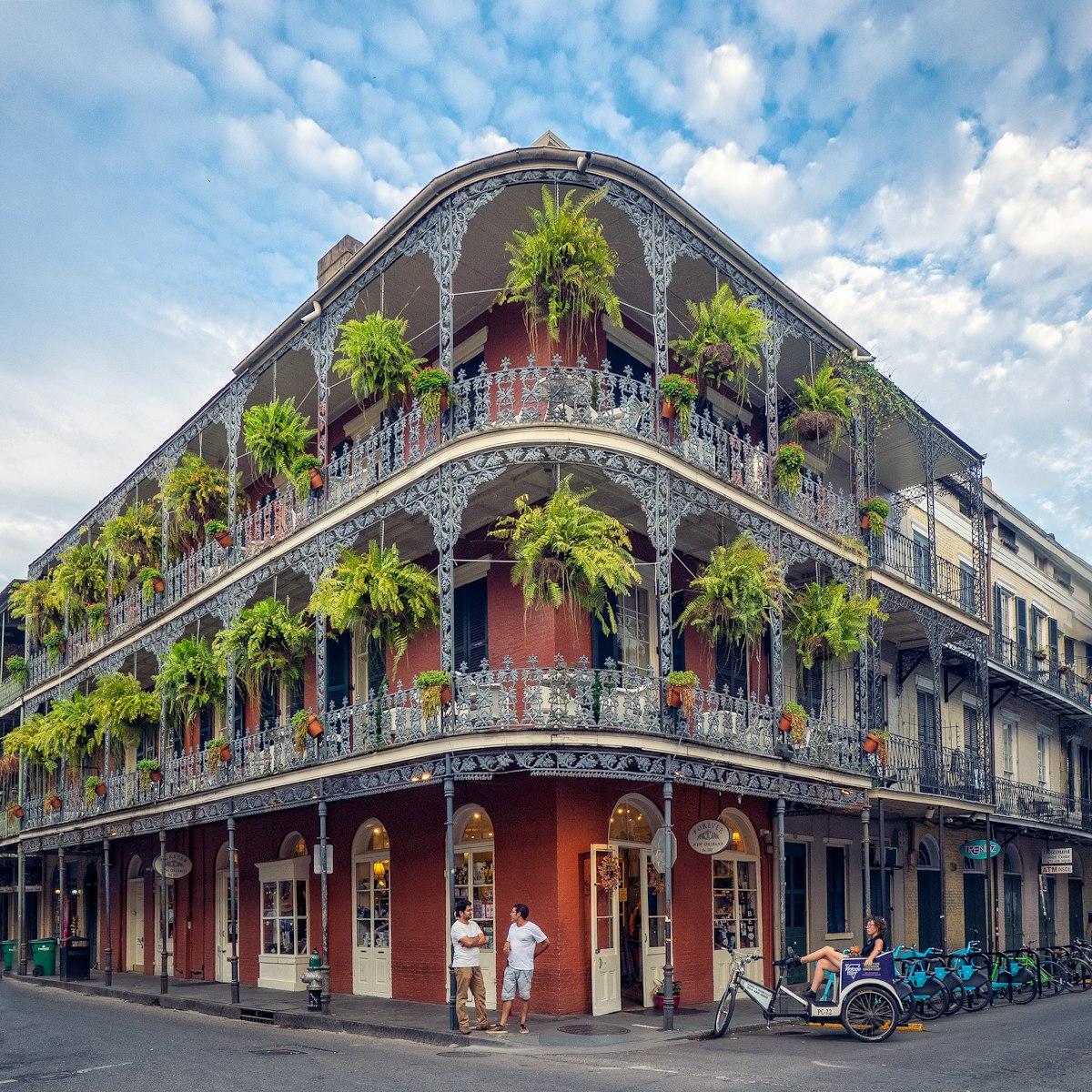
Jackson Square, New Orleans French Quarter — the beating heart of Italian-American St. Joseph's Day in the United States. Hundreds of men in tuxedos march through these streets every late March.
No American city embraces St. Joseph's Day with greater visceral fervor than New Orleans. Following the Civil War, a massive influx of Sicilian immigrants arrived in Louisiana — initially to work the sugarcane plantations, eventually establishing themselves in the burgeoning citrus trade. Consequently, New Orleans today boasts the largest concentration of St. Joseph's Altars in the country, deeply woven into its unique cultural tapestry.
The visual and communal climax is the spectacular Italian-American St. Joseph's Parade in the historic French Quarter — organized by the St. Joseph's Society, founded in 1970 by Judge Anthony Russo and Joseph Cardinia. The 2026 parade rolls on Saturday, March 28, beginning at 6:00 p.m., featuring 16 elaborate floats, nine marching brass bands, and a custom-built rolling altar float. Hundreds of men in formal black tuxedos promenade down the cobblestone streets, handing out silk flowers, decorative garters, and blessed lucky fava beans — traditionally in exchange for kisses.
Beyond the parade, a remarkable sociological byproduct of the Sicilian settlement is the holiday's deep intersection with African American culture. During the era of segregation, the historically Black St. Augustine Church in the Tremé uniquely allowed Sicilians to worship within its walls. As a result, St. Joseph's Day became intimately intertwined with the culture of the Black Masking Indians — the Mardi Gras Indians — whose spectacular Super Sunday show of hand-beaded suits closely aligns with the timing of St. Joseph's Day, creating a dual-layered, multi-ethnic celebration that exists nowhere else on earth.
Providence, Rhode Island: Federal Hill's Zeppole Zing
Providence's "Little Italy" on Federal Hill transforms for the St. Joseph's season, with iconic bakeries — Angelo's, Antonio's, D. Palmieri's — working around the clock to meet statewide zeppole demand. Due to New England's unpredictable March weather, the outdoor Festa di San Giuseppe block party has been moved to a more comfortable June 6–8, 2026, closing Atwells Avenue from Dean Street to Sutton Street from 3:30 p.m. to 2:30 a.m. across three days. Highlights include the Best Meatballs on the Hill Contest (Saturday, June 7 at 3 p.m.) and the beloved Zeppole Zing Showdown (Sunday, June 8 at 3 p.m.) — a ferocious 3-minute eating contest where twelve contestants race to consume as many cream-filled pastries as humanly possible.
New York, New York: Society Galas to Folk Revivals
In New York, the feast spans the full socioeconomic spectrum. The Columbus Citizens Foundation will host its prestigious annual Feast of San Giuseppe on Saturday, March 21, 2026, from 6:00 to 10:30 p.m. at its historic Townhouse at 8 East 69th Street — a $195-per-person black-tie affair centered on a majestic St. Joseph's Table, with a mandatory food drive for local charities. For a more intimate experience, Experience Sicily hosts a folk-culinary luncheon at Cacio e Pepe (182 Second Avenue) on Sunday, March 22, 2026 — limited to 50 guests, featuring Maccu di Fave, Bucatini con Sarde, and live Sicilian folk music from Villa Palagonia.
Chicago, Illinois: The Parish-Centered Feast
Chicago's celebration is anchored by parish life. The majestic St. John Cantius Church will host its sprawling St. Joseph's Table on Sunday, March 15, 2026, at 1:30 p.m., with parishioners baking at home, soliciting bakery donations, and personally donating all ingredients. Every cent raised goes directly to the Mission of Our Lady of the Angels, providing sustenance to Chicago's most vulnerable populations.
2026 National Event Compendium
| City | Date & Time | Event / Organizer | Details |
|---|---|---|---|
| New Orleans, LA | Mar 28, 6:00 PM | Italian-American St. Joseph Society Parade | 16 floats; tuxedoed marchers; fava bean throws; gala at Hilton Hotel |
| New Orleans, LA | Mar 19, 10:00 AM | St. Joseph Cemetery No. 1 Altar | Inaugural public altar; bring photos of deceased loved ones; ends 2:00 PM |
| New York, NY | Mar 21, 6:00 PM | CCF Feast of San Giuseppe | $195 black-tie gala; CCF Townhouse, E. 69th St.; food drive required |
| New York, NY | Mar 22, 2:00 PM | Experience Sicily Luncheon (Cacio e Pepe) | $110; 50 guests; Bucatini con Sarde; Sicilian folk music by Villa Palagonia |
| Chicago, IL | Mar 15, 1:30 PM | St. John Cantius St. Joseph's Table | Volunteer-driven; all proceeds to Mission of Our Lady of the Angels |
| Providence, RI | Jun 6–8, 2026 | Festa di San Giuseppe (Federal Hill) | Zeppole Zing Showdown; Meatball Contest; 3 stages; Atwells Ave. closed |
| Los Angeles, CA | Mar 19, Noon–8 PM | St. Peter's Italian Church — Casa Italiana | Free open house; St. Joseph's Table; 1039 N. Broadway |
| Fremont, CA | Mar 20–21, 2026 | 4th Annual St. Joseph Conference, Mission San José | $20; lectures, Mass, Vigil; Bishop Michael Barber presiding |
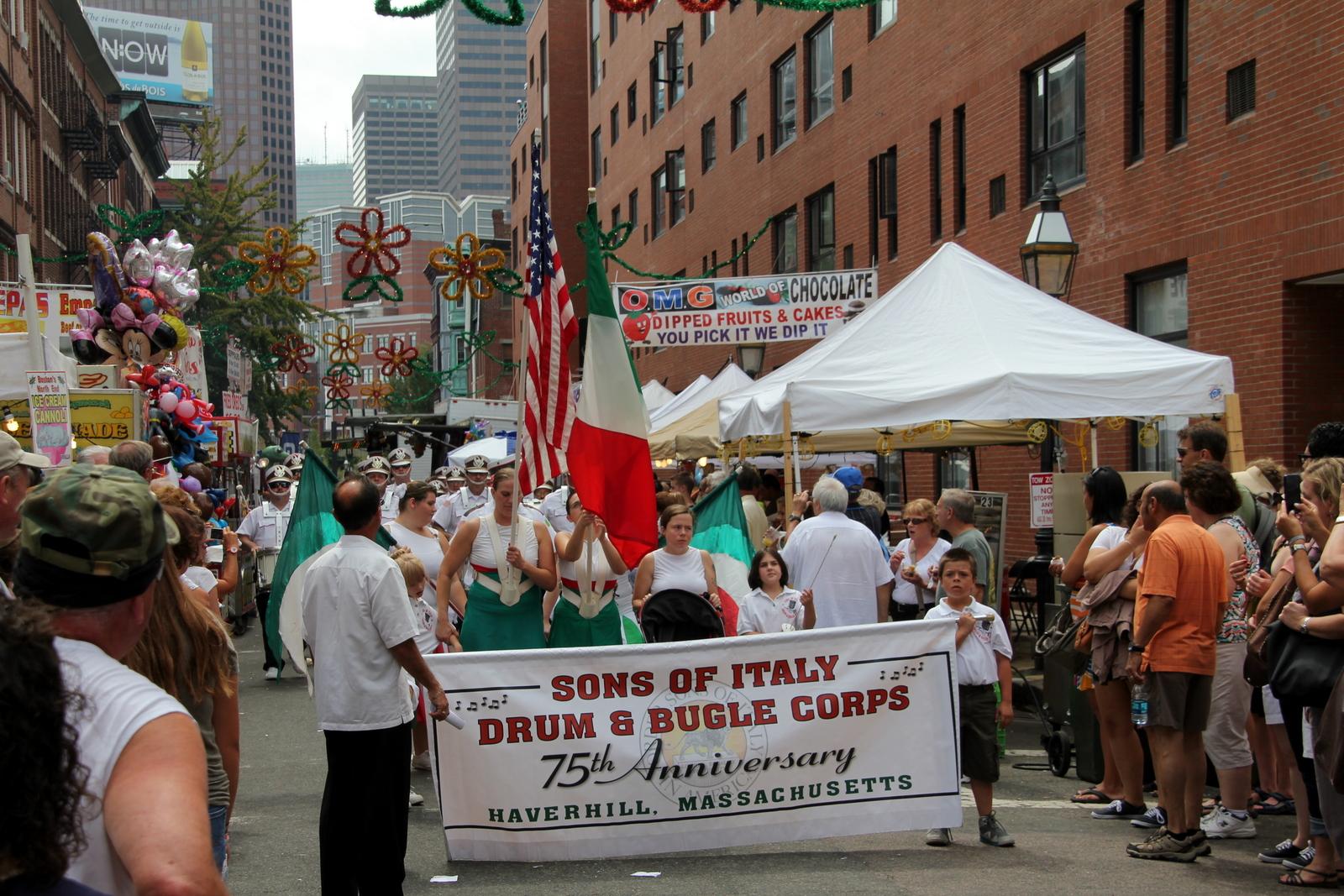
| Boston, MA | Mar 19 & nearby dates | St. Joseph Society of Riesi (North End) | Founded 1925; table blessing, street procession, North End Marching Band |
Sociological Significance: Trauma, Preservation, and Almsgiving
Beneath the culinary spectacle and the vivid parades, the modern execution of St. Joseph's Day reveals profound sociological dynamics about immigrant integration, trauma recovery, and cultural preservation in America.
The Evolution of the Vow. Historically, building a St. Joseph's Altar was a deeply private obligation rooted in sheer survival — a family that had survived tuberculosis, or welcomed a son home alive from the trenches, would endure significant financial sacrifice to honor their ex-voto promise. But as the Italian-American diaspora achieved upward socioeconomic mobility across the 20th century, the altar underwent a fascinating evolution. It transitioned from a private mechanism of survival into a highly public assertion of ethnic identity. The physical move of altars from crowded tenement living rooms to massive parish halls, country clubs, and powerful civic organizations marks the full institutionalization of Sicilian folk religion into a celebrated, pan-Italian-American cultural heritage.
Civic Trauma as Cultural Catalyst. A fascinating third-order effect is how mass civic trauma accelerates the revival of ancient traditions. Following Hurricane Katrina's devastation of New Orleans, anthropologists and cultural historians noted a massive surge in the construction and elaboration of St. Joseph's Altars throughout the recovering city. The catastrophic flooding generated a profound communal anxiety about the permanent loss of regional cultural rituals — an existential threat that subconsciously mirrored the medieval drought that originally birthed the tradition in Sicily. In response, the diaspora aggressively reinforced the altar tradition. Baking the bread and building the altars became an act of sheer cultural defiance: a tangible declaration that the city's Sicilian footprint would not be washed away by the floodwaters.
The Modern Economy of Almsgiving. The absolute, non-negotiable rule of the St. Joseph's Table is that it must yield zero financial gain for the host; it must remain an act of unadulterated charity. The modern American interpretation has seamlessly adapted this ancient ethos into a highly structured philanthropic engine. Leftover food is systematically packaged for local shelters and soup kitchens. Monetary donations from affluent visitors are directly funneled into vetted nonprofits. This modern adaptation allows the ancient vow to function with maximum efficiency within a complex capitalist society — transforming deep cultural devotion into a massive engine for tangible, measurable civic aid.
A Key Timeline: From Sicily to 2026
| Year | Event |
|---|---|
| c. 1300s | Sicily's catastrophic drought; the Sicilian people vow a feast to St. Joseph. The fava bean becomes the island's survival crop. |
| 1847 | Blessed Pope Pius IX formally declares St. Joseph Patron of the Universal Church (December 8); March 19 elevated to a Solemnity. |
| 1880–1920 | Great waves of Italian and Sicilian immigration to the United States; the Tavola di San Giuseppe takes deep root in New Orleans, New York, Chicago, and Boston. |
| 1925 | St. Joseph Society of Riesi founded in Boston's North End by immigrants from Caltanissetta, Sicily. |
| 1955 | Pope Pius XII institutes the Feast of St. Joseph the Worker (May 1), affirming the dignity of labor. |
| 1970 | The Italian-American St. Joseph Society of New Orleans founded by Judge Anthony Russo and Joseph Cardinia, establishing the French Quarter parade. |
| 2005 | Hurricane Katrina devastates New Orleans. The trauma sparks a massive surge in St. Joseph's Altar construction as an act of cultural defiance and reclamation. |
| 2026 | Italian-American communities from New Orleans to New York, Chicago to San Francisco, hold parades, galas, tables, novenas, and folk luncheons to honor the feast. |
A Feast That Feeds the Future
Ultimately, La Festa di San Giuseppe remains one of the most emotionally complex phenomena in the American cultural calendar. It is an entire holiday constructed around the ancestral memory of starvation, paradoxically celebrated through the medium of staggering culinary abundance. As the tuxedoed men march through the French Quarter, as the zeppole are feverishly consumed on Atwells Avenue, and as children knock on heavy wooden parish doors during the Tupa Tupa in Chicago — Italian Americans are engaged in a profound act of historical memory. Through the scent of toasted breadcrumbs, the sweetness of ricotta, and the humble hardiness of the lucky fava bean, the quiet legacy of St. Joseph endures loudly: a masterclass in how a diaspora honors its perilous past while continually, and generously, feeding its future.
Works Cited & Source Links
- 1.Was St. Patrick Italian? — The Italian Jewelry Company
- 2.Saint Joseph's Day Traditions — The Italian Jewelry Company
- 3.St. Joseph's Day — National Today
- 4.St. Joseph's Table — Vatican Year of St. Joseph
- 5.Fava Beans and St. Joseph Altars — Catholic Culture
- 6.St. Joseph's Feast — Order Sons and Daughters of Italy
- 7.Move Over St. Patrick, St. Joseph is Here! — Live in Italy Magazine
- 8.St. Joseph's Day Table — DiCamillo Bakery
- 9.St. Joseph's Day Altars — NewOrleans.com
- 10.History of Zeppole di San Giuseppe — Red Sauce America
- 11.Why Italians Eat Zeppole — Oggi Foods
- 12.Festa di San Giuseppe — Federal Hill Providence
- 13.Feast of San Giuseppe — Columbus Citizens Foundation, NYC
- 14.St. Joseph's Table 2026 — St. John Cantius Church, Chicago
- 15.St. Joseph Society of Riesi — Boston North End
- 16.St. Joseph's Day: Sicilian Tradition of Feasts, Faith & Family