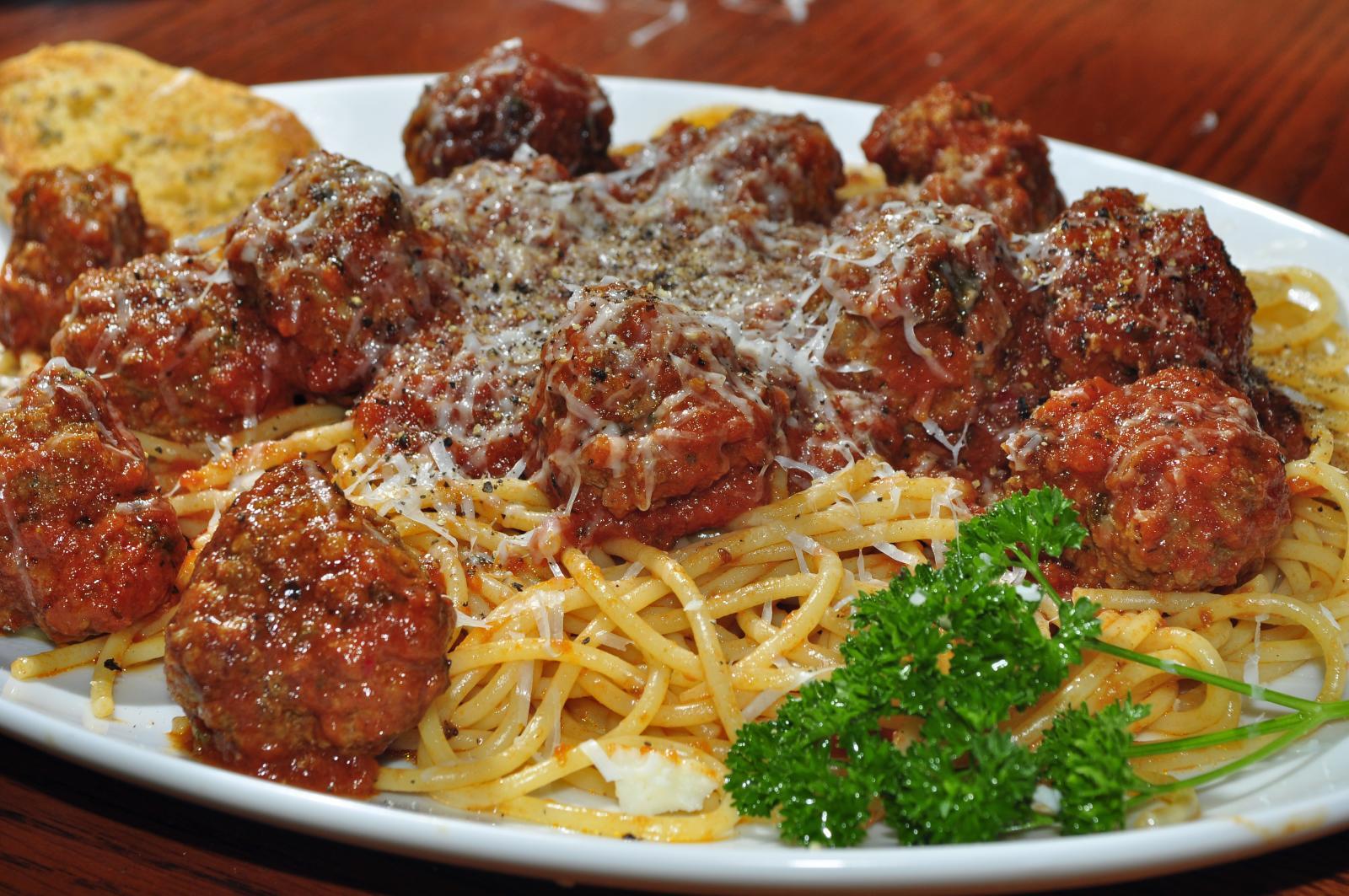
Italian American food encompasses the dishes and practices created by migrants from Italy, their descendants, and the people who have cooked, sold, and shared meals with them in the United States. It includes household meals and holiday tables, neighborhood bakeries and restaurants, gardens and groceries, and the agricultural and industrial work behind the ingredients. The history of Italian-American cuisine connects places in Italy with American communities through movement, trade, memory, and invention. 1 2
Spaghetti and meatballs, a slice of pizza, or a tray of baked pasta may provide a familiar starting point. The fuller story also includes ravioli in San Francisco, a New Jersey family's Thanksgiving lasagna, Louisiana altar breads, and the seafood businesses of Southern California. Those examples belong to particular people and places. Together, they show why a national cuisine can remain varied, local, and personal. 7 9 33 37
For an introduction to migration, meals, and memory, read our Italian American food history article. This guide emphasizes regional comparisons, the labor of making food, and the evidence connecting a dish with a wider history.
What this guide covers
How to read the history of Italian American cuisine
A cookbook records what its author chose to teach. A menu records what a business offered. An interview records what someone remembered. Each can answer useful questions, but they answer different ones. A recipe's appearance in print does not, by itself, identify its inventor or establish how often families ate it.
The regional sections therefore name people, communities, and source types. A family's recollection remains that family's experience; a current restaurant menu documents that restaurant's preparation. Where an origin story is disputed, the guide concentrates on the food's documented form and setting. That approach leaves room for new discoveries without making the whole account depend on a colorful anecdote.
The scholarly foundation includes inspected sections of Capatti and Montanari's Italian Cuisine, Cinotto's research on New York and California, and Zanoni's writing on migration and commerce. Full citations and reading scope appear below. 1 2 3 38
Roots in Italy: towns, regions, and exchange
The relationship between Italian and Italian American food begins with a diverse inheritance. Capatti and Montanari describe culinary identity as something formed through exchange among places and social groups. Cities and markets connected the foods of surrounding territories with distant consumers. A shared Italian identity could develop through those connections while local differences remained meaningful. 1
Even influential national cookbooks represented particular viewpoints. In their account of Pellegrino Artusi, the authors emphasize his familiarity with Tuscany and Romagna and the uneven geographical coverage of his collection. Its authority does not make it a complete survey of Italian household cooking. The distinction matters when we ask what migrants carried with them: a town, a household, a budget, and a period are more precise starting points than a single national menu. 1
Early English-language cookbooks show readers encountering a repertoire that extended beyond tomato sauce and long pasta. Antonia Isola's Simple Italian Cookery, published in 1912, includes Milanese minestrone and Tuscan polenta. Maria Gentile's 1919 The Italian Cook Book includes risotto alla Milanese and a Livornese cutlet preparation. These are examples from published collections, rather than a count of meals in immigrant homes. They nevertheless help restore rice, soups, vegetables, cornmeal, and varied meat preparations to the picture. 4 6
Julia Lovejoy Cuniberti's Practical Italian Recipes for American Kitchens makes adaptation visible in its title and instructions. Published in 1917, it addressed American homemakers in a wartime setting and offered ingredient substitutions. Its recipes include cappelletti associated with Romagna and Roman-style gnocchi. The book presented Italian cooking as something readers could learn and use in their own kitchens, with available ingredients and practical limits. 5
These books also remind us to keep regional names and geographical claims separate. A dish called “Milanese” in a cookbook tells us something about the author's classification. Establishing where a preparation began would require a different investigation. For family history, an equally productive question is often how a cook learned a particular version, what it was called at home, and what changed after a move.
Italian-American food in kitchens, markets, and businesses
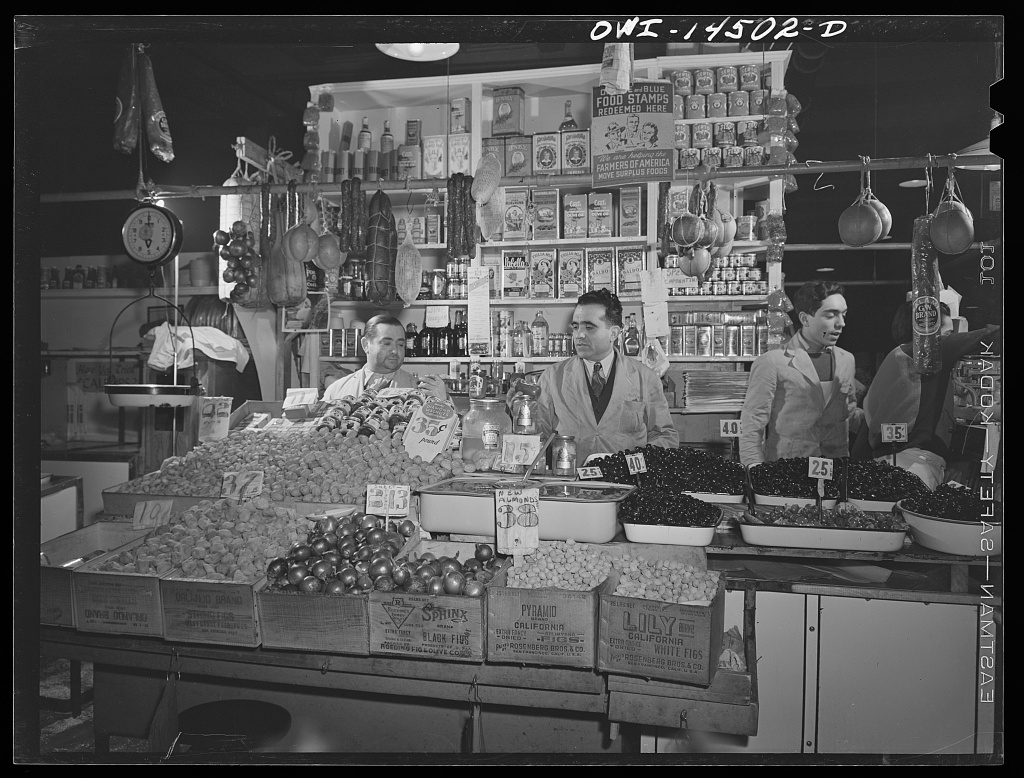
Migration changed the circumstances in which people cooked. Zanoni's comparative research on New York and Buenos Aires describes merchants connecting migrants with imported cheese, olive oil, canned tomatoes, pasta, rice, wine, and other foods. She also describes cooks experimenting with ingredients abroad, including meat, while maintaining recognizable connections to earlier meals. Trade and adaptation operated together. 2
That history complicates the familiar image of a recipe traveling intact in a trunk. Food could travel as an ingredient, a written instruction, a remembered taste, or a skill learned by watching someone else. Once in an American kitchen, it became part of a new arrangement of shops, income, equipment, working hours, and diners. The result could feel familiar to the cook while differing from what relatives ate elsewhere.
Cinotto's study of New York food memories places shopping within neighborhood life. In East Harlem, food commerce offered women opportunities for conversation and learning their surroundings. Some Jewish and Greek shopkeepers spoke their customers' Italian languages. The marketplace was therefore both a source of ingredients and a place where people negotiated relationships across differences. 3
Philadelphia provides a physical example of that connection between household and business. The Encyclopedia of Greater Philadelphia describes Ninth Street shops in adapted row houses, with commerce below and accommodation above. A business association organized in 1915 helped formalize the curb market. Food culture depended on premises, deliveries, regulation, and collective organization as well as the person behind the counter. 19
Households also produced food themselves. In his Rutgers oral history, Joseph De Luccia recalled his father's vegetable growing and preservation of tomatoes and peppers. This was food work carried out alongside paid employment, within a particular Paterson family's circumstances. It gives gardening and preserving their place in the history without suggesting that every urban family had the same space or resources. 7
Cookbooks can reveal another part of the process: the instructions intended to bridge kitchens. Cuniberti proposed substitutions for readers who lacked particular Italian ingredients. Isola named Deerfoot sausages in one polenta preparation. The instructions gave a reader concrete ways to approach Italian cooking with the products at hand. 4 5
Following a food through these settings changes the questions we ask. Who stocked the shop? Who carried purchases home? Who owned the oven, tended the garden, or supplied the restaurant? Who could afford the ingredients? A dish becomes easier to understand when its recipe is read alongside those practical relationships.
Italian American cooking at family meals and holidays
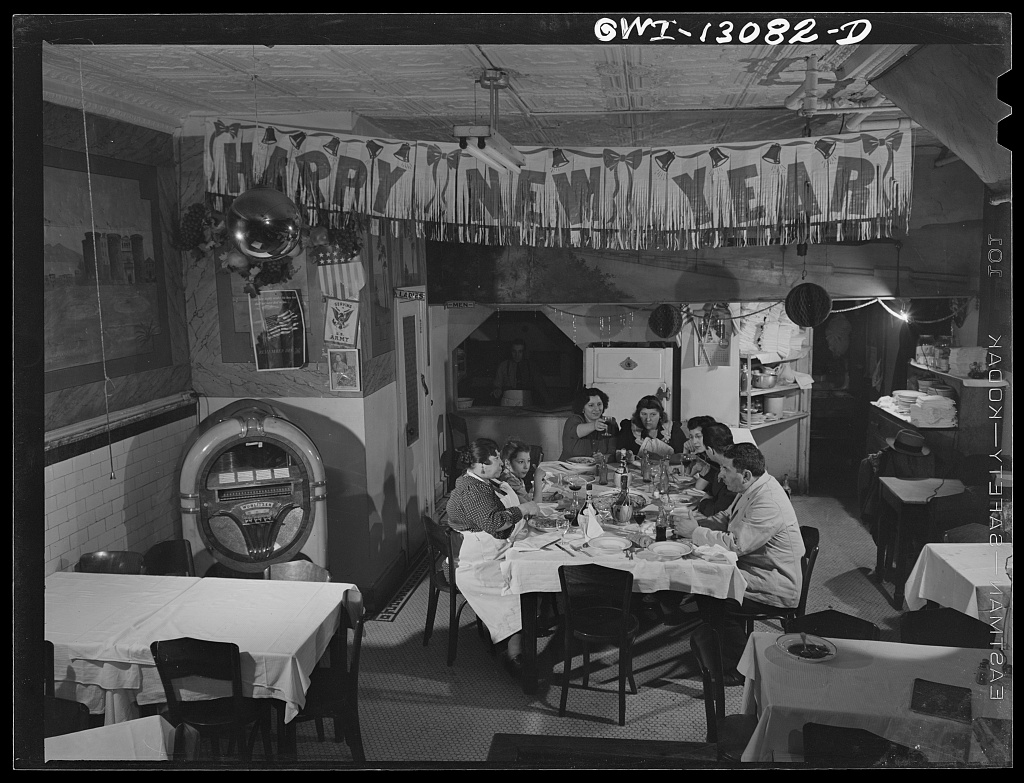
Family food traditions require people to keep making them. A remembered sauce depends on shopping and preparation; a holiday table may require several households to coordinate food, time, and travel. Recording that work makes family history more specific and gives credit to people who may be absent from restaurant histories.
De Luccia recalled Thanksgiving tables that combined turkey with platters of lasagna. Rosemary Agrista, another Rutgers interviewee, described Sunday dinner followed by visits among relatives in the South Plainfield area. After her grandparents died, relatives continued gathering at her uncle's home, around a large backyard tree. The setting changed while family members found another way to keep meeting. 7 8
Objects can preserve a different kind of evidence. The Heinz History Center holds a hand-cranked pasta machine associated with Rosina DeFlorio of Greensburg, Pennsylvania, made by C. Palmer Manufacturing. The machine connects a named woman's kitchen with a regional manufacturer and a later family's act of preservation. It does not tell us everything she cooked, but it gives future questions a concrete starting point. 11
Religious observances can make preparation communal. Folklorists documenting a St. Joseph celebration in Monroe, Louisiana, in 1994 described several days of work. Women prepared cookies and vegetables; men coordinated spaghetti sauce. The account records canned tomato paste and a jar of Prego in the sauce, and slightly sweetened breadcrumbs, locally called modega, representing a carpenter's sawdust. Familiar religious meanings coexisted with purchased ingredients and the choices of that particular group. 9
Knowledge could also pass beyond a single ancestry. In a Louisiana Folklife account based on a 2015 interview, Betty Schoettle recalled her father helping Sicilian neighbor Mary Greco with pignolata and later baking altar breads and cuccidati for St. Frances Xavier Cabrini Catholic Church. Learning took place through relationships among neighbors and helpers. 10
Christmas Eve offers another carefully bounded case. Anthropologist Michael Di Giovine's study of the Feast of the Seven Fishes begins with his own New Jersey family. He examines how preparation and eating helped maintain relationships and accommodate spouses and changing tastes. His explicit attention to the limits of the case is useful: one family's observance can illuminate a process without defining how every Italian American family celebrates. 48
Household cooking was only one part of women's food work. History San José's cannery exhibit describes Italian American women employed in the Santa Clara Valley industry, including women who became forewomen. Reading industrial work beside a family recipe expands the story: the same community could help produce food commercially and maintain food traditions at home. 12
These sources suggest a useful way to record a family meal. Ask who planned it, who bought or grew the ingredients, who did the repetitive work, and who cleaned up. Ask which tasks changed as people aged or took different jobs. A photograph of the finished table becomes more informative when those activities and names remain attached to it.
Regional Italian American food traditions across the United States
The following comparison groups related places for navigation. The groups are not fixed culinary borders, and the examples are not complete inventories. Some sources document household practice; others describe businesses, neighborhoods, or industrial work. That unevenness is part of the surviving record and should remain visible.
| Regional group | Examples explored here | What the evidence helps explain |
|---|---|---|
| New York and New Jersey | Tenement meals, slice shops, Thanksgiving lasagna | Neighbor relationships, household change, and continuing participation |
| Connecticut and New Haven | Apizza and white clam pizza | Business families and local food vocabulary |
| Boston and wider New England | North End businesses, Federal Hill, Maine ham Italian | Neighborhood change, affordability, and local identity |
| Philadelphia and Pennsylvania | Ninth Street market and tomato pie | Markets, living space, and neighboring variations |
| Chicago and Illinois | Deep-dish, tavern pizza, Italian beef | Several local food forms and family businesses |
| St. Louis and Missouri | The Hill and toasted ravioli | Industrial settlement and commercial food traditions |
| Industrial Great Lakes and western Pennsylvania | Cleveland, Greensburg, Detroit, Buffalo | Distinct communities, tools, industries, and contributors |
| New Orleans and the Gulf region | Muffuletta, altars, Tangipahoa food production | Sicilian connections, communal work, and rural households |
| San Francisco and Northern California | Restaurant menus, seafood, home bread and baccalà | Public dining and household memory |
| Southern California | Los Angeles agriculture and San Diego seafood businesses | Food production, settlement, and disruption |
| California agriculture | Canneries and wine company towns | Paid labor, family networks, and unequal opportunities |
| Phoenix and the Southwest | A family's later deli migration | Movement within the United States and limits of present evidence |
New York and New Jersey
New York's story reaches from a neighborhood shop to a shared meal across a tenement hallway. The Tenement Museum recounts how Irving Cohen, a Jewish boy at 97 Orchard Street, developed a close relationship with the Sicilian Catholic Baldizzi family. His recollection of enjoying their food is evidence of one friendship crossing household and religious boundaries. 13
Cinotto's East Harlem research also records food at the Mount Carmel feast, including sausage and peppers, pizza, zeppole, and torrone. A feast connected eating with a public occasion and a neighborhood's social life. It represents a different setting from an everyday family dinner. 3
Across the Hudson, the family accounts discussed above show how gardens, holiday meals, and Sunday visits connected food with kinship. Read beside the tenement friendship and the public feast, they offer several ways to understand this region's Italian American food through the occasions on which people ate together.
Connecticut and New Haven: apizza
New Haven's apizza tradition illustrates the importance of local vocabulary and business relationships. The New Haven Museum's “Pronounced Ah-Beetz” exhibition brings together photographs, objects, and oral histories concerning pizzeria families and establishments including Pepe's, Sally's, and Modern. The museum treats the food as part of a city's social history. 14
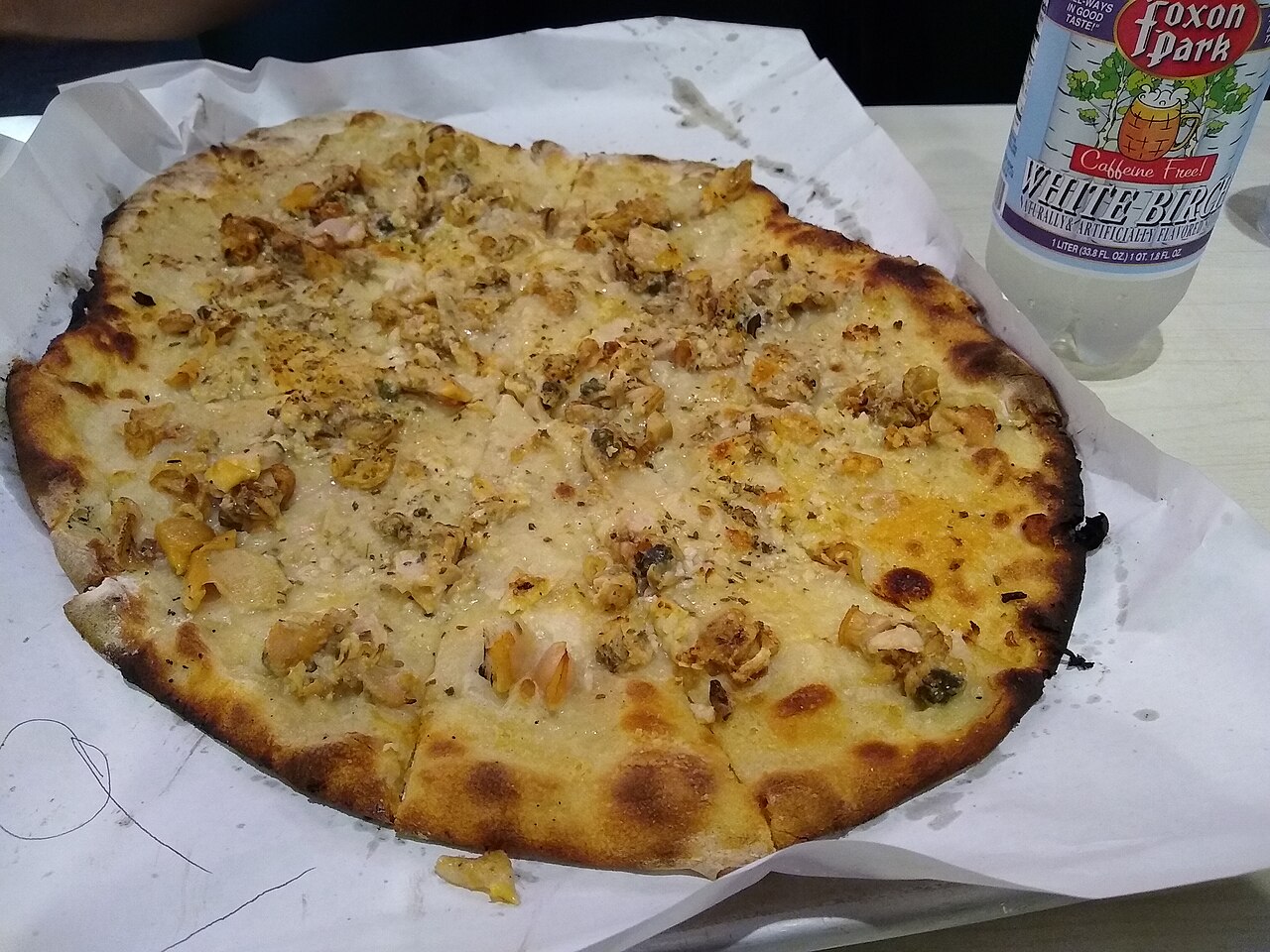
A current menu makes one local preparation tangible. Pepe's white clam pizza lists clams, garlic, oregano, Pecorino Romano, and olive oil. Seafood, garlic, and cheese give this particular pie an identity a reader can recognize and compare with another establishment's version. 15
The comparison is most informative when it preserves both levels: the citywide tradition documented by the museum and the identifiable version sold by a particular business. A local name can contain many family stories and variations.
Boston and wider New England
Boston's North End shows how food businesses can maintain connections after residents move. A Boston University account of James Pasto's teaching and neighborhood research distinguishes the area's Italian commercial identity from the ancestry of all its residents. Restaurants, bakeries, and festivals can remain gathering places for people who live elsewhere. 16
New England's story also includes affordability and conflict. Historian Russell DeSimone's account of Providence's 1914 macaroni unrest connects food prices, merchants, protest, and policing in Federal Hill. The cost of a familiar staple could become a public dispute, drawing residents, shopkeepers, and authorities into the same neighborhood history. 17
Farther north, a Portland ham Italian T-shirt in the Maine Historical Society's collection documents another kind of local attachment. Hugh McCormick Design created its logo, and Arm Factory printed the shirt in Portland. Preserved as an object from 2018, it shows a sandwich becoming a wearable expression of local identity. 18
Philadelphia and Pennsylvania: the Italian Market and tomato pie
Philadelphia's Italian Market joins food retail with the history of homes and streets. Its development included family businesses, collective organization, and changing groups of merchants. The Encyclopedia of Greater Philadelphia describes later Asian and Mexican participation as part of the market's history. The neighborhood's Italian associations coexist with a commercial landscape shaped by additional communities. 19
The region also rewards careful attention to names. Philadelphia bakery tomato pie is generally a rectangular, spongy bread with tomato topping and a light addition of grated cheese. The same regional history distinguishes a typically circular and cheesier Trenton tomato pie across the Delaware. Calling both “tomato pie” does not make them identical. 20
For a reader tracing a family preparation, the useful details are the bakery or household, the shape and texture, the ingredients, and the name people used. A regional label provides a starting point for that comparison; it cannot replace those observations.
Chicago and Illinois: pizza and Italian beef
Chicago contains several well-established ways of thinking about pizza. Deep-dish is one, but it should share the picture with thin, square-cut tavern pizza. The Chicago History Museum's discussion of deep-dish and Home Run Inn's account of its own thin pizza document distinct forms within the same metropolitan food culture. 21 22
Home Run Inn's family history credits Mary Grittani and Nick Perrino in the development of its pizza. Keeping both names visible gives recipe work and collaboration a place in the account of the business. A company history becomes more informative when it identifies the people who helped make its food distinctive. 22
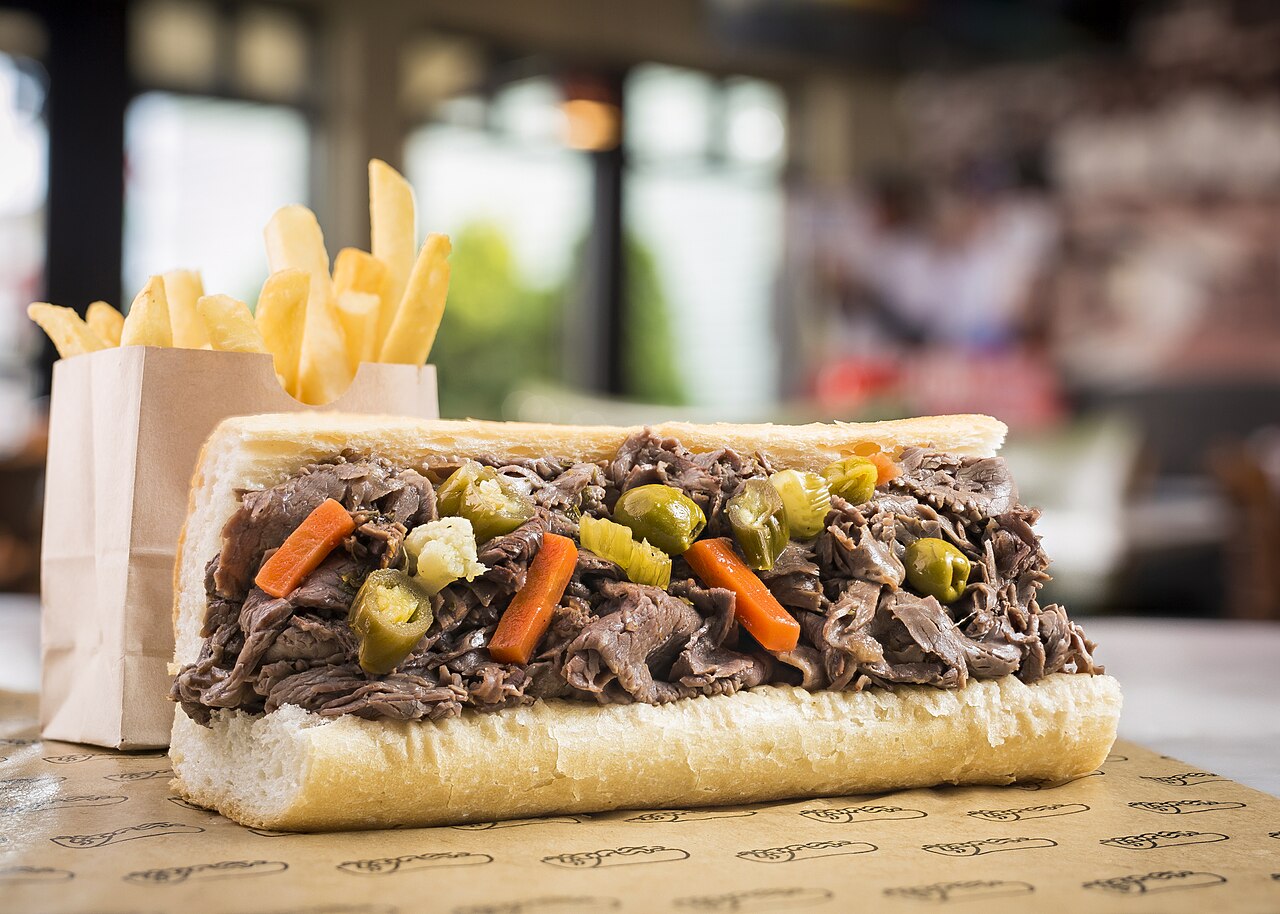
Italian beef adds another local form: thin slices of roasted beef on bread, with the amount of roasting gravy and the choice of peppers becoming part of an order. Portillo's offers sweet peppers or hot giardiniera and explains its dry and dipped options. In a culinary-history lecture abstract, Anthony Buccini interprets the sandwich in relation to festive meat preparation and commercial sale. The preparation and that attributed interpretation give two useful entry points into its Chicago setting. 23 50
St. Louis and Missouri
The Hill's food identity belongs within a history of work and settlement. The City of St. Louis describes Italian migration into a district associated with clay mining and brickmaking, alongside German, Irish, and African American residents. Its account traces a transition from male boardinghouse residents to family settlement and describes the later effects of highway construction. 24
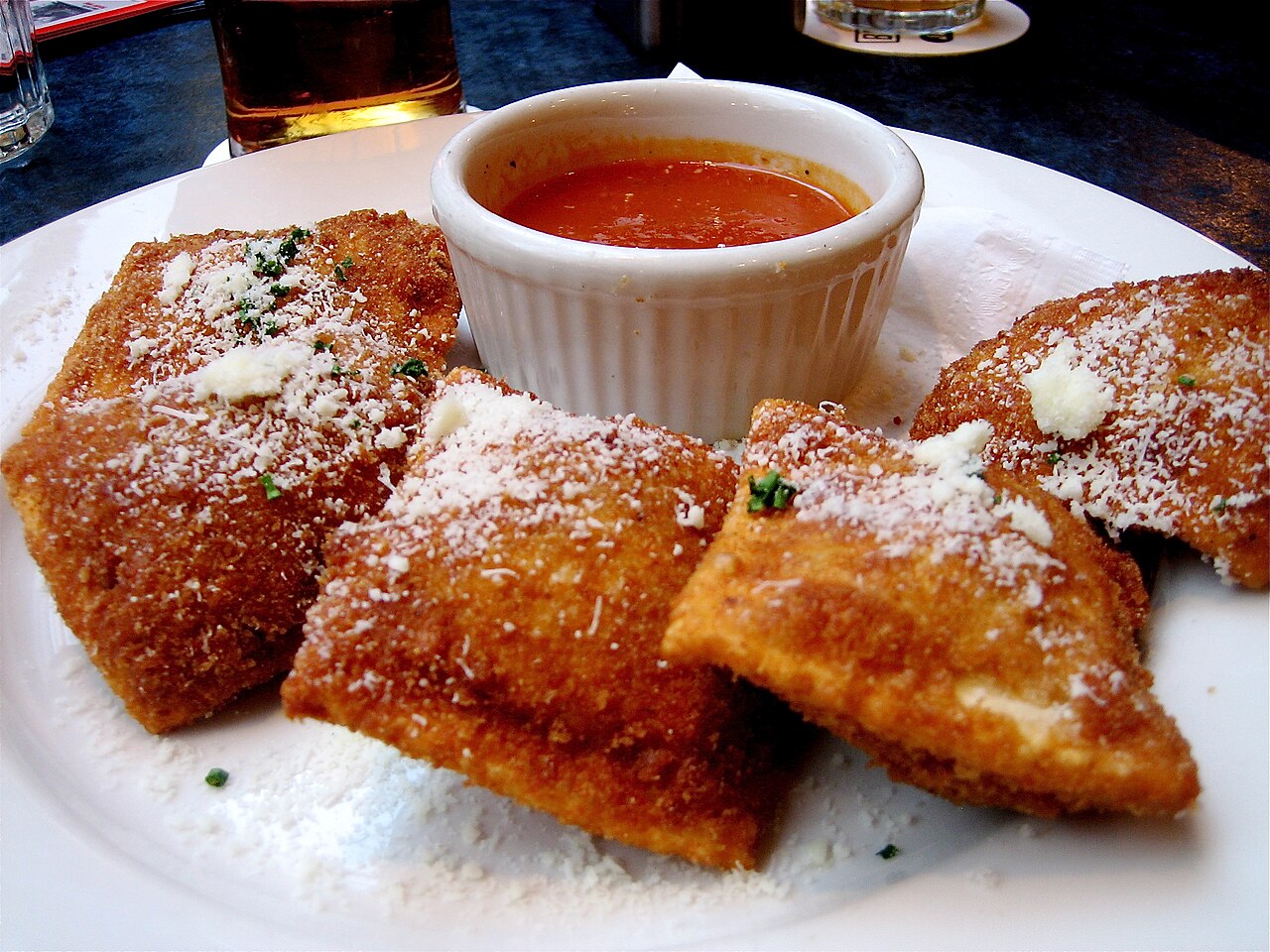
Toasted ravioli provides a recognizable food example: filled pasta is breaded and fried, with meat and cheese versions represented in commercial practice. Louisa dates its production to the 1960s and describes later distribution through national restaurant chains and grocery stores. The company's account connects a local preparation with manufacturing and wider sale. 25
Read beside the Hill's settlement history, the product's movement raises useful questions about scale. A food can be made for a neighborhood meal, served in a restaurant, and produced for customers elsewhere. Each setting leaves different records of the work involved.
Cleveland, western Pennsylvania, Detroit, and Buffalo
Industrial communities deserve individual attention. The Encyclopedia of Cleveland History connects Big Italy with the fruit trade and describes tailoring, monument work, and gardening in Little Italy. Pasta manufacture also belongs in its account of local enterprise. Food work developed within communities with several occupations, churches, and hometown associations. 26
In western Pennsylvania, Rosina DeFlorio's grandson, chef Rizzi DeFabo, donated her pasta machine to the Heinz History Center. Its manufacturer was founded in 1946 by Carmen Palmieri, an immigrant from Lettopalena; the museum dates the machine itself to around the 1950s. Owner, maker, and donor connect an ordinary kitchen tool with several lives. 11
Detroit-style pizza is distinguishable by its pan-baked form and cheese-crisped corners. Buddy's describes the construction and layering of its own pizza, drawing attention to how dough, cheese, and sauce behave together in the pan. The crisp edges are a useful point of comparison with the other pizza forms in this guide. 27
Buffalo adds several contributors and preparations to the comparison. The Buffalo History Museum describes the Bellissimo family's Anchor Bar-associated wings and John Young's whole, breaded wings with a sauce his family and local coverage render as ‘mambo’ or ‘mumbo’ sauce, alongside earlier wing dishes. Spectrum's interview with Young's daughter identifies him as a Black entrepreneur and records her efforts to preserve his work. Naming the people and distinguishing their preparations keeps those contributions visible. 28 51
These communities are grouped here because industrial work and urban settlement provide useful points of comparison. They do not constitute one regional menu, and a food prominent in one city should not be assigned automatically to the others.
New Orleans and the Gulf region: muffuletta and St. Joseph altars
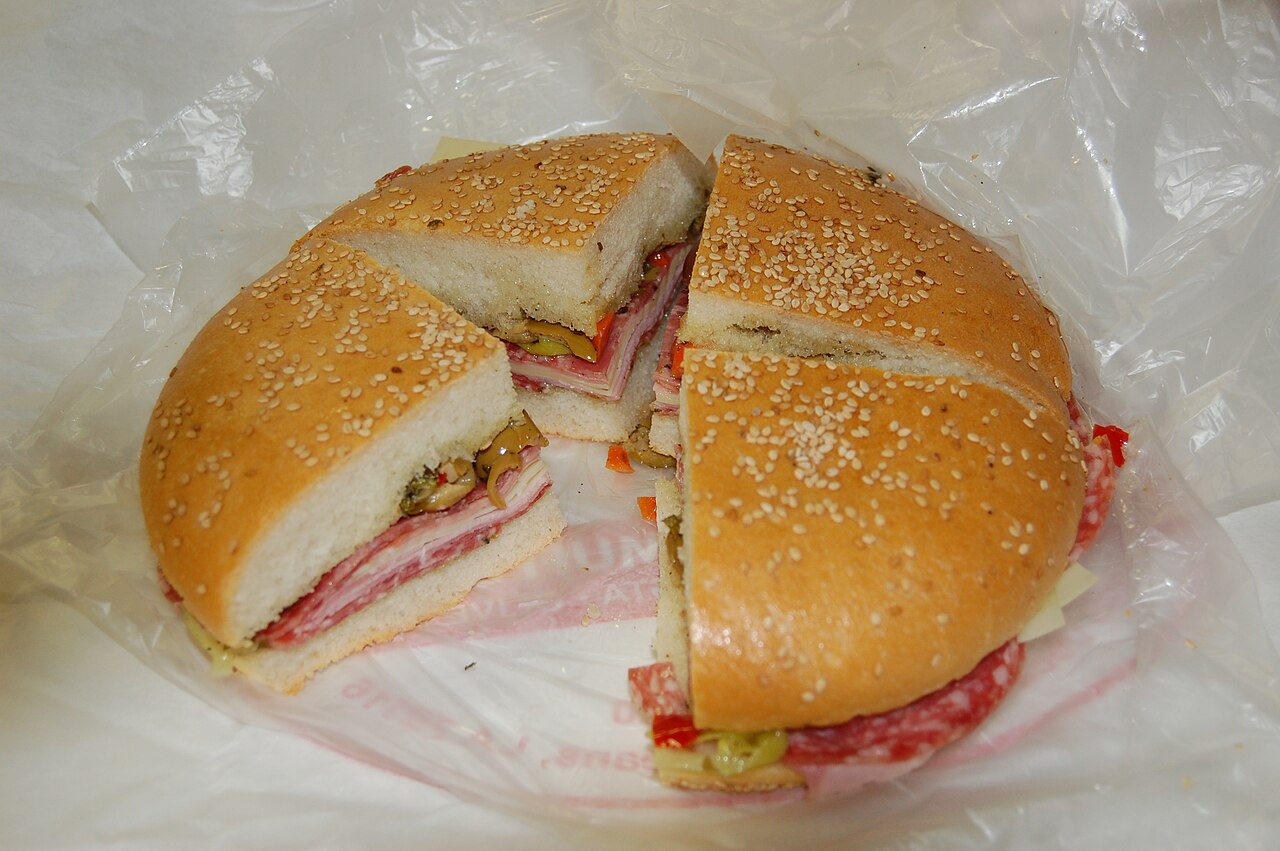
New Orleans's muffuletta connects a recognizable sandwich with the city's Sicilian-American food culture. Central Grocery's current version combines a round sesame loaf, cold cuts, cheese, and olive salad. Dana Logsdon's historical discussion in Gravy distinguishes the bread's history from the sandwich's and describes the difficulty of establishing early documentation. That distinction is more useful than treating every part of the food as one invention. 29 30
Louisiana foodways also reach into parishes, gardens, and farms. Laura Westbrook's Independence research records cooks, stuffed vegetables, breads, pastries, and home winemaking. Harry Becnel's Tangipahoa account, based on interviews, connects strawberry farming and household work with family memories, including outdoor bread baking. These sources extend the region's story beyond New Orleans restaurants. 31 32
St. Joseph altars bring another set of relationships into view. The Monroe and other Louisiana accounts document preparation, sharing, religious meaning, and the teaching of skills. They let us describe how particular observances worked, while treating devotional origin stories as traditions told by participants. 9 10
San Francisco and Northern California
San Francisco's Italian restaurant repertoire was already varied in a 1914 account. Clarence Edwords's Bohemian San Francisco describes meals combining foods such as salami, anchovies, fish, spaghetti or ravioli, veal, dessert, and wine. It is a period observer's account, useful for what he recorded eating; his ethnic stereotypes do not supply an explanation of anyone's cooking ability. 33
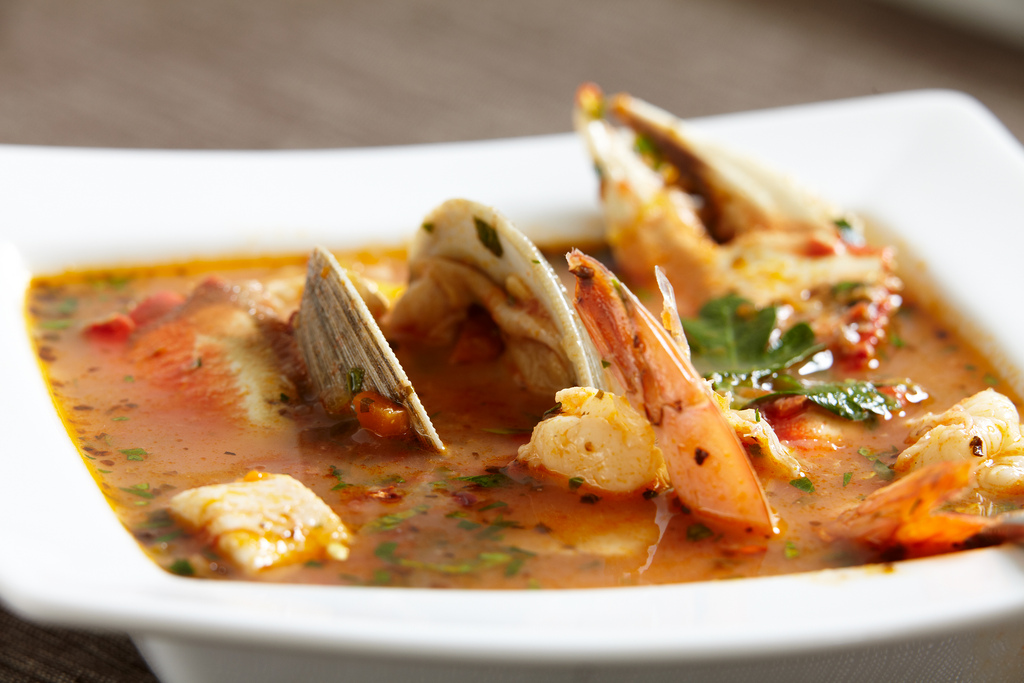
Cioppino belongs in the region's seafood story. KQED's discussion with food historian Erica Peters examines the stew's history and challenges the popular “chip in” explanation of its name. A precise earliest recipe date requires the underlying historical documents, so this guide does not assign an invention year. 34
Household evidence widens the picture. In 1991 fieldnotes, folklorist Russell Frank recorded Murphy Sabatino's memories of San Jose family life, including backyard bread baking and Christmas baccalà. The written account connects food with gardens, agricultural materials, and a family's work history. It remains a recollection recorded by a fieldworker, rather than a survey of Northern California households. 35
Southern California
Los Angeles's Italian food history includes agriculture and viticulture as well as restaurants. The Italian American Museum of Los Angeles places early Italian settlement in a city shared with other communities around the Plaza and describes agricultural activity as part of that history. The context helps us look for growers, sellers, and workers alongside prominent dining rooms. 36
San Diego's heritage record connects Italian fishing communities with seafood processing, marketing, and restaurants. The Advisory Council on Historic Preservation also describes disruption associated with wartime restrictions and freeway construction. Food businesses were part of a broader maritime economy and a neighborhood whose circumstances changed. 37
The useful comparison here is between the activities that sustained food culture: growing, fishing, processing, selling, and cooking. “Southern California” gathers those related questions into one section, but it should not make Los Angeles, San Diego, or their different communities interchangeable.
California agriculture and wine
California's food history also requires attention to the conditions of production. History San José's cannery exhibit describes women's paid work and advancement within the industry, as well as discrimination affecting later Mexican-American workers. Its evidence places the food on a table in relation to workers who processed and packed it. 12
In Soft Soil, Black Grapes, Cinotto examines how California wine enterprises drew on family and hometown networks. His account of Asti and Guasti also describes unequal access to employment benefits and housing. Italian workers and Japanese or Mexican seasonal workers did not occupy the same position within those arrangements. 38
Community meals operated within that working environment. Cinotto describes groceries, a bakery, celebrations, and women's cooking in company-town life. The gatherings could strengthen relationships while also serving employers' efforts to present an image of harmony. The histories of food, business, and labor therefore need to be read together. 38
This perspective preserves both achievement and circumstance. A successful food enterprise is easier to understand when its workers, recruitment practices, technologies, and inequalities are part of the explanation.
Phoenix and the Southwest
Later movement within the United States offers another route into the story. In its own family history, DeFalco's traces a journey through Michigan before a Phoenix deli opened in 1972 and the business later moved to Scottsdale. It is a useful account of food knowledge and business activity moving between American regions. 39
This evidence supports a specific family-business example. It does not, on its own, establish a distinct historical “Southwestern Italian cuisine.” The next questions are local ones: which families and workers sustained businesses, how their menus changed, and how customers and neighborhood relationships shaped their work. Future oral histories and records can deepen that section without requiring us to name a regional tradition before the evidence supports it.
A reference to dishes and food traditions
This reference to Italian American cuisine brings together household dishes, regional business preparations, holiday practices, and foods documented in early English-language cookbooks. Inclusion does not mean that a food originated in the United States or belongs exclusively to Italian Americans. Each evidence paragraph identifies the particular version or setting used here. Linked recipes and records provide further detail.
Spaghetti and meatballs
Long pasta served with tomato sauce and meatballs. Lidia Bastianich's published version combines beef, pork, and veal in the meatballs and offers cheese at the table. The meat mixture is a useful detail when comparing family versions.
A contemporary preparation from Lidia's Italy in America. 47
Baked ziti
Tube-shaped pasta is combined with tomato sauce, ricotta, and melting cheeses, then baked. Bastianich's version includes mozzarella and provola. The filling, sauce, and cheeses bring several textures into a dish that can be portioned at the table.
Bastianich's published recipe. 40
Italian American lasagna
Layers of pasta with a substantial filling and sauce. Bastianich's published version uses ricotta, mozzarella, and meat sauce. The De Luccia interview separately places lasagna on that family's Thanksgiving table.
Recipe evidence and a bounded holiday recollection. 41 7
Manicotti
A filled preparation that can use pasta or crêpes around ricotta-based filling, finished with sauce and cheese. The wrapper is worth recording when comparing family versions, since the same name can cover different techniques.
Bastianich's published manicotti preparations. 42
Stuffed shells
Large pasta shells hold a cheese filling and are baked with tomato sauce. Bastianich's documented version includes peas and scallions, illustrating why an ingredient list should accompany a familiar dish name.
A specific published recipe. 43
Chicken Parmigiana
Chicken is breaded and combined with tomato sauce and cheese in Bastianich's published preparation. The dish brings a crisp coating together with sauce and melted cheese; the cut of chicken and assembly help distinguish a particular cook's version.
Bastianich's published recipe. 45
Ravioli
Filled pasta appears in different settings: Cuniberti's 1917 collection includes ravioli alla Genovese, and Edwords recorded ravioli in San Francisco restaurant meals. The filling, sauce, and occasion help distinguish individual examples.
Early cookbook and period restaurant evidence. 5 33
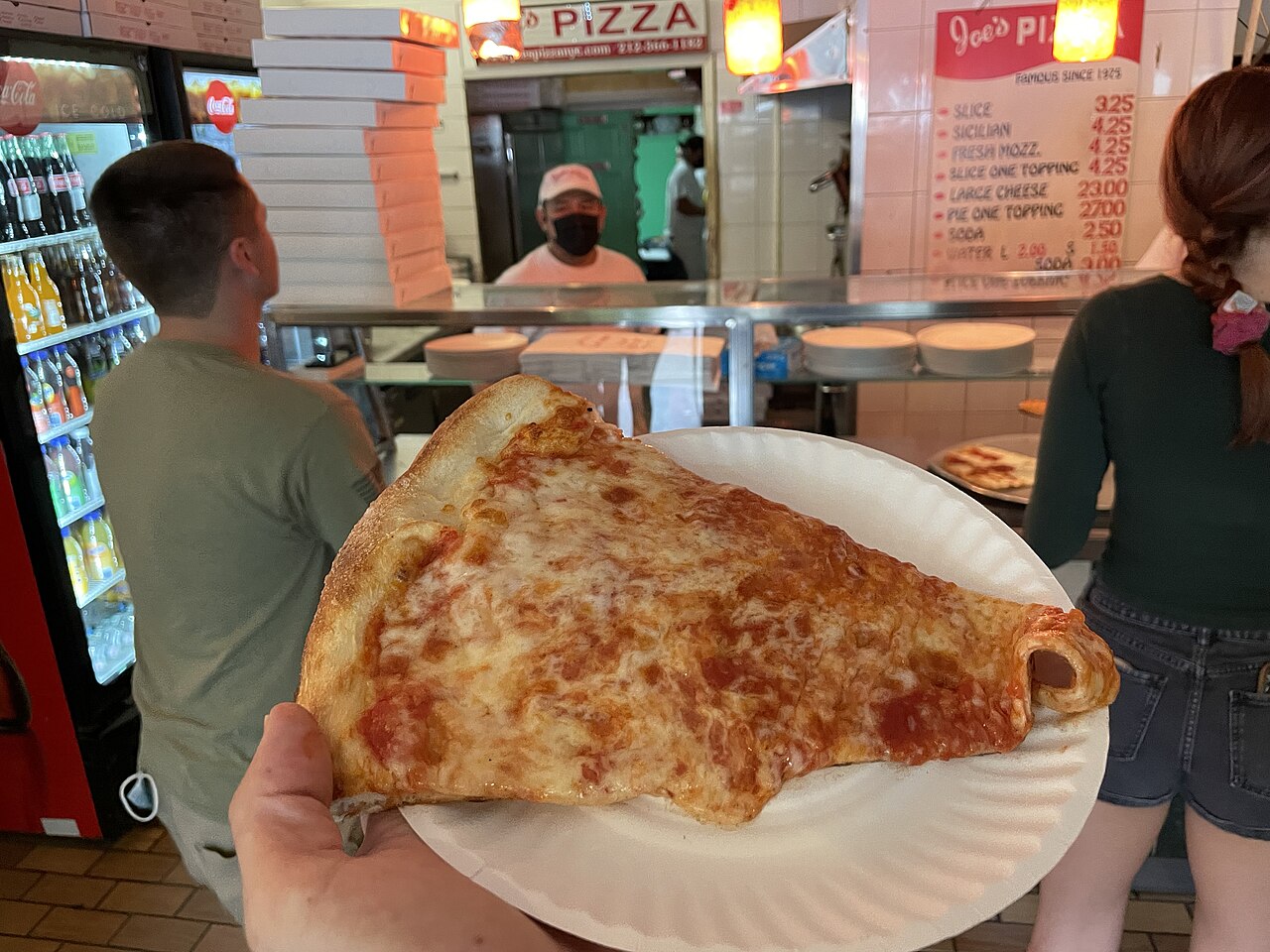
New York pizza by the slice
A serving form connected with neighborhood shops and working kitchens. In the Tenement Museum interview, Scarr Pimentel recalls slice-shop experiences and learning pizza work, placing the food within an individual career.
Contemporary practitioner testimony. 13
New Haven apizza
New Haven pizza with the crust, crunch, and char emphasized by the city's museum. Its exhibition connects the food with establishments including Pepe's, Sally's, and Modern through photographs, objects, and oral histories about pizzeria families.
New Haven Museum's historical exhibition. 14
White clam pizza
Pepe's version combines clams, garlic, oregano, Pecorino Romano, and olive oil. The seafood, cheese, and seasonings distinguish this identifiable preparation within the wider New Haven pizza tradition.
Pepe's official menu. 15
Philadelphia tomato pie
Usually a rectangular bakery preparation with a spongy bread base, tomato topping, and light grated cheese. Texture, shape, and the bakery's own method are useful details when identifying a particular version.
Regional historical description. 20
Trenton tomato pie
The regional history distinguishes a generally circular, cheesier form from Philadelphia bakery tomato pie. The shared name invites comparison, while the different construction shows why neighboring food terms should be examined closely.
The same comparative regional source. 20
Chicago deep-dish pizza
A deep-pan pizza with a substantial, pastry-like crust and generous cheese in the Chicago History Museum's description. The crust and depth of the finished pie provide a practical starting point for comparison with the city's thinner styles.
Chicago History Museum's discussion. 21
Chicago tavern pizza
Thin, crisp pizza cut into squares in Home Run Inn's account. The company credits Mary Grittani and Nick Perrino in its family history, giving the preparation a documented collaborative setting.
A business's account of its own pizza. 22
Detroit-style pizza
Pizza baked in a pan, with cheese that crisps at the corners. Buddy's description emphasizes its layered construction. The relationship between the pan, dough, and cheese gives the finished pizza a distinctive edge and texture.
Buddy's description of its own pizza. 27
Italian beef
Thinly sliced roasted beef is served on French bread with roasting gravy. Portillo's offers sweet peppers or hot giardiniera, and dry or dipped serving options. Those choices change the heat, moisture, and texture of the assembled sandwich.
A named contemporary business preparation. 50
Toasted ravioli
Filled ravioli are coated with breadcrumbs and fried. Louisa's commercial range includes meat and cheese versions. The coating and frying distinguish this St. Louis-associated preparation from ravioli served directly with sauce after boiling.
Louisa's account of its pasta products. 25
Buffalo wings
The Anchor Bar tradition combines cut, fried wings with hot sauce, celery, and blue cheese dressing. John Young's distinct preparation uses whole, breaded wings and mumbo sauce. The museum discusses both in its account of the city's wing history.
Buffalo History Museum. 28
Muffuletta
Central Grocery's sandwich brings cold cuts, cheese, and olive salad together inside a round sesame loaf. The bread and olive salad are useful identifying features when comparing the sandwich with other Italian American deli preparations.
Central Grocery's description of its sandwich. 29
Cioppino
A seafood stew associated with San Francisco, combining a tomato-based broth with varied fish and shellfish. KQED's account describes a mixture that can include crab, mussels, shrimp, calamari, and fish, making the seafood assortment central to a particular version.
KQED's reported account and historian interview. 34
Polenta
A cornmeal preparation represented in Isola's 1912 cookbook by Tuscan and chopped-sausage versions. One recipe specifically names Deerfoot sausages. The collection shows cornmeal used as a substantial part of the repertoire offered to English-language readers.
Early cookbook, pp. 23–24. 4
Risotto alla Milanese
Gentile's 1919 recipe cooks rice with successive additions of hot broth or water, then finishes it with butter and Parmesan. Saffron is optional in this printed version. Its instructions make the management of liquid central to the preparation.
Recipe 22, p. 22. 6
Minestrone
Isola's Milanese minestrone combines a substantial broth with ingredients including rice, beans, vegetables, and pork or a ham bone. It is one documented version of a soup whose ingredients deserve careful description.
Simple Italian Cookery, p. 5. 4
Roman-style gnocchi
Cuniberti's version uses farina or cornmeal cooked with milk, or milk and water, then enriched with egg, butter, and grated cheese. The mixture is cooled, cut into squares or diamonds, and baked with butter and cheese.
Practical Italian Recipes, p. 19. 5
Christmas baccalà
Salt cod belongs to the Christmas foods Murphy Sabatino recalled from family life in San Jose. Recording the family's name for the food and its place in the holiday meal connects an ingredient with a particular household calendar.
Russell Frank's written interview account. 35
St. Joseph altar breads
In the Monroe account, breads carried symbolic shapes and were shared with visitors. Their significance involved preparation, religious observance, display, and giving, rather than the finished loaf alone.
Documented parish celebration in 1994. 9
Fig pastries and cuccidati
Louisiana altar accounts describe fig pastries and the transmission of preparation skills among relatives and helpers. Recording local names, fillings, and shaping methods preserves details that a general “Italian cookie” label can lose.
Interview-based folklife documentation. 10
Stuffed artichokes
Artichokes appear among the prepared foods documented in Louisiana community accounts. The particular filling and occasion should accompany the dish name when a family version is recorded or compared with another.
Independence foodways inventory. 31
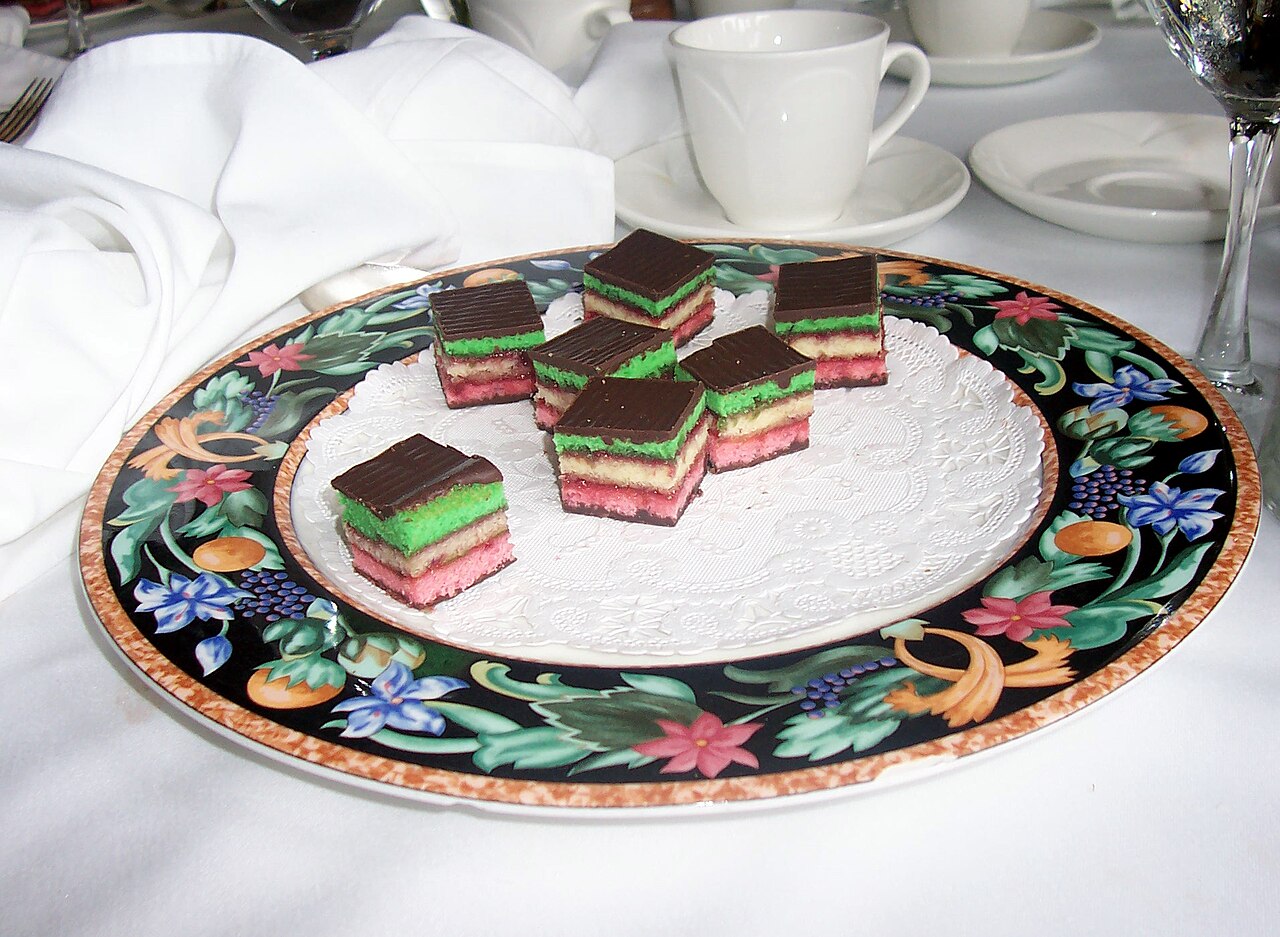
Rainbow cookies
Almond-based cake layers are assembled with jam and chocolate in Bastianich's Lidia's Italy in America. The layers give the small portions their striped appearance, while cake, fruit filling, and chocolate supply the preparation's contrasting textures.
Bastianich's published recipe. 44
Maine ham Italian
Amato's menu describes its bread filled with ham, cheese, onions, pickles, tomatoes, green peppers, and Greek olives, dressed with oil, salt, and pepper. The vegetable assortment is an identifying feature of this particular sandwich.
Official menu, printed March 2025. 49
Home bread baking
Sabatino recalled a family backyard oven and his mother's bread baking in San Jose. Such an account connects a staple food with fuel, equipment, repeated work, and remembered household routines.
A geographically bounded family recollection. 35
Christmas Eve seafood feast
In Di Giovine's study of his New Jersey family, preparing and eating the Feast of the Seven Fishes helps maintain relationships while accommodating new participants and tastes. The work around the meal is part of the tradition being transmitted.
A family-based anthropological study. 48
How Italian American food became a wider American repertoire
The movement from a household or neighborhood into wider American life took several forms. A neighbor could develop a taste for another family's meal. A cook could learn in a restaurant kitchen. A manufacturer could supply a new market, and a cookbook could make a preparation available to readers far from the community with which it was associated. These are different processes, so they require different kinds of evidence.
The Tenement Museum's interview with Scarr Pimentel brings one process into focus. He discusses Dominican family influences and learning pizza work in New York kitchens. His account shows a cuisine associated with Italian migration continuing through a practitioner with another family background. Participation includes learning, working, and making decisions about food. 13
Printed media helped frame what readers understood as Italian food. In a working paper on American popular magazines from 1950 to 2000, Cinotto identifies a shift from emphasis on qualities such as convenience and price toward more detailed attention to regional origins and authenticity after the 1960s. His sources document how food was presented, rather than proving that readers cooked the recipes or followed the recommendations. 46
That distinction helps explain why reputation and practice should be studied together. A magazine may praise a regional ingredient while a family continues making a different preparation learned decades earlier. A restaurant can emphasize a particular place in Italy while its staff bring experience from several communities. The question for a historian is how those claims, skills, and choices came together in a specific setting.
Cinotto also observes that later magazine narratives often gave relatively little attention to food-production labor and class relationships. Reading those representations beside cannery history, shop records, and kitchen objects brings the people doing the work back into the discussion. The attractive finished dish is one part of a larger sequence of activity. 46
The direction of influence was not always toward the United States. Zanoni describes returning migrants carrying culinary experiences and expectations back to Italy. A history that follows those journeys can account for repeated movement and change, rather than assuming that migration ended with a single arrival. 2
Published recipes also offer a practical way to compare versions without ranking whole communities. A manicotti recipe can specify a crêpe wrapper; another can specify pasta. A lasagna can document a particular combination of sauce and cheeses. Those details let a reader ask what a cook chose and how the preparation works. They are more informative than treating a familiar name as a guarantee that every version must match. 41 42
For this reason, “authenticity” becomes most useful when attached to a clear question. Authentic to which household, restaurant, place, or period? A family's account can explain fidelity to a remembered meal. An early cookbook can document the instructions available to its readers. A restaurant's records can trace changes in its own menu. None of those tasks requires one example to govern everyone else's food.
The continuing history of Italian-American food lies in those identifiable choices. Preserving them means crediting the people who make them and retaining enough detail for another generation to understand the context. The national story becomes richer as the local stories become more precise.
Preserve the story behind a family dish
Choose one dish and begin with one person who knows it well. Ask when they first remember eating it, who usually prepared it, and how they learned to make it. Keep the name they use, including a family or dialect pronunciation. A later standardized spelling can sit beside that name without replacing it.
Record the occasion and the work. Was it an ordinary meal, a Sunday gathering, a holiday, or food prepared for sale? Who shopped, grew ingredients, kneaded, filled, fried, served, or cleaned? Which parts were shared with relatives or neighbors? A person's account of an inexpensive substitution may explain more than a polished ingredient list.
Then look for an object or record that belongs with the memory: a handwritten card, a dated photograph, an annotated cookbook, a receipt, or a piece of equipment. Write down who owns it and how its history is known. Photograph both sides of a recipe card and include measurements or maker's marks when documenting a tool.
Keep recollection and corroboration visible. If someone remembers a restaurant opening “around the time we moved,” preserve those words while looking for a directory or newspaper that can narrow the date. Ask permission before recording or sharing a relative's voice or photographs, and agree on the audience.
For a family history of Italian American food, the Family History Starter Kit offers a place to begin. A useful first record is modest: one dish, one narrator, one date, and a clear account of what remains uncertain.
Frequently asked questions about Italian American cuisine
What is the difference between Italian and Italian American cuisine?
They are connected food traditions shaped by their settings. Capatti and Montanari describe exchange and regional diversity within Italy; the American examples here show food made meaningful through immigrant neighborhoods, workplaces, and family relationships. Identifying a place, period, and cook makes the comparison more precise. 1 3 38
Does every dish in this guide originate in America?
No. The reference includes foods documented in American practice and in early cookbooks for English-language readers, whether their roots are Italian, American, or connected across places. Inclusion explains their place in the story; it does not assign an American inventor. 4 5 6
Did every Italian American family celebrate the Feast of the Seven Fishes?
The evidence here does not support that universal claim. Di Giovine presents a situated family study, and Sabatino's San Jose recollection documents Christmas baccalà without establishing a required count. Ask a family what it served, what it called the occasion, and how the meal changed. 35 48
Why do accounts disagree about who invented a dish?
A business opening, an early printed recipe, a new serving form, and a remembered family preparation are different events. Sources may document one while later stories treat it as all four. The regional examples therefore separate descriptions from priority claims and leave disputed dates open.
How can I contribute a family food history?
Start with a clearly identified narrator, the place and period, the name of the food, and the occasion. Add records or objects when available, and explain what is remembered versus documented. Use the starter kit to organize the material, then contact the Institute through the site's contact page about contributing it.
Sources and editorial notes
This guide distinguishes scholarly interpretation, historical records, oral recollections, and contemporary recipes. The sources below identify the material supporting the text. Reading a selected passage does not imply that every chapter of a book or every archival item in a collection has been inspected. Recipe and business pages support descriptions of their own preparations; they do not independently settle disputed origins.
1. Alberto Capatti and Massimo Montanari, Italian Cuisine: A Cultural History, translated by Áine O'Healy (Columbia University Press, 2003). Inspected in the purchased Kindle edition: complete introduction, “Identity as Exchange,” locations 182–approximately 365; “Artusi and National-Regional Cuisine,” pp. 26–30. Publisher record. Other chapters and their notes were not inspected for this version.
2. Elizabeth Zanoni, “Making Homes Through Migration and Food,” RSAJournal 30 (2019), pp. 134–139, in the forum “New Perspectives on the Italian American Diaspora.” Essay and relevant shared notes inspected. Journal text. This citation concerns the essay, rather than an uninspected chapter of Migrant Marketplaces.
3. Simone Cinotto, “The Taste of Place: Food in the Narratives of ‘America’ and ‘Italy’ by Italian Immigrants of New York, 1920–1940,” in Massimo Bacigalupo and Pierangelo Castagneto, eds., America and the Mediterranean (OTTO, 2003), pp. 145–156. Chapter text through p. 154 and relevant notes inspected. University of Washington library copy.
4. Antonia Isola, Simple Italian Cookery (1912), especially Milanese minestrone, p. 5, and polenta preparations, pp. 23–24. Digitized text; edition checked against the historical scan.
5. Julia Lovejoy Cuniberti, Practical Italian Recipes for American Kitchens (1917), Foreword, pp. 3–4; Suggestions, pp. 5–6; cappelletti, p. 11; gnocchi, p. 19; ravioli, p. 22. Digitized original.
6. Maria Gentile, The Italian Cook Book (1919), preface; recipe 22, p. 22; recipe 73, pp. 57–58. Digitized original.
7. Joseph De Luccia, oral history interview by Shaun Illingworth, Eric Vivino, and Daniel Ruggiero, October 27, 2008, Saddle Brook, New Jersey, Rutgers Oral History Archives. Father's migration and silk-industry employment passage, plus food recollections on transcript pp. 6–7, inspected and paraphrased. Transcript.
8. Rosemary Agrista, oral history interview by Molly Graham, March 13, 2015, Rutgers Oral History Archives. Family-background and household passages inspected and paraphrased. Transcript.
9. Stephanie Pierrotti and Madelyn Boudreaux, “The St. Joseph's Day Altar Tradition in Monroe,” Louisiana Folklife. Account of 1994 preparation and observance, including cooking and sauce-making sections. Fieldwork account.
10. Laura Marcus Green, “St. Joseph's Altars: Faith in Tradition,” Louisiana Folklife (2016), especially “A Companion for Life,” drawing on Betty Schoettle's April 2, 2015 interview. Article and source notes.
11. Melissa E. Marinaro, “An In-Depth Look at the Italian American Program,” Heinz History Center, October 18, 2015, “Pasta Roller, c. 1950s,” accession 96.47. Curatorial account.
12. History San José, “Cannery Life: Del Monte in the Santa Clara Valley,” especially labor and ethnicity discussions. Museum exhibition.
13. Tenement Museum, How to Be American, “Flattened Dough with Stuff on Top,” transcript, p. 1 and pp. 6–8. Relevant Cohen/Baldizzi and Pimentel passages inspected; underlying interview audio not independently reviewed. Transcript.
14. New Haven Museum, “Pronounced Ah-Beetz,” exhibition description. The description was inspected; the individual exhibited recordings and objects were not independently examined. Museum exhibition page.
15. Frank Pepe Pizzeria Napoletana, official menu, “White Clam Pizza,” inspected October 2026. Menu.
16. Susan Seligson, “Is the North End Still Italian?”, BU Today, July 12, 2016. University reporting on James Pasto's teaching, research, and neighborhood relationships. Article.
17. Russell J. DeSimone, “The Providence Macaroni Riots of 1914,” Online Review of Rhode Island History, January 11, 2015. Article and newspaper references inspected; underlying newspaper issues not independently examined. Historical essay.
18. Maine Historical Society, “Ham Italian t-shirt, Portland, 2018,” Maine Memory Network, item 112031, collection 2020.023. Catalog text used; object image not reproduced. Object record.
19. Helen Tangires, “Italian Market,” Encyclopedia of Greater Philadelphia, including “Fresh Produce, Year-Round.” Scholarly regional history.
20. J. A. Reuscher, “Tomato Pie,” Encyclopedia of Greater Philadelphia. Comparative regional history.
21. Chicago History Museum, “Pizza, Chicago Style,” April 5, 2021. Used for the local pizza form; its compressed origin anecdotes are not adopted here. Museum article.
22. Home Run Inn, “Our History,” inspected October 2026. Attributed family-business testimony, used for its own preparation and credits. Company history.
23. Anthony F. Buccini, “From Peanut Weddings to Beef Stands: The Socio-Culinary History of Chicago's Italian Beef,” Culinary Historians of Chicago, November 15, 2022. Written lecture abstract inspected; the complete lecture was not reviewed. Abstract.
24. City of St. Louis, “The Hill Neighborhood Overview,” history section. Municipal history.
25. Louisa Foods, “Evolving Pasta,” inspected October 2026. Manufacturer account used for its own commercial ravioli forms. Company description.
26. Charles Ferroni, “Italians,” Encyclopedia of Cleveland History, Case Western Reserve University. Historical settlement and occupational discussion. Encyclopedia essay.
27. Buddy's Pizza, “Our Story,” inspected October 2026. Used for the company's description of its pizza; national-first and pan-origin claims not adopted. Business account.
28. Buffalo History Museum, “Who Served Buffalo's First Wings?”, July 29, 2022. Used for distinctions among contributors and preparations. Museum research.
29. Central Grocery, “Original Muffuletta Sandwich,” product description, inspected October 2026. Used for composition of its own sandwich. Official description.
30. Dana Logsdon, “From Sicily to the Crescent City: The Backstory on Muffalettas,” Gravy 42, Southern Foodways Alliance, article on printed pp. 5–7. Article and reproduced advertisement inspected; complete original newspaper issue not inspected. Issue scan.
31. Laura Westbrook, “Italian Traditions in Independence, Louisiana,” Louisiana Folklife, published online 2009, foodways, gardens, winemaking, and “The Community Meal in Independence” sections. Folklife inventory.
32. Harry P. Becnel Jr., “Customs, Traditions, and Folklore of a Rural, Southern Italian-American Community,” Louisiana Folklife, based on sixteen recorded interviews; farming and household sections. Interview-based account.
33. Clarence E. Edwords, Bohemian San Francisco (1914), “About Dining,” Italian restaurant meals. Selected relevant passages inspected. Digitized original.
34. KQED, “The Fishy Origins of Cioppino,” discussion with historian Erica Peters. Article inspected; the complete 1901 newspaper and 1906 cookbook referenced there were not independently inspected for this version. Article.
35. Russell Frank, fieldnotes for Murphy Sabatino interview, October 10, 1991, San Jose, Library of Congress, American Folklife Center, AFC 1989/022, document afc1989022_04_063, PDF pp. 20–21. Written fieldnotes inspected; original audio not independently reviewed. Fieldnotes.
36. Italian American Museum of Los Angeles, “History,” “Italians in Early L.A.” Museum history.
37. Advisory Council on Historic Preservation, “San Diego–Little Italy, California,” Preserve America community profile. Used for historical settlement and food-business context, rather than present-day counts. Heritage profile.
38. Simone Cinotto, Soft Soil, Black Grapes: The Birth of Italian Winemaking in California (New York University Press, 2012), selected introduction and chapter 7 passages, especially pp. 130–147, with corresponding notes. Publisher's open-access edition. Selected passages inspected; this is not a claim to have read the complete book.
39. DeFalco's Italian Deli and Grocery, “Our Story,” inspected October 2026. Attributed family-business account. Family history.
40. Lidia Bastianich, “Baked Ziti,” official recipe. Published preparation.
41. Lidia Bastianich, “Lidia's Italian-American Lasagna,” WTTW, displayed publication date July 29, 2017. Authorized recipe.
42. Lidia Bastianich, “Manicotti”, from Lidia's Italian-American Kitchen, and “Crespelle Manicotti with Spinach”. Both official recipe pages inspected.
43. Lidia Bastianich, “Baked Stuffed Shells,” official recipe. Published preparation.
44. Lidia Bastianich, “Rainbow Cookies,” from Lidia's Italy in America, official recipe. Published preparation.
45. Lidia Bastianich, “Chicken Parmigiana,” official recipe. Used for the common composition in its notes and recipe, rather than a chronology of the dish. Published preparation.
46. Simone Cinotto, “‘Now That's Italian!’: Representations of Italian Food in America Popular Magazines, 1950–2000,” working paper hosted by Columbia University's Italian Academy, spring 2004 file. Selected methodology, findings, and discussion inspected, especially pp. 3–5 and 19–20. Working paper.
47. Lidia Bastianich, “Spaghetti and Meatballs,” from Lidia's Italy in America, official recipe; notes, ingredients, and directions inspected. Published preparation.
48. Michael A. Di Giovine, “La Vigilia Italo-Americana: Revitalizing the Italian-American Family Through the Christmas Eve ‘Feast of the Seven Fishes,’” Food and Foodways 18, no. 4 (2010), pp. 181–208, DOI 10.1080/07409710.2010.529012. Abstract and pp. 181–184, including methods, inspected in the author's posted text. Author-posted article.
49. Amato's, take-out menu, printed March 2025, p. 1, “Original Real Italian” ingredients. The filename includes May 2025; the printed date is 03/25. Used for sandwich composition, not the menu's invention claim. Official menu PDF.
50. Portillo's, “Italian Beef Sandwich,” inspected October 2026, product description and serving options. Official description.
51. Viktoria Hallikaar, “Black History Uncovered: Buffalo's Mumbo Wings and the Hidden Figure Behind Them,” Spectrum News 1, February 14, 2022. Article and reported interview with Lina Brown Young inspected; videos not reviewed. Used for John Young's identity and his daughter's preservation work. Reported interview.