An Italian Christmas cookie tray can bring together several kinds of sweets: patterned wafers, almond biscuits, fig-filled pastries and little glazed cookies. “Italian Christmas cookies” is a useful heading, but it cannot identify the cookie you remember from a relative's kitchen. Begin with its shape, texture, filling and family name.
This guide helps you make that first identification and ask better questions. The source descriptions below are reference points, not a required Christmas assortment. A regional association does not prove where your family's recipe came from, and a similar appearance does not establish that two recipes are identical.
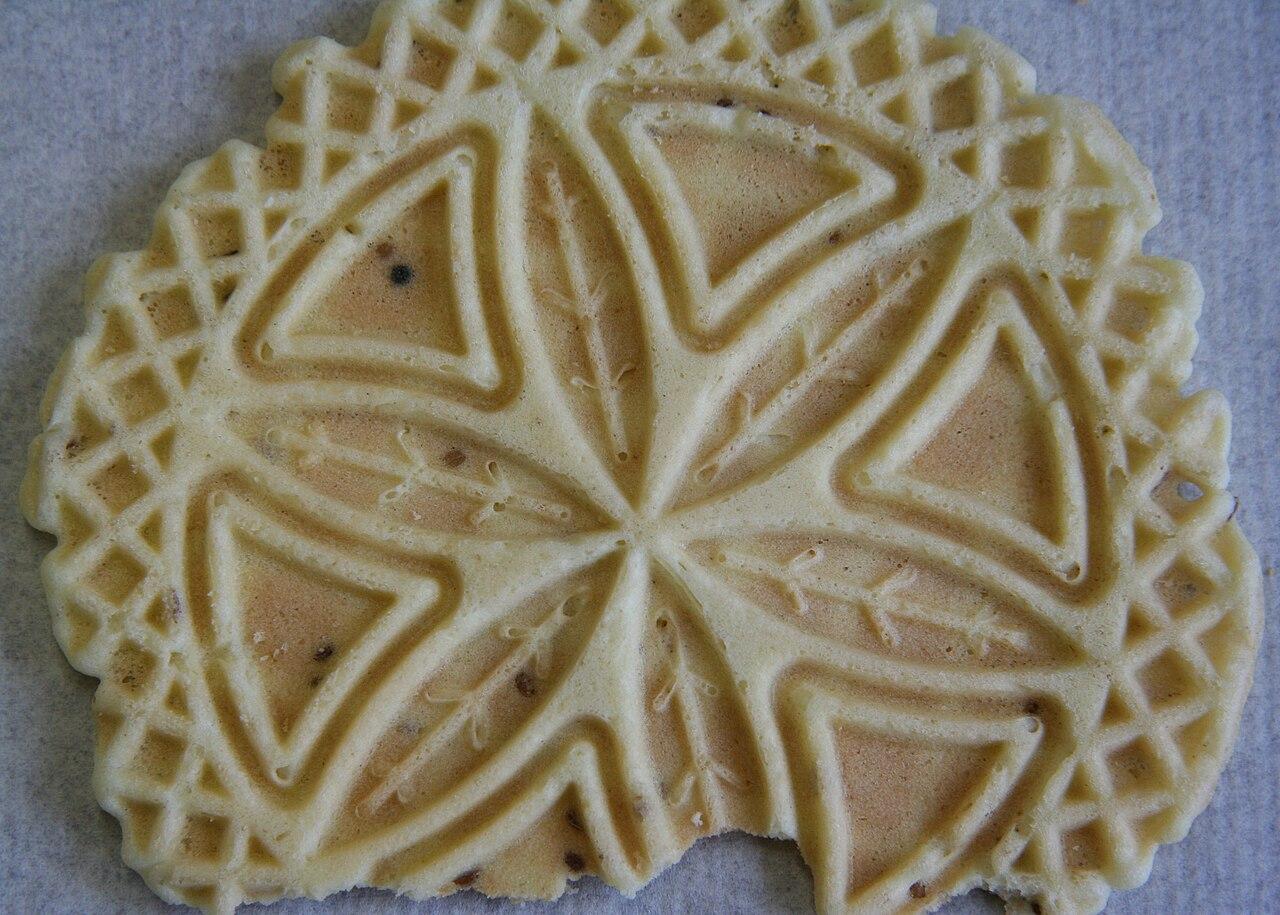
Photo: AnisePizzelle.JPG by Jonathunder, CC BY-SA 3.0. Wikimedia resized the photograph; no other changes were made for this guide. This is a reference example, not an Institute-tested recipe.
A quick guide to the names
| Name | Clues to look for | Source context |
|---|---|---|
| Pizzelle | Thin wafers with an iron's patterned impression; anise or vanilla are possible flavors. | King Arthur's pizzelle; a municipal museum in Abruzzo lists pizzelle irons among household objects. |
| Buccellati | Pastry surrounding a dried-fig filling; shapes and decoration vary. | GialloZafferano's Sicilian example includes nuts, citrus, spices and chocolate. |
| Cuccidati | Fig-filled cookies; look inside as well as at the icing. | A 2001 SAVEUR report from St. Louis describes a bakery's iced version with figs, raisins, pine nuts, chocolate and orange rind. |
| Ricciarelli | Soft almond pastries, often rounded lozenges with powdered sugar. | Visit Tuscany describes Ricciarelli di Siena. |
| Cantucci / cantuccini | Crunchy, oblong almond biscuits. | Visit Tuscany's cantucci recipe describes its almond-biscuit example from Prato. |
| Glazed ricotta cookies | Soft cookies with ricotta in the dough and a glaze. Confirm ricotta in the recipe or bakery ingredient list; a glazed exterior alone is not diagnostic. | King Arthur's published version uses citrus and vanilla flavors. |
| Rainbow cookies | Layers of almond cake joined with jam and covered with chocolate; often red, white and green. | King Arthur's rainbow cookies illustrate the layered structure. |
| Befanini | Cutout shapes with colored sugar decoration. | Visit Tuscany's Befanini recipe associates them with the Lucca area and Epiphany. |
Use these clues to narrow a search. If a remembered cookie has a fig center, compare filled-cookie recipes first. If it has a patterned surface, ask whether the family used an iron. If it has three colored layers, search for rainbow cookies rather than a glazed drop cookie.
Names can describe different things
A recipe title, a bakery label and a family's spoken name may not match. Preserve the original wording before adding a proposed identification. Write “possibly pizzelle” when the evidence is a photograph and a memory; leave room for a relative to recognize something you have missed.
The fig-filled examples show why ingredients and scale matter. Visit Sicily's buccellato guide describes a larger ring-shaped Christmas sweet with dried figs, almonds and orange peel. GialloZafferano describes smaller buccellati, while SAVEUR records a bakery's cuccidati. These examples help you compare related-looking sweets; they do not establish that every recipe bearing one of those names is interchangeable.
Before ordering from a bakery, describe what you want as well as giving the name. Ask about the filling, texture, size and decoration. That conversation is more useful than assuming a label guarantees the version you remember.
Help keep this work free
Help another family find its story.
A gift to the Alghini Institute supports free Italian American stories, research, and family-history resources.
Support family-history resourcesRegion is context, not a family certificate
Abruzzo's preserved pizzelle irons and Tuscany's descriptions of Siena sweets provide specific regional connections. They cannot establish that a particular American household's cookie traveled directly from that place. A recipe may have come from a relative, neighbor, bakery, magazine or later cookbook; find the record before choosing the story.
Separate a documented association from an origin legend. This guide does not identify an inventor or earliest date for any cookie. Our Italian-American food history article offers the broader setting; a family's recipe card, labeled photograph or recorded explanation can make that setting personal.
Also ask when the sweet was served. Befanini are associated with Epiphany in the Tuscan source, so the holiday season extends beyond Christmas Day. Record your family's occasion even if it differs from a published guide.
Preserve a family variation in six notes
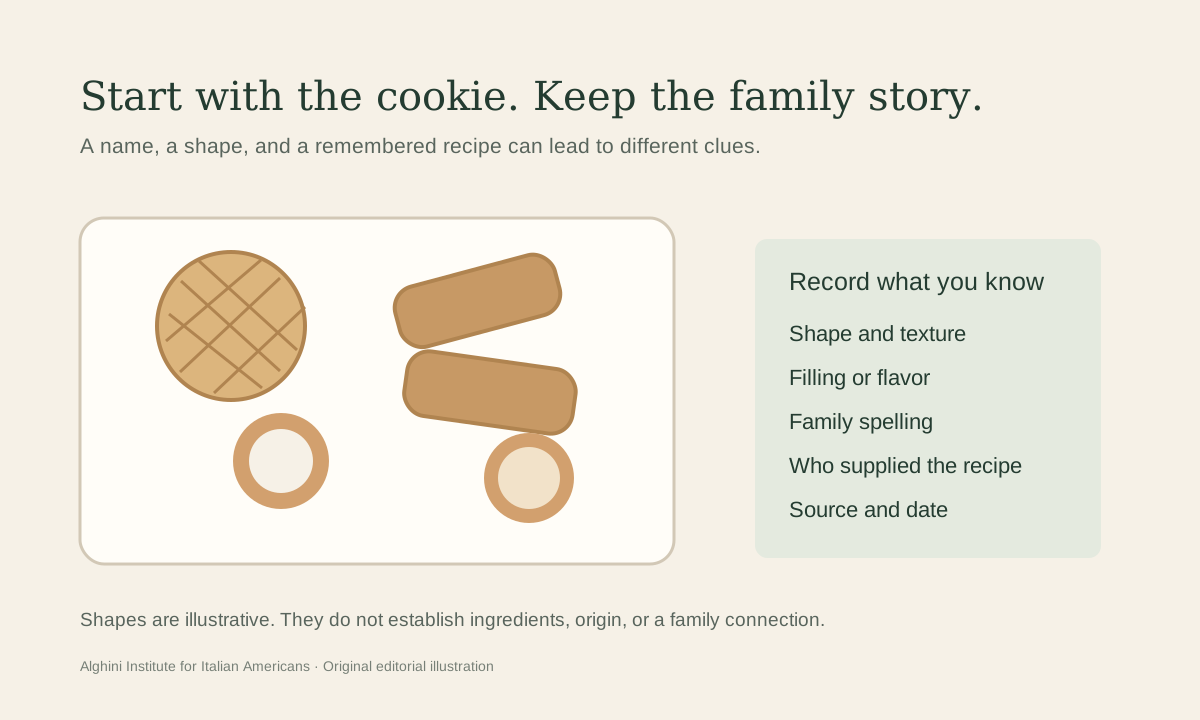
Start a page for one cookie rather than trying to catalogue the whole tray at once. Add:
- 1.The name as used. Copy the card's spelling and record the spoken pronunciation with permission.
- 2.The person and occasion. Who made or bought it, and for which gathering?
- 3.The appearance. Photograph the whole cookie and its interior; note shape, decoration and texture.
- 4.The recipe's source. Keep the original card, cookbook reference or bakery label. Label an online comparison separately.
- 5.Remembered changes. Ask about flavoring, filling, decoration and equipment. Identify who supplied each memory.
- 6.Your uncertainty. Mark an approximate date or possible identification clearly. Do not fill a missing history with a familiar story from the internet.
If you bake a family version, keep the original wording and write your practical changes beside it on a separate sheet. A clarified quantity is useful; silently rewriting the original makes it harder to understand later.
Choose a tray that fits your gathering
For a first cookie exchange, select a few recognizable styles and label each with its actual name. Ask the baker about ingredients and storage, and follow a complete recipe when baking. A photograph or identification table is not an ingredient list; ask directly about allergies and dietary needs.
The free Family History Starter Kit can hold the people, places and source notes behind your cookie page. Save those notes with a photograph of this year's tray. The next person opening the folder will have more than a name: they will have a trail back to the people who used it.
Explore other celebrations in our Italian-American holidays and festivals calendar.