If you want to explore Italian-American heritage in New York and New Jersey, begin with a question. Are you looking for a cultural outing, a place to learn about Italian-American studies, or evidence of the neighborhood your family knew? Each purpose points toward a different resource.
This guide compares four institutions using their official pages and collection descriptions checked on October 28, 2026. It is a starting point for choosing a useful next step, rather than an inventory of every organization in either state. Check each institution's current access instructions before making plans.
Choose the resource that fits your question
| Resource | What it is | A useful starting purpose |
|---|---|---|
| Italian American Museum, Manhattan | Public cultural museum focused on Italian-American life | Explore exhibitions and educational programming with family or friends. |
| John D. Calandra Italian American Institute, Manhattan | University institute affiliated with Queens College, CUNY | Find research and learning resources about the Italian-American experience. |
| Newark Public Library's First Ward Italian Collection | A specifically identified Italian-American collection within a library research repository | Investigate Newark's First Ward through research files and photograph descriptions. |
| New Jersey State Archives, Trenton | General state archive with relevant historical community material | Investigate particular New Jersey places using collection guides, including Italian files. |
For a cultural outing: Italian American Museum
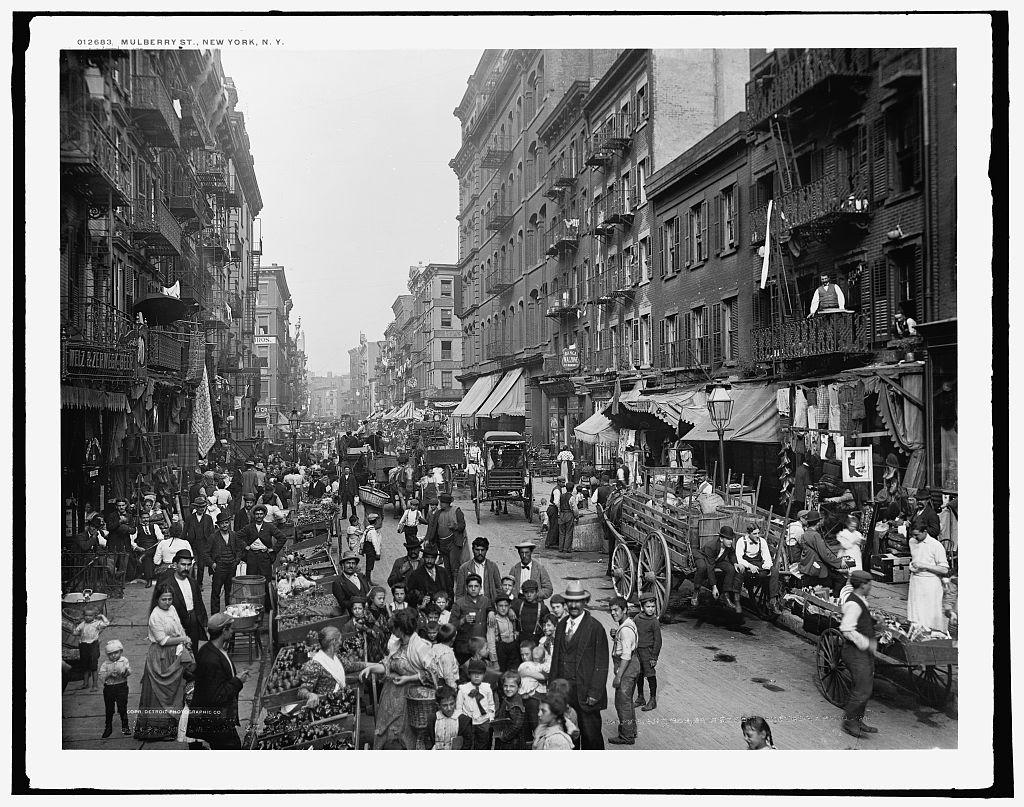
The museum's official site identifies its location at 151 Mulberry Street in Manhattan's Little Italy and describes exhibitions, educational programs and community partnerships devoted to Italian-American history and culture. Choose it when your first goal is learning together through a museum visit.
Before going, consult the museum's dedicated Visit page and confirm the arrangements for your intended date. Check announced programs separately; visiting information can differ between pages. A museum visit can prompt family questions, but it does not establish that your relatives lived in the neighborhood or appear in the collections.
Bring one question to discuss afterward: Which object, story or theme reminded someone of a family experience? Write down who made the connection, and distinguish that memory from what an exhibition label actually says.
For research and learning: Calandra Institute
Queens College's institutional page describes Calandra's work on Italian-American culture and heritage and lists research resources, a library, archives, lectures and conferences among its offerings. Although affiliated with Queens College, the institute's office is at 25 West 43rd Street in midtown Manhattan, rather than on the college's Flushing campus. Use the university page's current location and contact details when planning an inquiry.
Approach it as a university research institute. Use its official contact information to ask which resource fits your topic and how it can be consulted. Do not assume that an institute's archive operates like a walk-in museum or that staff undertake individual family research.
A helpful inquiry names the subject, place and period: for example, Italian-American cultural organizations in a particular borough during a particular decade. Explain whether you need introductory reading, a collection description or information about an announced program.
For Newark family and neighborhood questions: First Ward Italian Collection
The Charles F. Cummings New Jersey Information Center at Newark Public Library holds the Gerard Zanfini and Michael D. Immerso First Ward Italian Collection. Its official finding aid describes research files, original materials and photograph copies assembled for Immerso's work on Newark's Little Italy. Photograph indexes often identify people, places, dates and addresses.
The library's digital collection record links to photographs placed online. Begin with the descriptions and indexes; the finding aid identifies the collection as MG Nwk Immerso-(Main) and links indexes to corresponding file records. The digital description uses MG Nwk Immerso and explains its CD-number/file-number identifiers. Physical photograph references can instead use a volume and index entry. Preserve both references when supplied, so a digital image and a physical photograph request can be traced separately. Neither a surname match nor a familiar-looking face is enough to identify an ancestor.
This is a research collection within a public library. An older exhibition mentioned in its description is historical, so consult staff about materials rather than expecting that exhibition to be on display.
Help keep this work free
Help another family find its story.
A gift to the Alghini Institute supports free Italian American stories, research, and family-history resources.
Support family-history resourcesFor wider New Jersey community context: State Archives
The New Jersey Ethnological Survey Records, 1935–1939 finding aid provides a concrete Italian-related starting point within the State Archives' broader holdings. Its Italian files include Morristown occupations, Paterson and Newark churches, Paterson and Passaic organizations, and Trenton grocery stores and homeowners.
The guide explains that the collection largely consists of research notes and unfinished drafts. Use it to investigate a specific place or institution, while checking who produced a document and what it actually records. Historical survey categories and observations should not be treated as descriptions of today's communities.
Copy the series identifier, FWPNW001, and relevant box or file description. A useful route in the inventory is Box 1 → Ethnic Files → Italians. Keep an inventory entry's number separate from the Original Folder No. column. For manuscript material, check the manuscript-room schedule and request identified boxes or files in advance using the Archives' current visit guidance. Manuscript and microfilm rooms have different arrangements; do not assume one room's availability applies to the other. Confirm availability before traveling; a finding aid is not a guarantee of immediate access or of a record about your family.
Prepare one useful research session
Choose one institution for the first session and make a short preparation sheet:
- 1.Your question. State the person, neighborhood or organization, place and approximate period.
- 2.What you already know. Bring names, spelling variants, an address and the documents supporting them. Label family memories separately.
- 3.The likely material. Record the collection title, catalogue entry or program page that made the institution relevant.
- 4.Access questions. Check appointments, identification, material requests, accessibility and reproduction rules with the institution.
- 5.The next step. Decide what one useful result would be: a source reference, a candidate photograph, introductory reading or a narrower question.
Keep collection names, item identifiers, URLs and access dates alongside your notes. If you find an image online, ask about reuse permission before publishing it; online access alone does not supply permission. When nothing relevant appears, record what you checked so the next session can build on it.
Keep community connections and family evidence together
Our Italian-American holidays and festivals calendar can suggest other occasions to explore. Verify a current event with its organizer before attending. A conversation at a gathering may suggest a useful lead; ask permission before recording or sharing someone's story.
Use the genealogy hub for the next research steps and the free Family History Starter Kit to organize your question and source notes. Begin with the resource that matches your purpose, and leave with a clear record of what you learned and what you still want to find.