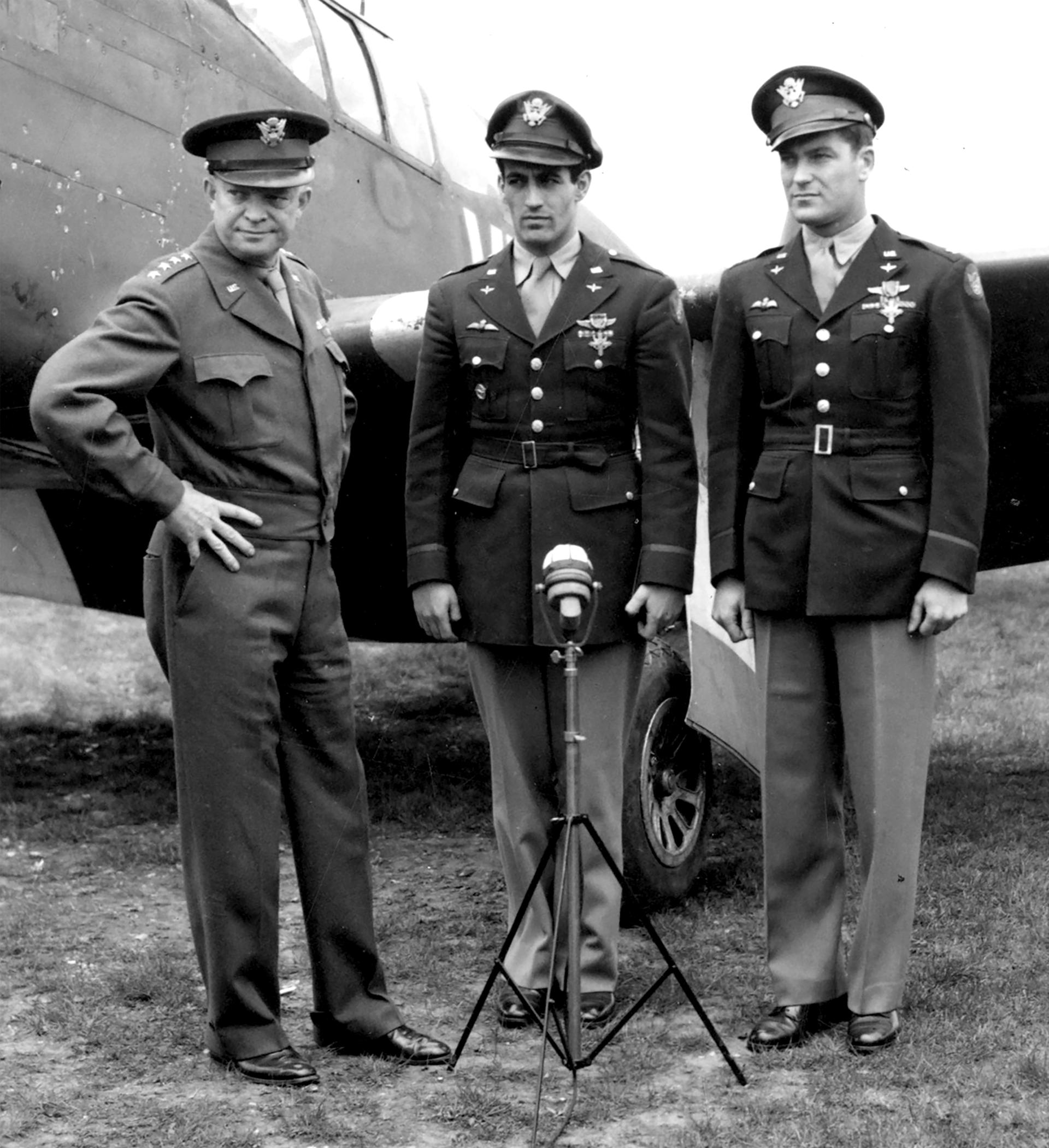
In an April 1944 photograph, Don Gentile stands between Dwight Eisenhower and fellow pilot Don Blakeslee. The three men, their uniforms and the aircraft behind them belong to one occasion. Keeping the whole photograph gives us a way to begin with the people around a familiar name.
The lives of John Basilone, Don Gentile, Gino Merli and Peter Pace offer four ways into Italian American military history. They served in different roles and generations: a Marine machine gunner, a fighter pilot, an Army infantryman and a Marine who became chairman of the Joint Chiefs of Staff. Their records also survive in different forms, from combat citations and museum collections to a fellow pilot's recollections and a presidential ceremony.
Veterans Day falls on November 11. In the days after the observance, we can keep listening and looking. This installment of our Notable Italian Americans series follows four people through the evidence behind their public stories. It is a beginning for further reading, rather than a measure of the many kinds of service within a community.
Family background has its own evidence in these biographies. Reading it alongside service records, recollections and later commemorations gives us a fuller picture of each life and the people connected with it.
John Basilone: follow the citation beyond the familiar portrait
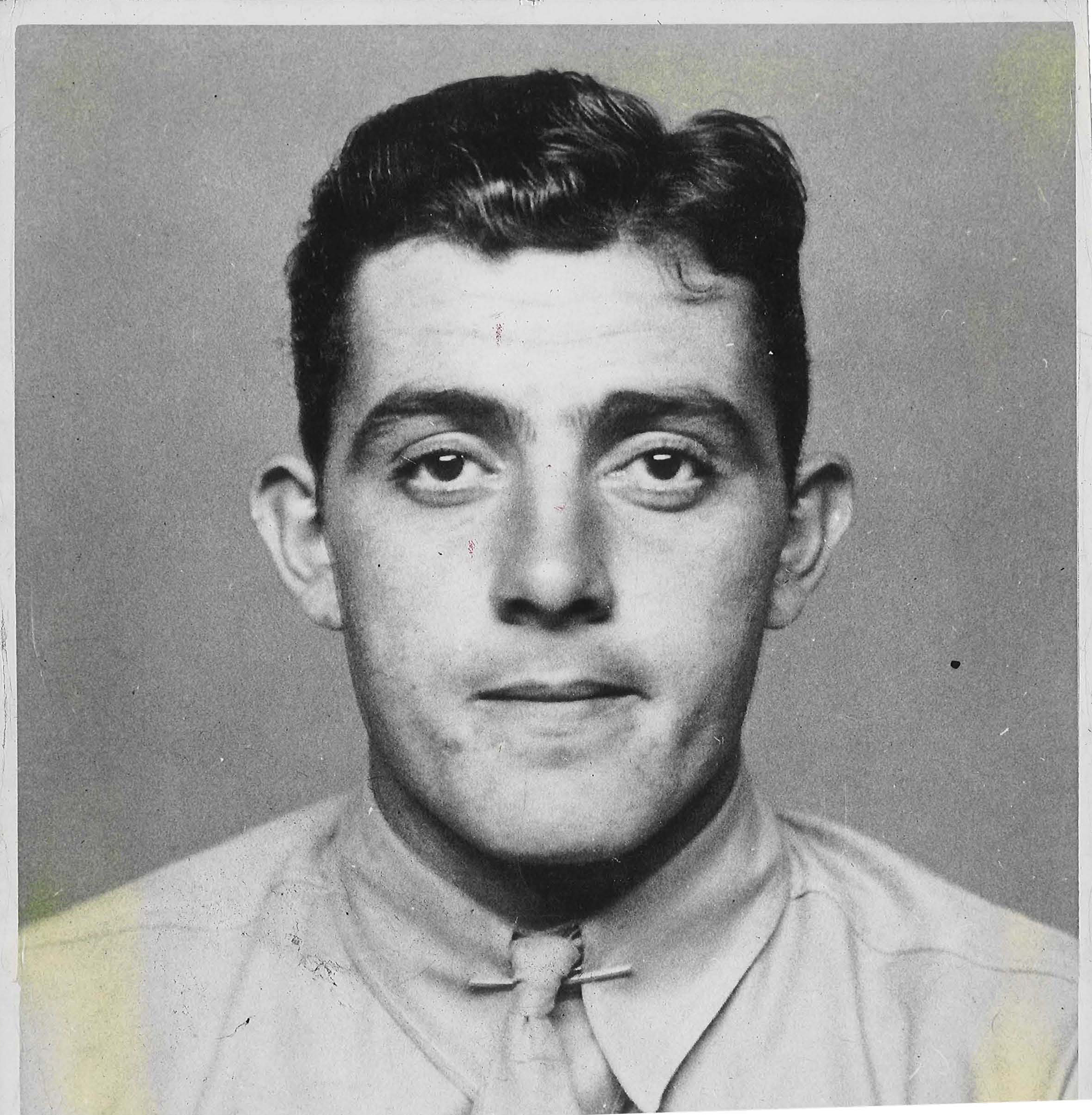
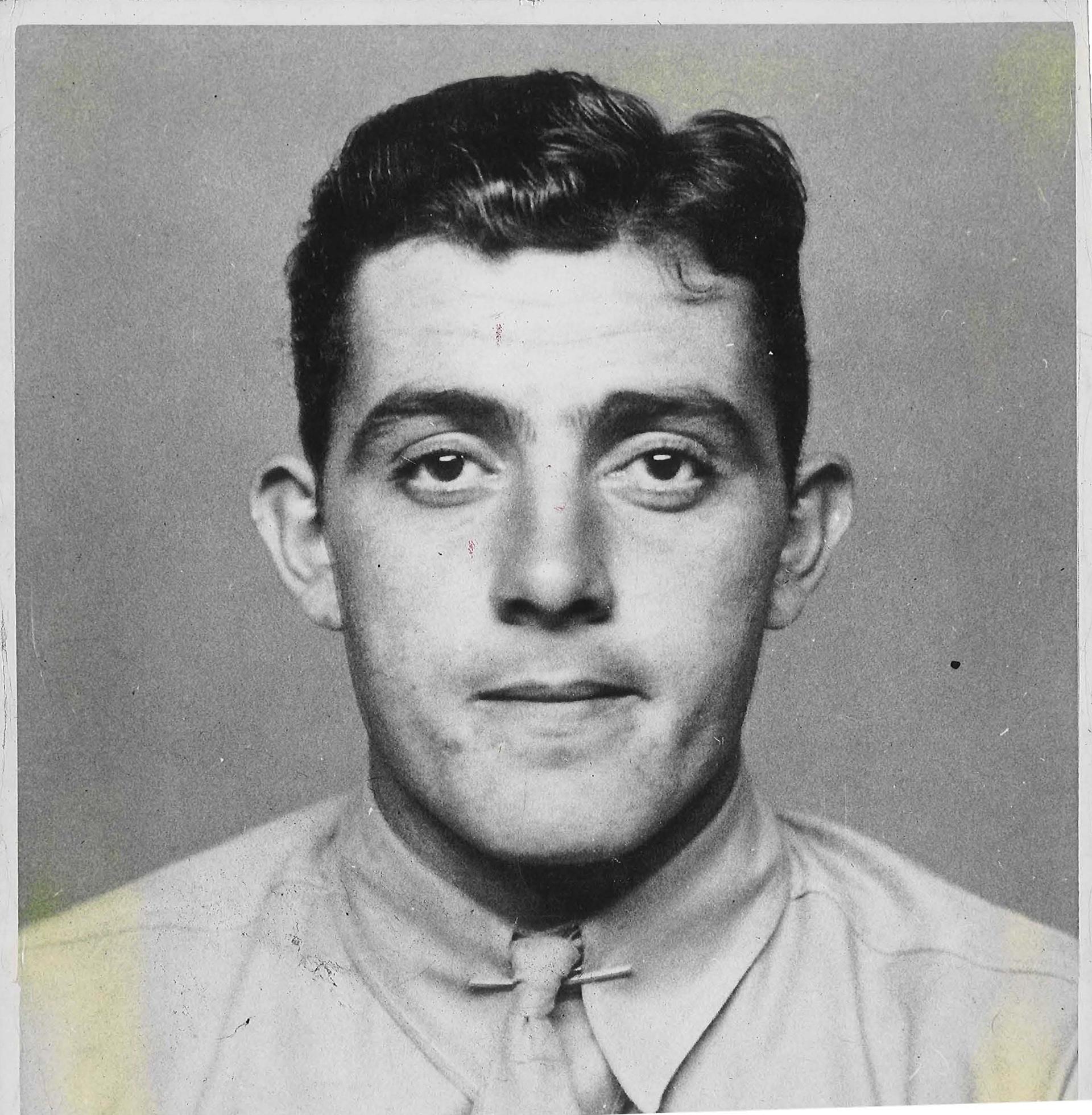
John Basilone was born in Buffalo, New York, in 1916 and grew up in Raritan, New Jersey. The Marine Corps History Division biography identifies his father as Italian-born. Basilone served in the Army before joining the Marine Corps in July 1940; his earlier service in the Philippines helps explain the nickname Manila John.
His Medal of Honor recognized his actions on Guadalcanal while serving with the 1st Battalion, 7th Marines, 1st Marine Division. He later returned to combat with a different unit, the 1st Battalion, 27th Marines, 5th Marine Division, on Iwo Jima. He was killed there on February 19, 1945, and received the Navy Cross posthumously. These are separate episodes and awards. Reading them as one undifferentiated legend makes the chronology harder to understand.
The Naval History and Heritage Command's description of a September 1943 press photograph preserves another moment: Basilone smiling when a reporter asked about his Italian-born father. That caption connects the public military figure with a family question, without requiring us to invent what he said in reply.
There is room to pause over that distinction. A picture records an expression; its catalog description supplies an occasion. Neither gives us a transcript of the interview. Saving the caption alongside the image keeps a human moment attached to the evidence that identifies it.
For a first reading, compare the Guadalcanal account with the Iwo Jima account. Write the unit and the award beside each. It is a small exercise, but it returns sequence and context to a name that often arrives already wrapped in superlatives.
Don Gentile: a pilot, a squadron and a friend's memory
Don Salvatore Gentile, associated with Piqua, Ohio, volunteered to fly for the Royal Air Force in 1941. The National Museum of the United States Air Force traces his service with No. 133 Squadron, one of the Eagle Squadrons staffed by American pilots, and his subsequent career in the U.S. Army Air Forces' 4th Fighter Group. After his wartime combat service, he flew as a test pilot at Wright Field. He died in a jet-trainer crash in 1951.
The museum's collections offer something more useful than a running total of aerial victories: the chance to see service through objects, uniforms and a photograph with other people in it. Its award-ceremony photograph identifies Dwight Eisenhower at left, Gentile in the center and Don Blakeslee at right. The caption places the Distinguished Service Cross presentation in April 1944. Keep the other men and the occasion in view when looking at Gentile.
A different kind of source is the museum-hosted transcript of Steve Pisanos's account. Pisanos recalls his friendship with Gentile and the way the two were introduced as a Greek and an Italian. This is a participant remembering a relationship, many years afterward. It gives us the perspective of a friend; it is not a contemporary service order or a checked record of either man's parents.
Gentile also appeared in President George W. Bush's October 8, 2001 remarks on Italian American contributions. That later tribute helps document how he was remembered in an Italian American setting. It serves a different purpose from the wartime photograph.
Try reading those sources in order: an institutional account of service, the described ceremony, a comrade's recollection and a later public commemoration. The changes in voice are part of the story. Each source lets us ask a different question about Gentile's life.
Gino Merli: what a citation says, and what it does not
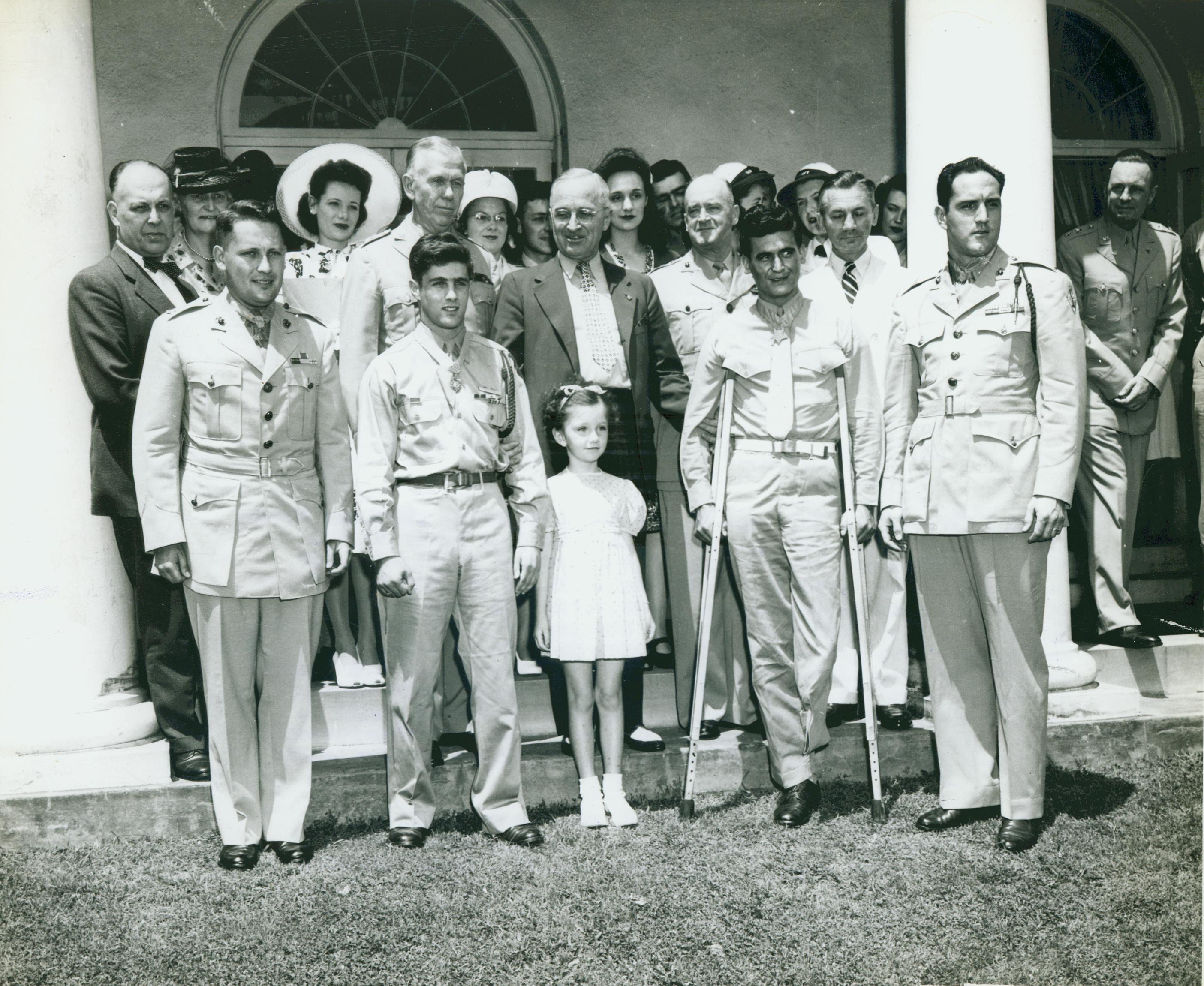
Gino Merli served with the 18th Infantry, 1st Infantry Division. His Medal of Honor citation places his action near Sars la Bruyere, Belgium, on the night of September 4–5, 1944. It describes a machine gunner maintaining his position after his company was overrun, covering other soldiers' withdrawal, and resuming fire after enemy troops had taken him for dead. His assistant gunner was killed.
Read the Army's citation beside its reproduction in the June 13, 2002 Congressional Record, printed page E1034. The printed version makes the September 4–5 date range clear where the Army web rendering loses the separator. It also distinguishes Scranton, his birthplace, from Peckville, where he entered service. Place names in a record have roles; they are not interchangeable labels.
The citation's wording matters in another way. It reports enemy dead on the battlefield, including those directly in front of Merli's gun. It does not turn that battlefield count into a verified tally of people he personally killed. Retelling an account accurately means preserving the scale of what the source actually says.
His place in Italian American history also has documentary support beyond his surname. In the Congressional Record of July 28, 1953, printed page 10170, Representative Joseph Carrigg identified Merli as Italian while speaking about immigration legislation. It is an attributed public identification, not a substitute for records tracing a family line.
Merli's story continued after military service. In his 2002 memorial, Representative Don Sherwood described Merli's long work for fellow veterans as an adjudication officer. The Pennsylvania Department of Military and Veterans Affairs' June 2026 newsletter records that Scranton's Northeastern Veterans' Center was renamed for Merli in November 2002. A citation and a veterans' home preserve different parts of a life: an extraordinary night in wartime, and a community's continuing act of remembrance.
Peter Pace: a public career and the people remembered with it
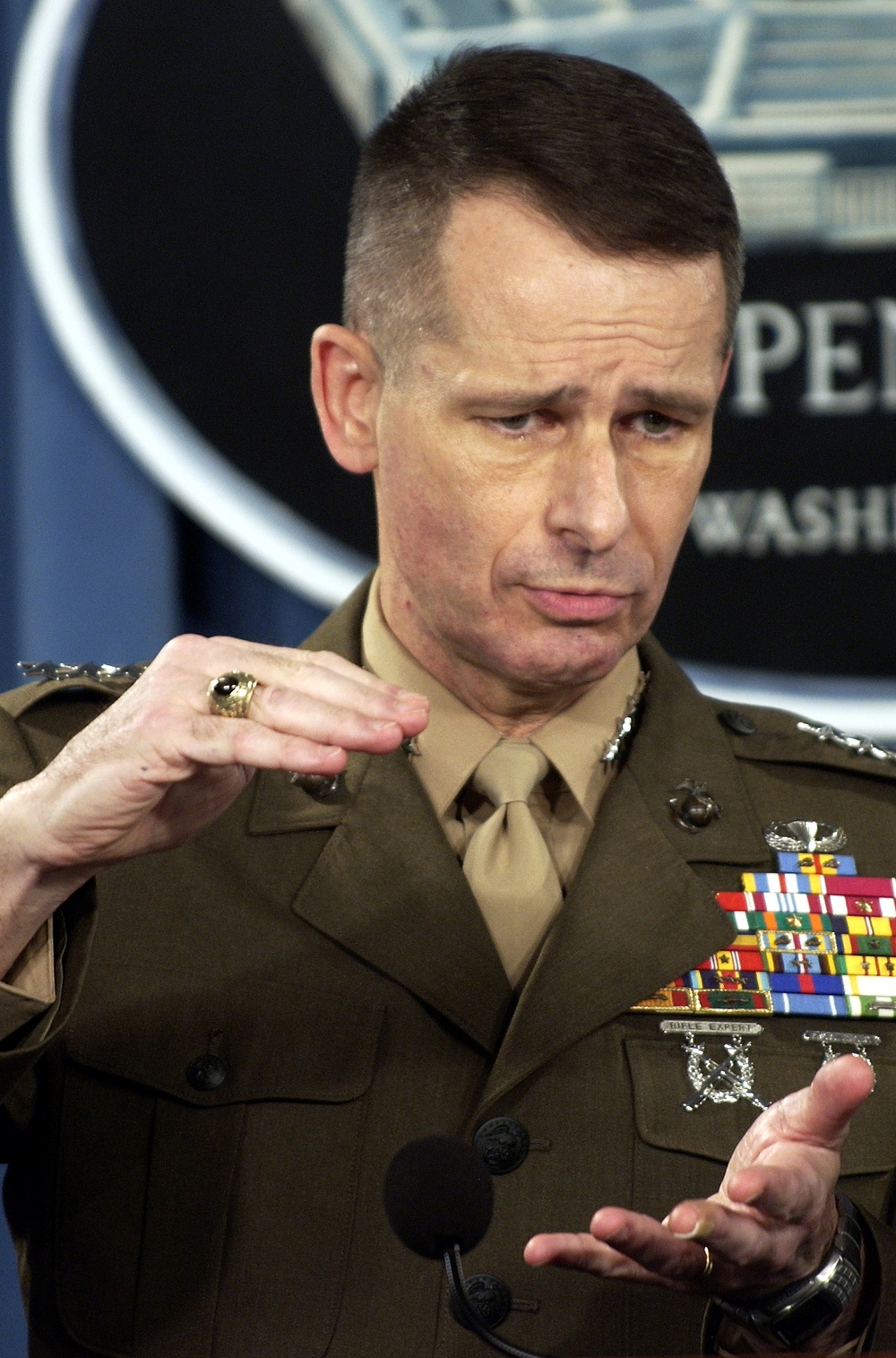
Peter Pace was born in Brooklyn in 1945 and grew up in Teaneck, New Jersey. The Joint Chiefs of Staff's historical biography identifies him as the son of an Italian immigrant electrician. A Naval Academy graduate commissioned in the Marine Corps in 1967, he served as a platoon leader in Vietnam before a long career in command, education and joint assignments.
Pace became the first Marine to serve as vice chairman of the Joint Chiefs of Staff in 2001, then the first Marine to serve as chairman, holding that office from 2005 to 2007. The sequence of assignments shows a career moving from a platoon to responsibilities shared across the armed services.
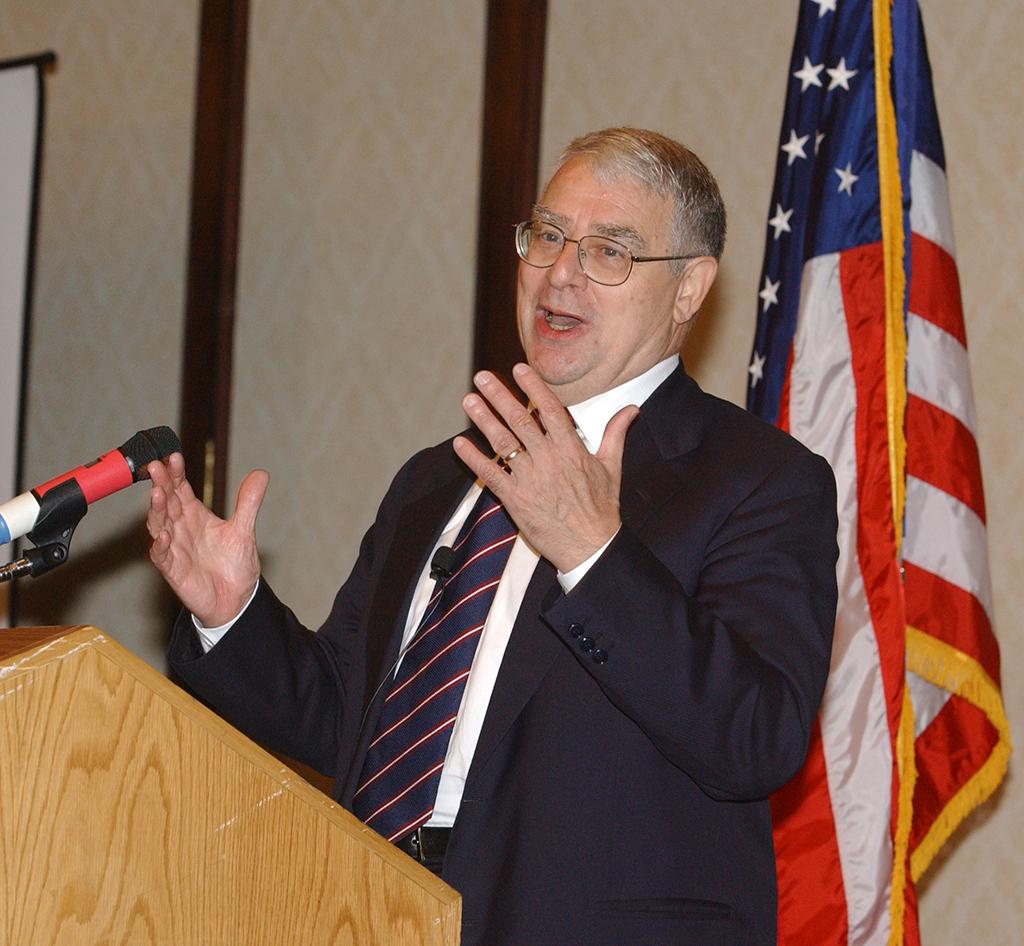
He received the Presidential Medal of Freedom in June 2008. In the White House ceremony remarks, President Bush recounted Pace's visit to the Vietnam Veterans Memorial at the end of his military career. The account describes him leaving his four stars and notes for Marines who had died under his first command.
That is a story told at an honoring ceremony, and it should remain attributed to that source. Its emotional force comes from the connection it draws between a senior officer and the men he had led as a young lieutenant. The account invites readers to look beyond the most prominent person in a biography and ask who else belongs in its memory.
Keep the photograph and its explanation together
The photographs accompanying a service story are evidence worth keeping with their descriptions. Gentile's ceremony image, for example, has three identified subjects. If it becomes an isolated headshot, the reader loses the meeting, the other participants and part of the photograph's meaning.
Begin with the complete image. Read its institutional caption, identify who supplied the identification and distinguish the date of the event from the date a digital file was uploaded. A modern catalog entry can describe a much older photograph. Neither the filename nor the date on a download screen should quietly become the date of the occasion.
Then ask what the image itself supports. A photograph can show a uniform, a group or an award presentation. Family relationships, a service chronology and the precise award may depend on records outside the frame. Write those details beside their sources so the next reader can follow the same trail.
This approach makes space for the people who do not have a famous portrait. A well-captioned group photograph can be more revealing than a formal individual image. The point is to know whom we are looking at, where the identification came from and which questions remain open.
One page to begin a family service story
You do not need a complete biography before you start. Choose one photograph, letter or service document already in your family's care. Make a working page with the person's name as it appears on the item, the date if known, the unit or institution named, and who has kept the original. Leave blanks where the evidence leaves blanks.
Add a separate place for memories. If a relative tells you who appears in a photograph, record who made the identification and when. If the account came from an earlier generation, keep that chain of recollection. A remembered story can be valuable while still needing a date, a name or another source checked.
The four lives here suggest practical questions. Basilone's record encourages us to separate two campaigns and two awards. Gentile's photograph asks us to keep companions in the frame. Merli's citation reminds us to read the labels attached to dates and places. Pace's commemorative story asks whose service a celebrated person wanted others to remember.
As the page grows, keep the original wording beside your explanation. A later summary should help someone understand an item without replacing it. There is satisfaction in a modest, traceable finding: the correct unit, an identified face, the date of an award rather than the date of a battle.
Our Notable Italian Americans directory offers starting points for reading individual lives. Following the sources attached to those lives can lead us back to the people beside them: friends, fellow service members, families and communities. Remembrance becomes more personal when we can name those connections and show how we know them.