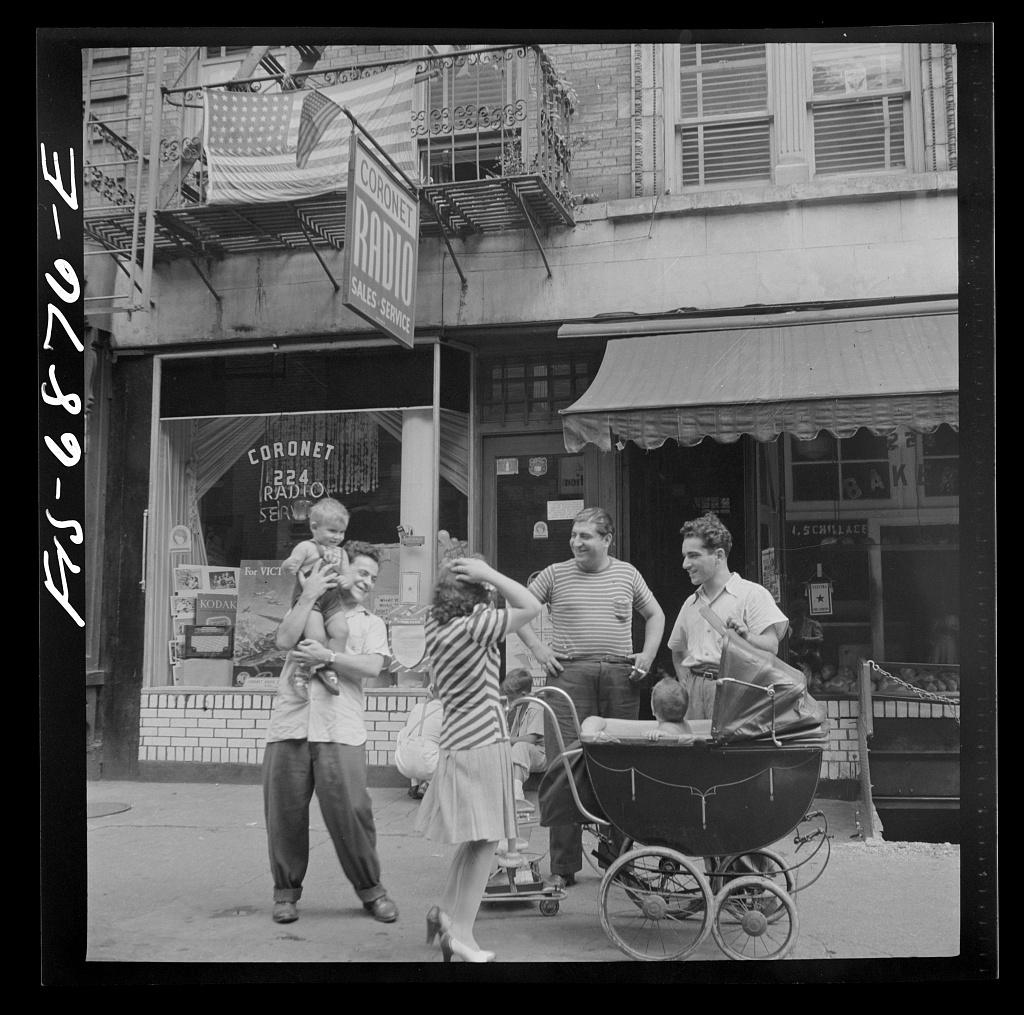
Frances Xavier Cabrini, Enrico Fermi, Geraldine Ferraro, Joe DiMaggio, Frank Capra and Frank Sinatra are six famous Italian Americans whose work reached far beyond their families and neighborhoods. They built schools, advanced science, entered national politics, played baseball, made films and recorded music.
Some arrived from Italy; others were U.S.-born descendants of Italian immigrants. Looking closely at one moment in each life reveals more than a familiar name can: a school opening, a scientific experiment, a public speech, a single in a losing game. These six stories offer starting points for exploring Italian American history.
Frances Xavier Cabrini: The Work Before Sainthood
Long before her canonization, Frances Xavier Cabrini was organizing schools with a small group of sisters. Born in Italy in 1850, she arrived in New York with six Missionary Sisters in 1889. The congregation's history describes a free school on Manhattan's Lower East Side, teaching at St. Joachim and visits to families. These were practical, shared efforts to establish a foothold in a new city. Missionary Sisters' early history, New York arrival, Work in New York
A surviving naturalization certificate places another milestone in 1909, two decades after her arrival. On July 7, 1946, she became the first U.S. citizen canonized a saint by the Roman Catholic Church. That wording matters: Cabrini was Italian-born. Her story connects migration, citizenship and religious life, while the school account preserves the collaborative work that preceded her later recognition. Naturalization certificate record, Congregation's canonization history
Enrico Fermi: Two Records, Two Milestones
Among the records preserved by the University of Chicago is a graph from December 2, 1942. It documents the experiment in which a team led by Enrico Fermi achieved the first controlled, self-sustaining nuclear chain reaction. A report from that December survives too, placing the achievement within the team's ongoing work. The records give a famous scientific milestone a material form: measurements on paper. University of Chicago experiment records
Fermi was born in Rome in 1901. He arrived in New York with his family in January 1939, after leaving Italy amid concerns about Fascist antisemitic laws and the position of his Jewish wife, Laura. Another document in the Chicago exhibition is his U.S. naturalization certificate, dated July 11, 1944. The experiment and the certificate mark different moments in the life of an immigrant scientist whose work was already changing American science. Fermilab biography, Migration and naturalization records
Geraldine Ferraro: A Father's Hometown at a National Announcement
When Geraldine Ferraro was introduced as Walter Mondale's running mate on July 12, 1984, she brought a small Italian town into a national political occasion. “My father came to America from a little town in Italy called Marcianise,” she said. Her own words supply a direct connection between her family history and the public moment. Ferraro's announcement remarks
Ferraro had been born in Newburgh, New York, in 1935 and served in the House of Representatives from 1979 to 1985. In 1984 she became the first woman nominated for vice president by a major U.S. political party. The Mondale–Ferraro ticket lost the election, but the nomination remains a distinct milestone. Reading the speech alongside her congressional biography preserves both scales of the story: one family's migration and a change in who appeared on a major party's national ticket. U.S. House biography
Joe DiMaggio: A Streak That Started in Defeat
Joe DiMaggio's 56-game hitting streak began during a game the Yankees lost 13–1. On May 15, 1941, he singled against Chicago White Sox pitcher Eddie Smith. The hit was one small part of a lopsided defeat; the streak it began finally ended on July 17. Starting there makes the familiar number more vivid: the accomplishment unfolded one game at a time, and its opening day brought no team victory. Baseball Hall of Fame account
The Smithsonian identifies DiMaggio as a native Californian and the son of Italian immigrants. Its collection includes an Exhibit Supply Company baseball postcard dated to approximately 1939–1946, the period surrounding that season. The card preserves another side of the player: the recognizable public figure whose image circulated beyond the ballpark. He entered the Baseball Hall of Fame in 1955. Smithsonian postcard and biography
Frank Capra: An Engineering Graduate Behind the Camera
Before directing It Happened One Night, Mr. Smith Goes to Washington and It's a Wonderful Life, Frank Capra studied chemical engineering. He graduated in 1918 from Throop College of Technology, the institution now known as Caltech. His route to filmmaking makes a useful interruption to the idea that a celebrated career must begin with an obvious, straight path. Caltech alumni history, American Film Institute career record
Capra came to the United States from Italy as a child in 1903; MoMA describes him as a naturalized American from Sicily. In his autobiography, he recalled combining his studies with predawn work at a power plant. A 1971 Caltech review reproduces that recollection, giving the engineering years a demanding daily rhythm. The filmmaker received the American Film Institute's Life Achievement Award in 1982, decades after his engineering graduation. MoMA film notes, Caltech's memoir excerpt, AFI award
Frank Sinatra: A Famous Voice, One Album
Frank Sinatra's name can lead to an overwhelming catalog. One manageable place to begin is Songs for Young Lovers, his eight-song album from 1954. The Library of Congress added it to the National Recording Registry in 2002. Choosing one work makes room to listen closely instead of reducing a musical career to sales figures or a list of honors. Library of Congress recording essay
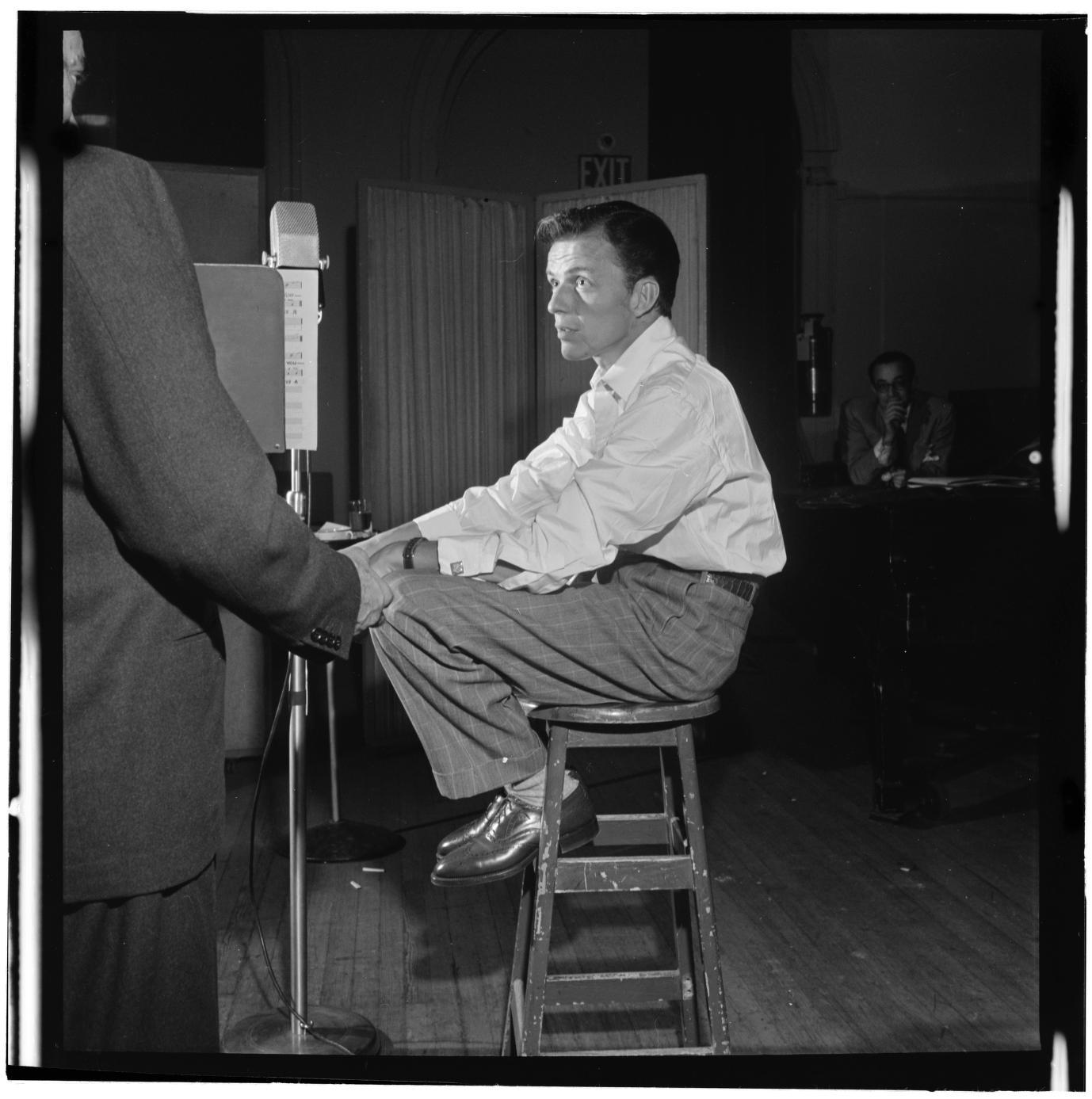
Sinatra was born in Hoboken, New Jersey, in 1915; his father was born in Sicily. William P. Gottlieb's photograph at the top of this article shows him seated beside a microphone and music stand at New York's Liederkrantz Hall around 1947. The photograph predates the album. Together, the image and recording offer two ways into his working life: a moment in a room and a performance preserved for later listeners. Hoboken Historical Museum, Original photograph
Explore Beyond These Six Lives
Each of these stories opens onto a larger subject: schools and migration, science and citizenship, political participation, sport or the arts. Our guide to Italian Americans places individual lives within the wider history of communities and identity.
To discover more names and fields, explore the Italian American directory. Entries have different review statuses, shown on their individual pages. A familiar name can be the beginning of the search; a specific work, document or photograph gives it somewhere to go.