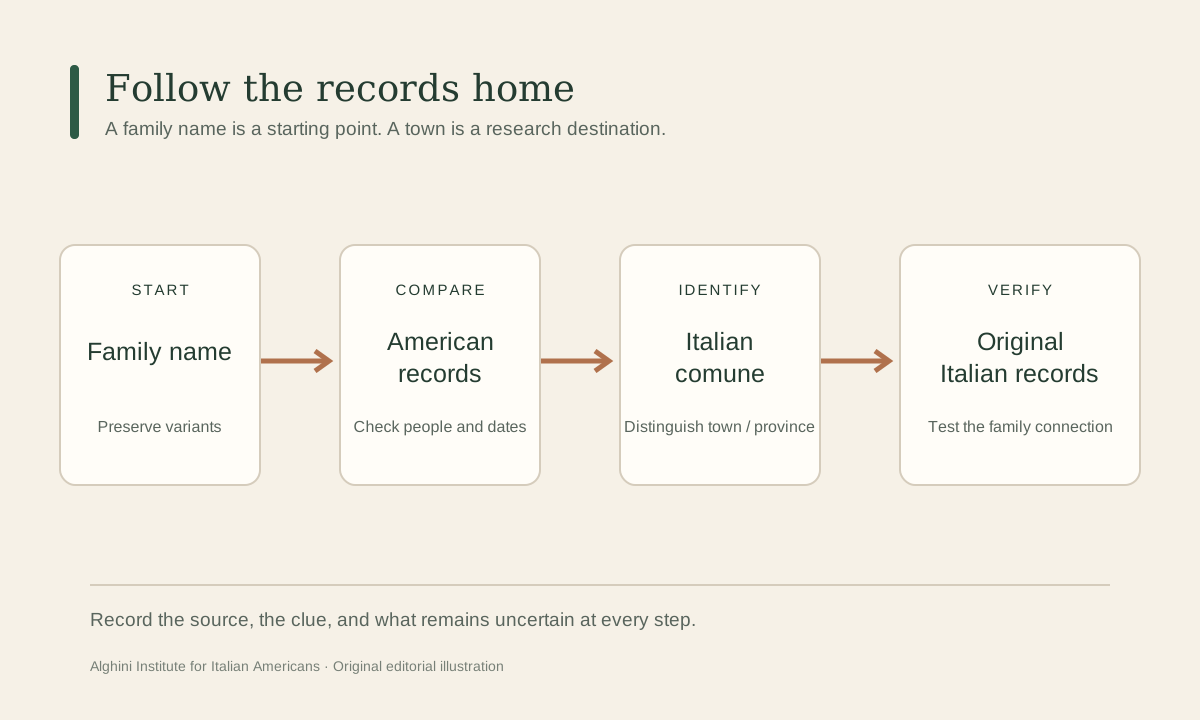
To find an Italian ancestor's town, start with records created during that person's life in the United States. Look for a birthplace in naturalization papers and passenger lists, compare it with relatives and dates, then identify the corresponding Italian municipality. A surname map can suggest places to investigate; it cannot establish where an individual was born.
The goal is a documented comune: the municipality whose records you can search. “Italy,” “Sicily,” or a province name usually leaves too much territory to cover. FamilySearch's Italy research guide places town identification before civil and church records.
1. Choose one immigrant and make an identity sheet
Work on one person at a time. Record every known name spelling, approximate birth date, spouse, children, occupation, and U.S. addresses. Copy family recollections separately from document transcriptions, including who supplied each memory.
Use a census to connect the immigrant to a household and a place where other records might exist. Do not expect every census to name an Italian town. For example, the 1930 census instructions asked for the country of a foreign-born person's birth, alongside immigration and naturalization information. “Italy” is an expected answer to that question.
Keep English given names and Italian forms as search possibilities. Joseph and Giuseppe may help you locate records, but matching names alone do not identify the same person. Our Italian first-names guide explains this distinction.
2. Look beyond a naturalization index card
If the immigrant pursued U.S. citizenship, search for the declaration of intention and petition. An index may provide a court, date, or file number that leads to the fuller document. Later petitions can contain a specific birthplace, spouse and children, and arrival details. NARA's petition description explains the information recorded on the standard form introduced in 1906.
Search where the person lived during the likely application period. If one court produces no match, check the holding institution and its coverage before treating the search as complete. The National Archives' naturalization guide explains that earlier records can belong to municipal, county, state, or federal courts, and that the declaration and petition need not be in the same court.
A person may never have naturalized. An unsuccessful search is a reason to try another record route, not evidence of an Italian birthplace or a citizenship determination.
3. Read the passenger image and its headings
Search arrival records using the identity sheet, including spelling variants and a reasonable date range. Open the original image rather than relying only on a database transcription.
The National Archives' passenger-record guide distinguishes information such as birthplace, last residence, and U.S. destination. Transcribe the place under its actual heading. A last residence is a useful lead, but it is not automatically the birthplace. A port of departure is another different place.
Read the entire relevant entry and any continuation indicated by the form. Compare age, occupation, traveling companions, destination, and relatives with your U.S. timeline. If two passengers have similar names, retain both as candidates until additional details distinguish them.
Do not restrict the search to Ellis Island. NARA's holdings are organized by arrival port or airport and have gaps. Follow the route supported by your ancestor's records.
4. Turn the written place into a candidate municipality
Copy the place exactly before correcting its spelling. Save an image reference and note any uncertain letters. Then list plausible Italian place names, using the accompanying province or nearby places to separate candidates.
Remember that a city and its surrounding province can share a name. Ask whether the record actually identifies the city, a smaller municipality in that province, or only the province. If it names a village or hamlet, establish the municipality that administered it at the time.
Use ISTAT's administrative-unit resources to check municipality names and territorial changes. Its historical former-name and suppressed-municipality lists cover changes from 1861 onward, alongside resources for current units. A current map is an orientation tool; it does not resolve every historical jurisdiction.
Our Italian surname guide provides additional regional context. Keep surname distribution subordinate to documents naming the person and place.
5. Test the town against the family
Before adding a birthplace to your family tree, seek a second record and investigate conflicts. Compare parents, spouse, dates, siblings, and residence. Two matching town references strengthen a lead, but copied information can repeat the same error.
If the person's documents remain vague, try an independently identified sibling or spouse. A relative's record can supply a place to investigate; confirm the relationship before transferring that place to your ancestor.
Next, check whether the proposed town has records covering the event and period. Search for a person whose family details agree with the U.S. evidence. Keep a tentative town labeled tentative until the documents support the connection.
When the search stalls
| Problem | Useful next action |
|---|---|
| Every record says only “Italy” | Search fuller naturalization papers, arrival images, or an identified relative's records. |
| The town spelling is unclear | Preserve the transcription, compare handwriting, and test candidates within the recorded province. |
| Several people have the same name | Separate their households, spouses, ages, occupations, and arrival journeys. |
| Two records name different towns | Check their headings: birthplace and last residence may both be correct. |
| The likely town has no online record for that year | Check archive holdings and other repositories; online absence does not prove the event did not occur. |
Leave a trail you can follow again
Record the collection, document title, archive or court, date, page or image, URL, and access date. Add one sentence stating what the record supports and what remains uncertain.
Download the free Family History Starter Kit for your next session, then use our genealogy hub to continue from a candidate municipality to its records. Finish with one clear research question: “Which record could confirm this person's birthplace?”