A translation, an anthology, a family memoir and a novel about work offer four ways into Italian American literature. John Ciardi, Helen Barolini, Jerre Mangione and Pietro di Donato are this week's reading companions. Start with the question that interests you, then follow the profile and archive links to explore further.
The European Day of Languages falls on September 26. We use that date as a reason to think about words crossing between homes, books and public life. This is our editorial theme, not an official observance theme or a claim that these writers participated.
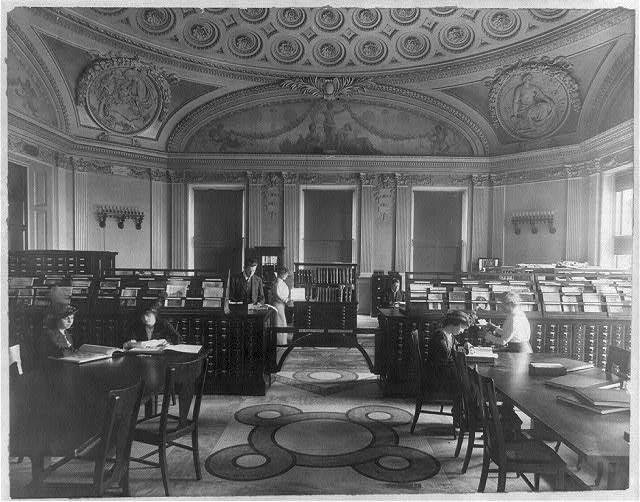
Historical context: Prints Division reading room, Library of Congress, circa 1900s. Levin C. Handy. Catalog and rights advisory: no known restrictions on publication. None of the featured writers is identified here.
John Ciardi: listening to a translation
John Ciardi, the son of Italian immigrants according to his Stony Brook biographical collection, translated Dante's Inferno, Purgatorio and Paradiso into English. Their publication dates were 1954, 1961 and 1970. His word-history broadcasting carried that interest in language into another medium. Biographical source.
Try reading a short passage in two translations. Which words change the pace or tone? You do not need to settle on a “best” translation to notice that each makes choices.
Helen Barolini: making room for other writers
Helen Barolini wrote Umbertina (1979) and edited The Dream Book, an anthology of Italian American women's writing that received an American Book Award in 1986. Syracuse identifies her parents as Italian American. Syracuse papers; Calandra memorial, page 6.
An anthology provides more than one possible doorway. Choose one contributor whose voice interests you, then ask a librarian how to find more of her work. Treat this as an invitation to explore rather than a definitive list of voices.
Jerre Mangione: a family becomes a memoir
Jerre Mangione grew up in Rochester; Penn identifies his parents as Sicilian. Mount Allegro describes Italian immigrant family life there. His later The Dream and the Deal examines the Federal Writers' Project, where he worked as national coordinating editor from 1937 to 1939. Penn memorial; Penn family-origin account.
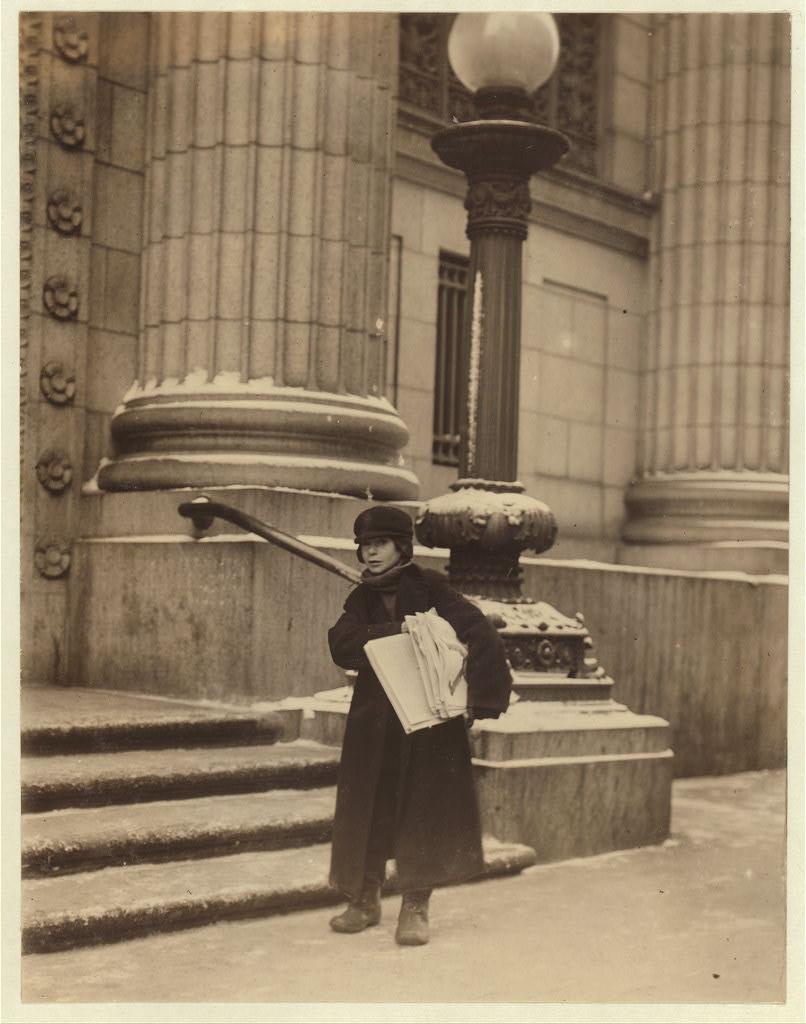
Historical context: Rochester newspaper seller, February 1910. Lewis Wickes Hine; National Child Labor Committee collection, Library of Congress. Catalog and rights. This is not Mangione; the child's ancestry is not identified. No known restrictions on publication.
As you read, make two columns: what the narrator remembers and what you would investigate in another record. Memoir offers a perspective; it does not remove the need for questions.
Pietro di Donato: work enters the novel
Pietro di Donato was a bricklayer and writer. His Christ in Concrete (1939) drew on the loss of his father in a construction accident. His family archive identifies his parents' origins in Vasto, Italy. Stony Brook collection; family archive.
Read with attention to how characters speak about work and one another. Fiction can invite historical questions without serving as proof that each scene happened exactly as written.
A reading route you can use
Ask your library about a Ciardi translation of Dante, Barolini's The Dream Book, Mangione's Mount Allegro, or di Donato's Christ in Concrete. Availability varies; these are reading suggestions, not stock or lending guarantees.
For a family activity, choose one word, expression or place-name that has traveled between generations. Ask a relative what it means to them, record their wording with permission, and note who spoke and when. Separate remembered meaning from an origin you have verified. Do not “correct” someone's recollection into a fact they did not claim.
Our genealogy resources can help you plan the documentary side of that inquiry. The Italian Americans introduction provides broader context, and each linked writer's profile gathers biographical sources.
Source note: University finding aids and institutional memorials supply biographical context; the di Donato family site supplies attributed family-origin evidence. The directory's separate ancestry checks are not replaced by this article. Illustrations are archival context photographs, not writer portraits.