A city service, a state office and a public broadcast all connect people to institutions. For the opening of Italian American Heritage Month, meet four Italian American public servants whose careers provide different ways to explore those connections: Fiorello La Guardia, Ella Grasso, John Pastore and Anthony Celebrezze.
October is an opportunity to ask how family histories intersect with public life. Congress designated October 1989 Italian-American Heritage and Culture Month; the Italian Consulate has also described the October observance. This feature is our editorial selection, not an official 2026 theme or endorsement of a political party. Our Heritage Month guide offers more ways to take part.
Fiorello La Guardia: the city at the microphone
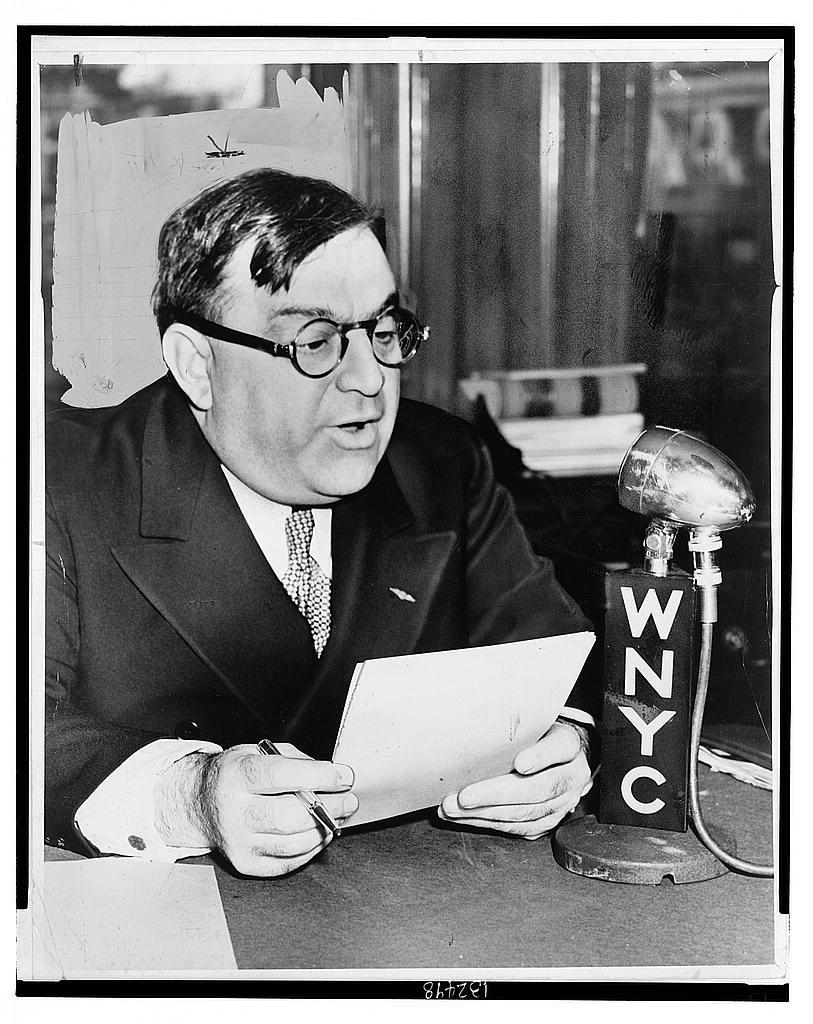
Fiorello La Guardia broadcasting on March 23, 1940. Fred Palumbo, New York World-Telegram and Sun Newspaper Photograph Collection, Library of Congress. Item and rights advisory: no known copyright restriction.
Fiorello La Guardia served as New York City's mayor from 1934 to 1945. His father came from Foggia; his Jewish mother came from Trieste, then part of Austria-Hungary. He had worked as an Ellis Island interpreter before entering Congress. NYC archival finding aid; House biography.
The photograph provides a concrete starting point: a mayor addressing listeners through radio. Ask what you can establish from its catalog record—the speaker, station, date and stated subject—and what the photograph cannot tell you about the audience's response. Public communication leaves records worth examining alongside budgets and buildings.
Ella Grasso: learning the levels of government
Ella T. Grasso, born to Italian immigrant parents in Windsor Locks, served in Connecticut's legislature, as secretary of the state and in Congress before becoming governor. Elected in 1974, she served as governor from 1975 to 1980. Museum of Connecticut History biography.
Her career makes a useful family or classroom exercise: list those offices, then find out which level of government each belongs to. Choose a local service you use and investigate which office is responsible for it today. A person's biography can open a question about institutions without providing every answer.
John Pastore: a public question about broadcasting
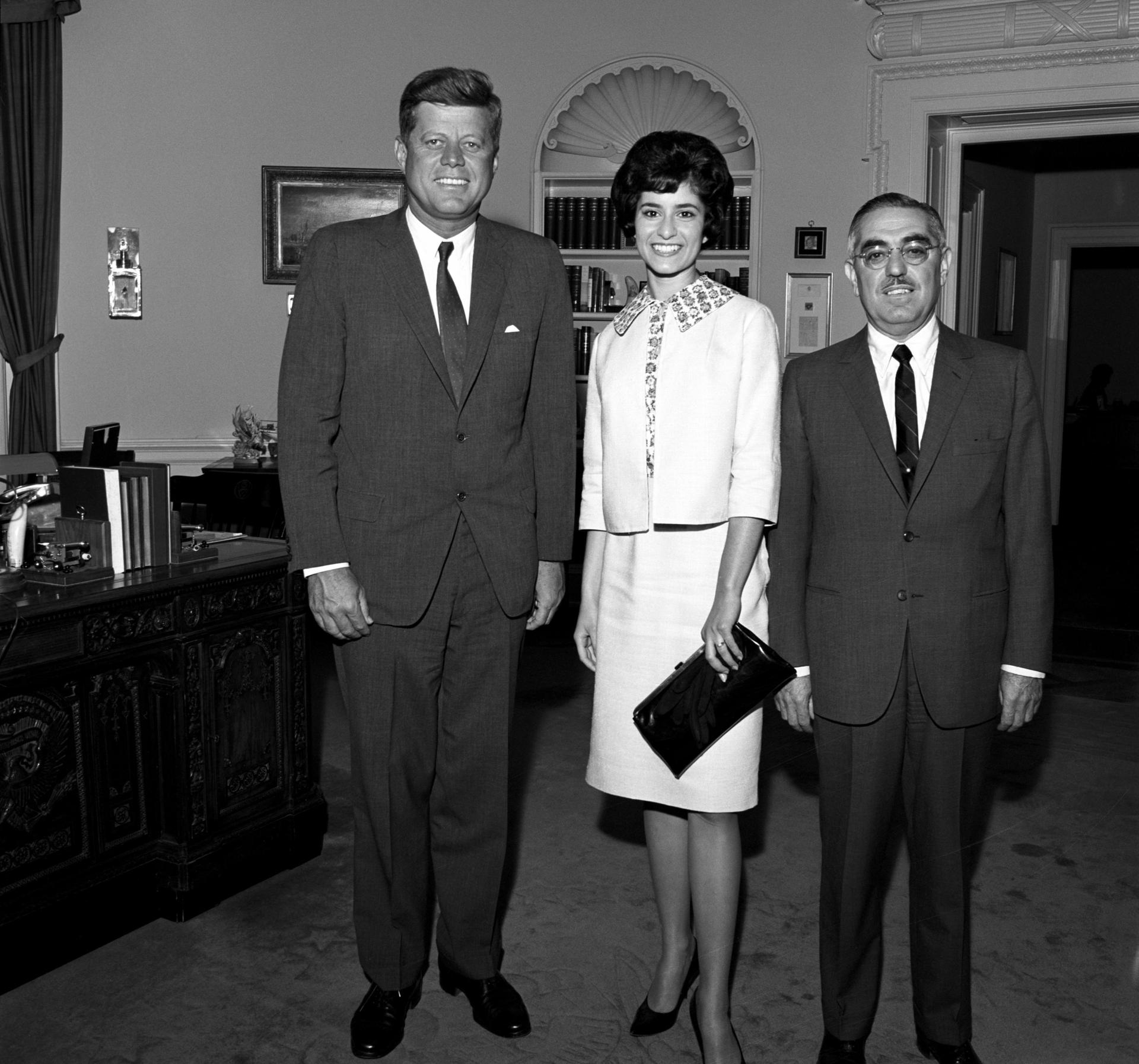
John Pastore, right, and Frances Pastore with President John F. Kennedy, May 7, 1962. Cecil Stoughton, White House Photographs, JFK Presidential Library. Archive record. Public domain as an official federal photograph.
John O. Pastore served as Rhode Island's governor from 1945 to 1950 and as a U.S. senator from 1950 to 1976. The National Governors Association identifies him as Italian American. An archived 1967 program documents his role as chairman of the Senate communications subcommittee during consideration of public broadcasting legislation. Congressional biography; NGA biography; hearing archive.
Explore the catalog description before listening. Who is speaking, what proposal is under discussion, and which institution would have authority to act? Distinguish a hearing from a law and an individual statement from a final decision. The archive's transcript is marked unverified, so check the recording before quoting it.
Anthony Celebrezze: from a city to federal institutions
Anthony Celebrezze was born in Anzi, Italy, and grew up in Cleveland. His career moved from Cleveland's mayoralty to the Department of Health, Education and Welfare and then to the federal appeals court. He served as mayor from 1953 to 1962, cabinet secretary from 1962 to 1965 and a federal judge beginning in 1965. Case Western Reserve biography; Federal Judicial Center.
Compare the three roles. A mayor, a cabinet secretary and a judge do different kinds of work. Looking at their responsibilities helps explain why public outcomes rarely belong to one person alone.
Make a community-history notebook
Choose one institution near you: a library, school, transit service or public broadcaster. Find a dated record about it through a local archive or official website. Write down the title, creator, date and source link. Then add a question the record leaves unanswered.
If a relative remembers using that service, record the recollection with permission and identify who spoke and when. Keep the memory alongside the document without treating them as interchangeable evidence. Our genealogy resources can help organize family research, while the Italian Americans introduction provides wider historical context.
These four careers are starting points, not a complete account of Italian American community life. Volunteers, workers, families and local organizations belong in that history too. Follow the linked directory entries for each person's biographical sources.